Behavioral health providers often work hard to expand access for clients who prefer care in a language other than English, but staffing decisions still break down when language capability is tracked informally. A supervisor may know that a clinician is bilingual, an HR generalist may have a certificate in one file, and an operations lead may have a separate coverage list for another program. When those records do not line up, organizations risk delays, mismatched assignments, inconsistent documentation, and preventable compliance questions.
Bilingual staff assignment software gives providers a more reliable way to match language-capable employees to the right roles, programs, and service settings. Instead of treating language coverage as a side note, organizations can manage it as part of workforce readiness. That matters in behavioral health, where assignment decisions may affect client communication, documentation standards, supervision needs, and overall continuity of care.
Key Takeaways
What Is Bilingual Staff Assignment Software?
Bilingual staff assignment software is a structured system for tracking which employees can serve in language-sensitive roles and for documenting the workforce details that support those assignments. In behavioral health settings, this may include spoken language proficiency, interpreter-related boundaries, role-specific expectations, site needs, population served, and any internal review required before assigning an employee to certain clients or programs.
The goal is not to label employees broadly as bilingual and stop there. The goal is to understand whether an employee is qualified, approved, and operationally ready for specific assignments. A provider may need to know whether a staff member can conduct clinical conversations directly, handle front-desk intake in another language, support community outreach, or work only with interpreter backup. Those differences matter.
Why It Matters for Behavioral Health Providers
Behavioral health organizations serve diverse communities across outpatient clinics, school-based programs, residential services, crisis teams, and community-based care. In many of these settings, language access affects intake quality, informed consent, treatment engagement, safety planning, and trust. If staffing teams cannot quickly see which employees can support which language needs, access goals become harder to deliver consistently.
There is also a workforce management issue. Bilingual employees are often in high demand across multiple locations and programs. Without a clear assignment process, the same people may be overused, booked informally, or placed into situations that do not match their role, schedule, or documentation status. That creates burnout risk and weakens coverage planning.
From an HR perspective, language-related assignments should be supported by current records. Providers may need to track proficiency validation, role expectations, pay differentials, supervisor approvals, or training tied to communication standards. If those details are buried in email threads or separate spreadsheets, organizations lose visibility right when it is needed most.
What Behavioral Health Organizations Should Track
Providers that want stronger language coverage decisions should define exactly what data supports a safe and efficient assignment workflow. The most useful system keeps operational, HR, and documentation details connected.
When this information is maintained in separate places, staffing decisions become slower and more subjective. When it is centralized, teams can respond with more confidence and less rework.
Best Practices for Matching Bilingual Staff Without Creating Risk
1. Define language-related assignment rules clearly
Organizations should decide what qualifies an employee for different types of language-sensitive work. Some assignments may require direct communication ability at a certain level, while others may only require basic conversational support with interpreter backup available. Clear rules reduce inconsistent manager judgment.
2. Separate language capability from assignment readiness
An employee may be bilingual and still not be the right person for a specific placement. Schedule conflicts, documentation gaps, limited role approval, or site-specific restrictions may make the assignment inappropriate. Good software helps teams see readiness, not just language skill.
3. Avoid informal booking through side conversations
When bilingual coverage is coordinated through texts, favors, or memory, the same staff members tend to get pulled in repeatedly without a reliable record. A centralized workflow helps providers balance access needs with fairness, availability, and documentation discipline.
4. Review language coverage data regularly
Language capability records can become outdated when employees transfer, take on new roles, change schedules, or complete new evaluations. Regular review keeps the assignment pool accurate and prevents teams from relying on stale assumptions.
5. Connect language coverage to broader workforce planning
Providers should not wait for an urgent need to discover coverage gaps. Tracking which sites, shifts, or programs depend heavily on a small number of bilingual employees can inform recruiting, onboarding, and retention decisions before access problems escalate.
How BUAMS HR Helps
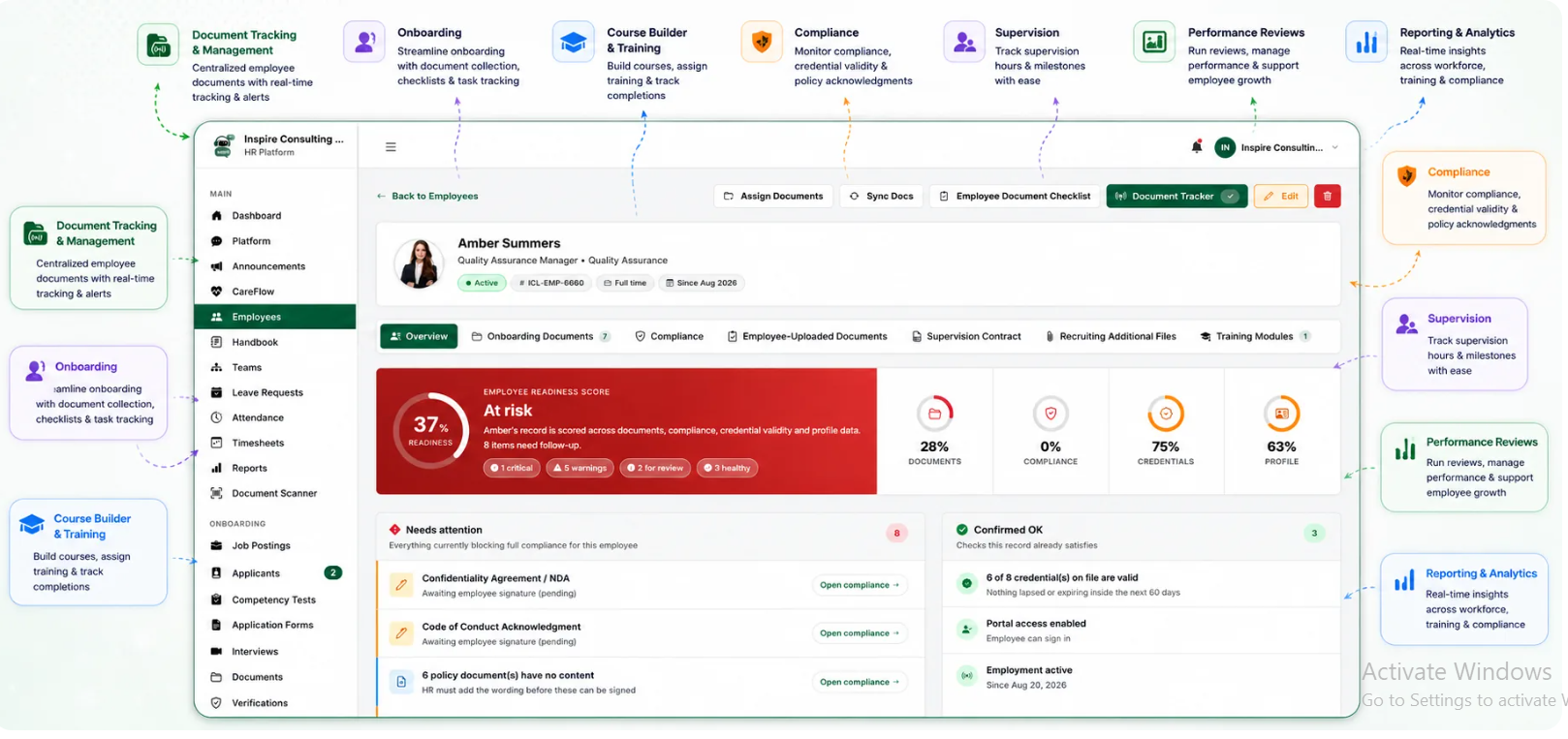
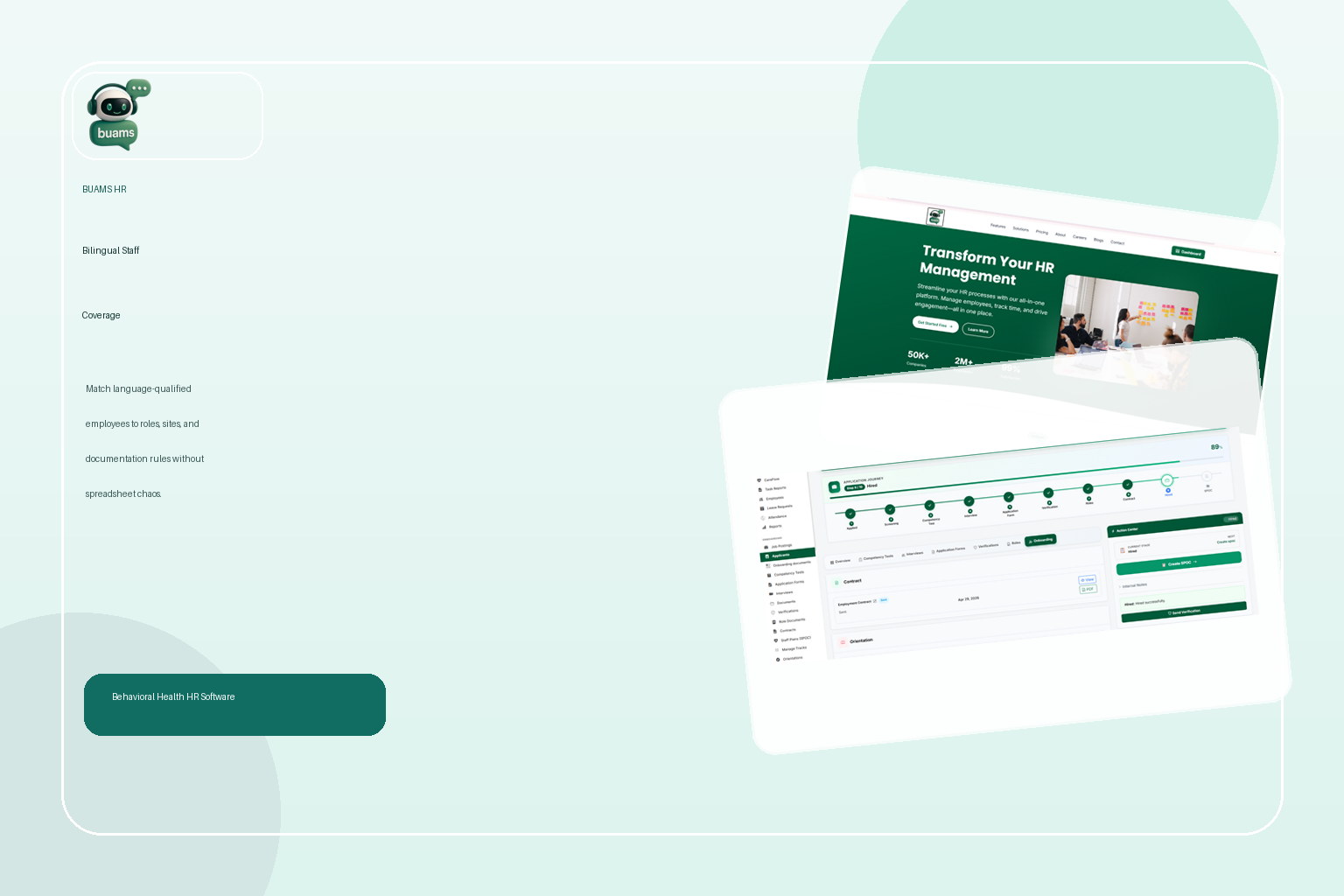
BUAMS HR helps behavioral health providers organize workforce records in a way that supports more reliable assignment decisions. Instead of keeping language capability, employee details, approvals, and supporting documents in disconnected files, teams can manage core HR information in one structured system. That makes it easier to understand who is available, what role they serve, and whether key records are current when coverage needs arise.
For providers managing multilingual teams across multiple programs, this kind of visibility supports both operations and compliance. HR can reduce manual follow-up, supervisors can make better staffing decisions, and leadership can spot where language coverage depends on too few people or too many unofficial workarounds.
Because BUAMS HR is built for behavioral health workforce workflows, it fits environments where staffing decisions are rarely just about filling an opening. They are about matching the right employee to the right assignment with the right documentation behind the decision.
Final Thoughts
Bilingual staff assignment software helps behavioral health providers treat language coverage as a managed workforce capability rather than an improvised staffing workaround. That shift improves access, strengthens documentation, and reduces the operational strain of searching for the right person every time a need appears.
For organizations trying to serve diverse communities while protecting workforce consistency and compliance, the value is clear. Better language coverage decisions start with better workforce data, and a platform like BUAMS HR can help make that data usable when it matters most.