Behavioral health providers depend on staff who can safely support clients in clinics, residential programs, schools, crisis settings, and community-based care. That makes current BLS and CPR credentials more than an HR checklist item. They directly affect scheduling, site readiness, risk management, and client safety. BLS and CPR renewal tracking software gives HR and operations teams one place to monitor expirations, collect proof, trigger reminders, and document readiness before a lapse creates a coverage problem.
For growing organizations, manual spreadsheets and inbox reminders rarely keep up with role changes, float staff, multiple office locations, and different training timelines. A stronger workflow helps behavioral health teams reduce last-minute scrambling while keeping life-safety documentation organized for supervisors, compliance reviews, and internal audits.
Key Takeaways
What BLS and CPR renewal tracking software does for behavioral health teams
BLS and CPR renewal tracking software is a structured way to manage who needs life-safety training, when each certification expires, what proof has been submitted, and whether the employee is still eligible for assigned work. Instead of keeping that information across spreadsheets, email threads, shared drives, and paper files, HR teams can maintain a current view of credential status inside one workforce process.
In behavioral health, this matters because readiness requirements often vary by role, site, and program. Direct care staff, nurses, supervisors, mobile crisis teams, and program leads may all need different combinations of training and renewal documentation. If the tracking process is weak, an organization can discover gaps only after schedules are set, site coverage is already thin, or an accreditation review requests proof.
Why manual CPR renewal tracking breaks down so quickly
Many organizations start with a spreadsheet, a calendar reminder, or a shared folder. That can work for a small team, but it usually becomes unreliable as headcount grows. One missed email, delayed upload, or unrecorded role transfer can leave the organization with outdated information.
Behavioral health providers also face an operational challenge: credential lapses do not stay in HR. They ripple into scheduling, supervision, and service continuity. A staff member with an expired CPR card may need to be pulled from certain assignments, replaced at the last minute, or escalated for urgent retraining. That is why renewal tracking needs to support real workforce decisions, not just passive recordkeeping.
What to look for in BLS and CPR renewal tracking software
Not every reminder tool is enough for behavioral health operations. The right setup should help teams move from reactive chasing to reliable workforce readiness.
Role-based requirement tracking
The system should distinguish which jobs, programs, or locations require BLS, CPR, or both. That helps HR avoid over-tracking for some staff and under-tracking for others. It also creates a better handoff when employees change roles or split time across programs.
Expiration visibility and early alerts
Good software should show upcoming expirations well before the deadline, not after it is missed. Early alerts give employees time to register for training, give managers time to plan coverage, and give HR time to follow up before a lapse becomes urgent.
Document collection tied to the employee file
Renewal tracking works best when proof of completion lives inside the employee record instead of a disconnected inbox or shared drive. That makes it easier to confirm the current card is on file, confirm dates match the document, and produce evidence quickly during reviews.
Supervisor and site-level reporting
Behavioral health providers often need more than a companywide list. They need to know which clinic, residential site, or mobile team has the highest renewal risk. Reporting by supervisor, location, and role helps organizations prioritize follow-up where a lapse would hurt coverage the most.
Clear status definitions
Teams should be able to tell the difference between pending renewal, document submitted, verified, expired, and temporarily exempt. Clean status categories reduce confusion and make escalation decisions more defensible.
How BLS and CPR renewal tracking supports compliance and care continuity
Life-safety credential tracking is operational, but it is also compliance-sensitive. Surveyors, accreditors, and internal reviewers may want proof that staff assigned to specific programs have current qualifications on file. When that proof is inconsistent, the organization spends time reconstructing records instead of responding confidently.
A stronger process also protects continuity of care. When upcoming expirations are visible early, teams can stagger renewals, plan coverage, and avoid sudden staffing disruptions. That matters in behavioral health environments where client trust, routine, and supervision consistency are already important.
Over time, better renewal tracking can also reveal patterns. If certain programs are constantly renewing late, leadership can investigate whether the issue is training access, weak manager follow-up, incomplete onboarding, or unclear ownership between HR and operations.
How BUAMS HR helps behavioral health providers manage renewal readiness
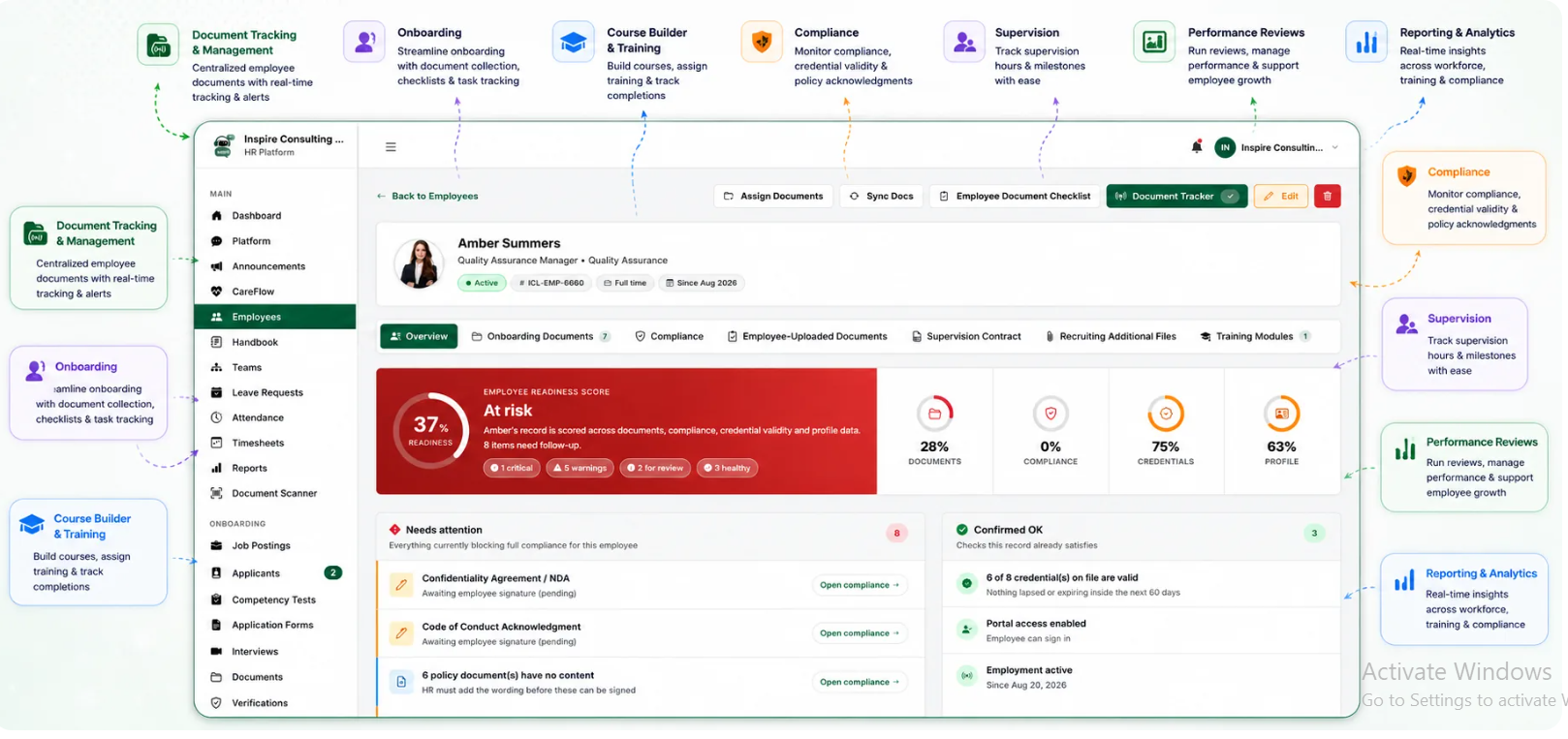
BUAMS HR gives behavioral health organizations a better way to centralize employee records, track workforce requirements, and keep readiness documentation organized in one place. Instead of relying on scattered reminders and manual file checks, teams can use a structured HR system to support visibility across hiring, credential records, training proof, and compliance follow-up.
For BLS and CPR renewals, BUAMS HR can support a more reliable workflow by helping teams maintain employee files, monitor expiring requirements, standardize document collection, and give leadership a clearer view of workforce readiness across sites. That is especially useful for organizations managing multiple programs, mixed role types, and frequent staffing adjustments.
When HR, supervisors, and operations leaders are all working from the same source of truth, renewal tracking becomes less about chasing paperwork and more about preventing coverage risk before it affects care delivery.
Final Thoughts
BLS and CPR renewal tracking software is not just a convenience for behavioral health providers. It is a practical control for staffing stability, life-safety readiness, and defensible compliance documentation. Organizations that centralize renewal dates, proof collection, and readiness reporting are better positioned to avoid surprises, protect coverage, and respond faster when audits or site reviews require evidence.
For providers that want a cleaner, more scalable process, BUAMS HR offers a strong foundation for organizing employee documentation and tracking the workforce details that matter most. The result is less last-minute scrambling, better visibility, and a more prepared behavioral health team across every site.