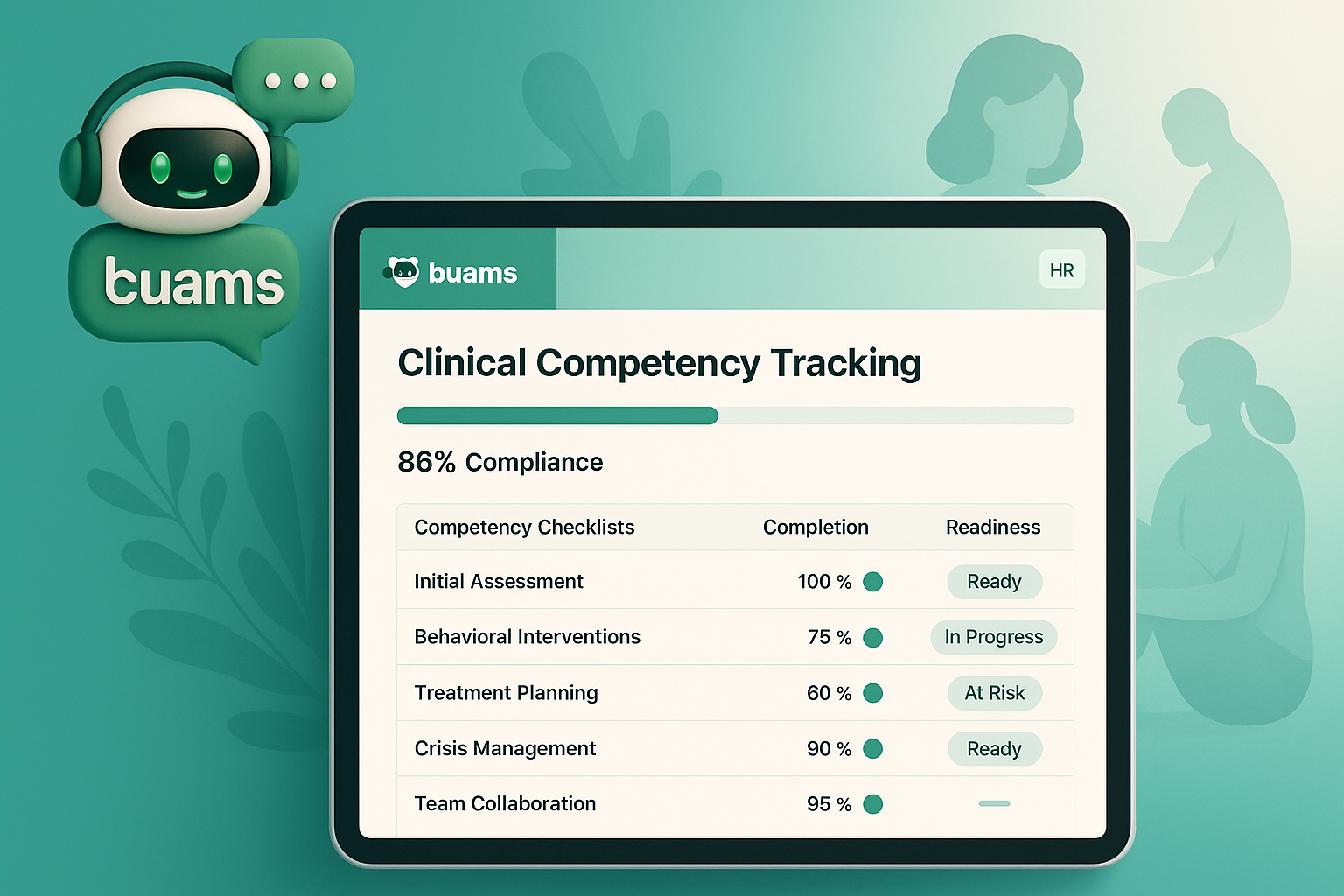
Behavioral health organizations depend on staff readiness in ways that go beyond a signed job description. Clinicians, supervisors, care coordinators, peer support staff, and administrative teams all need role-specific training, documented competencies, and timely follow-up when expectations change. When those records live in spreadsheets, email threads, and paper files, it becomes harder to prove readiness, coach consistently, and respond confidently during reviews. Clinical competency tracking software gives HR and operations teams a more reliable way to organize this work.
Key Takeaways
What Is Clinical Competency Tracking Software?
Clinical competency tracking software is a system for organizing the evidence that employees are prepared for their responsibilities. In behavioral health settings, that can include orientation milestones, training completion, license or certification support documents, supervisor sign-offs, performance checkpoints, policy acknowledgments, and role-specific competency reviews. Instead of chasing these items across disconnected tools, teams can track them through a single repeatable workflow.
This matters because competency is not a one-time event. New hires may need staged validation before working independently. Existing team members may need reassessment after promotions, transfers, incidents, policy changes, or new service lines. Without a structured tracking process, agencies risk inconsistent documentation and delayed intervention when a gap appears.
Why It Matters for Behavioral Health Providers
Behavioral health providers operate in environments where quality of care, safety, supervision, and workforce compliance are closely linked. HR teams are often expected to support operational readiness while also maintaining complete employee files. If competency records are incomplete or hard to locate, that creates friction during audits, accreditation surveys, supervision review, and internal quality checks.
A better process improves more than documentation. It helps managers know what must be reviewed, gives HR a clearer picture of overdue tasks, and makes it easier to show that role expectations are being applied consistently across locations and programs. For multi-site providers, that consistency becomes even more important when teams are spread across outpatient, community-based, and residential services.
What to Look For in a Competency Tracking Process
Behavioral health organizations do not just need a place to upload files. They need a system that connects competency work to the actual employee lifecycle. A useful process should support clear ownership, visible deadlines, and reliable evidence collection.
Common Problems With Manual Competency Tracking
Many providers try to manage competency tracking with spreadsheets plus folders plus calendar reminders. That setup can work for a short time, but it usually breaks down as the organization grows. Files are saved under inconsistent names, review dates get missed, and managers interpret requirements differently. HR ends up spending time reconciling records instead of improving the process.
Another common issue is that the competency process becomes disconnected from onboarding and employee file management. A staff member may complete required activities, but the proof never makes it into the personnel file or is not easy to retrieve later. The result is a false sense of completion. A stronger system closes that gap by making documentation and follow-up part of the same workflow.
How BUAMS HR Helps
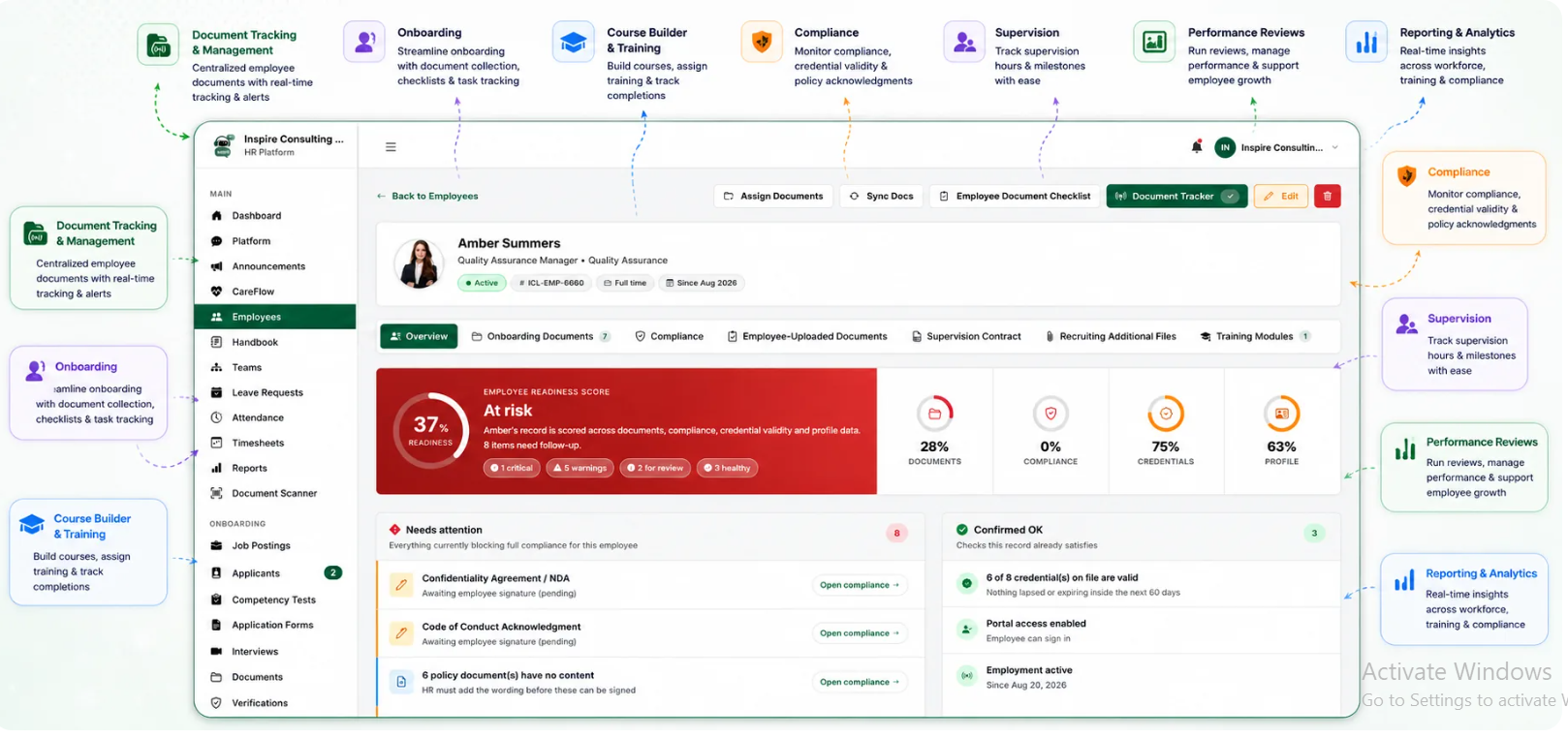
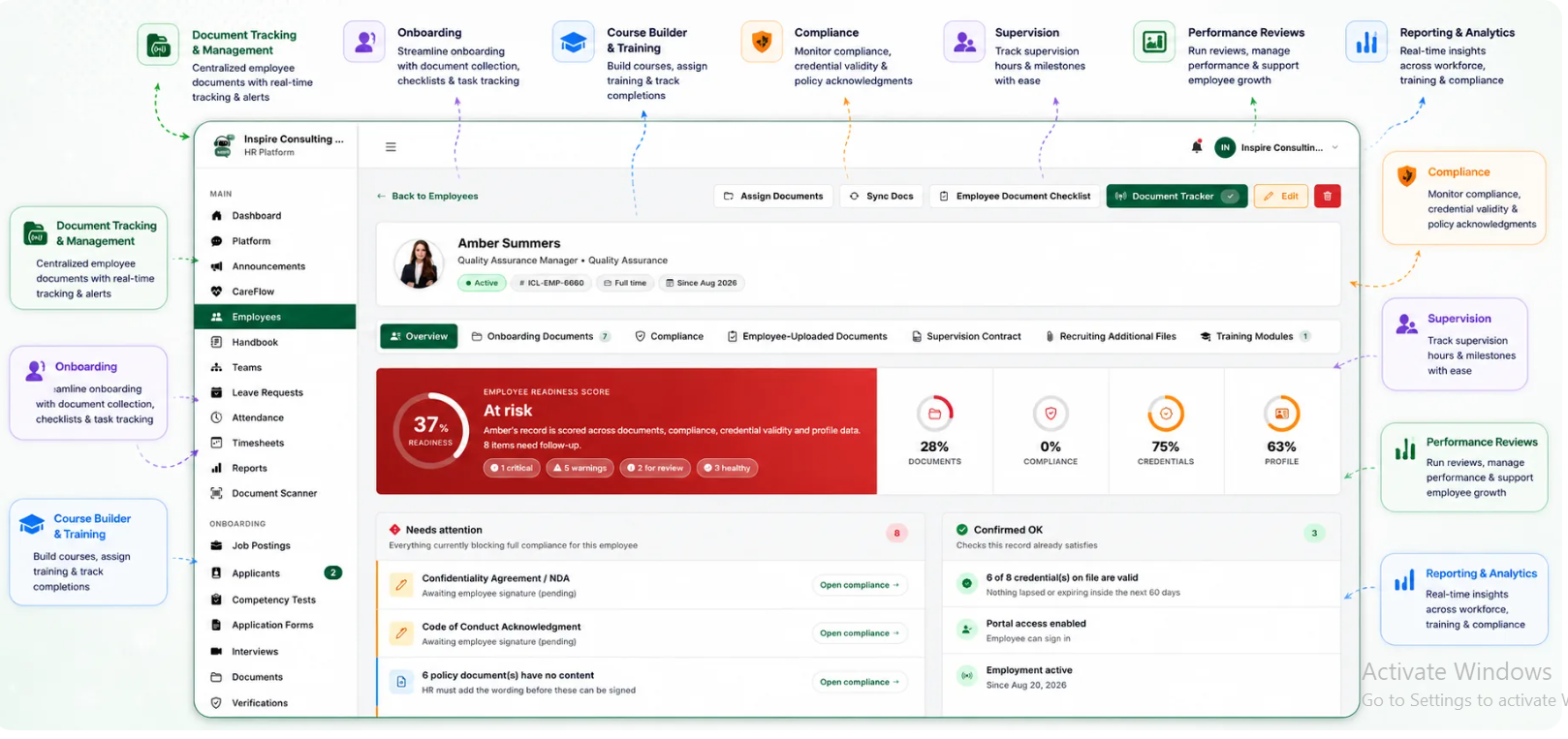
BUAMS HR helps behavioral health organizations bring employee documentation, onboarding records, and compliance-related workflows into one place. For providers that need better oversight of workforce readiness, that means less dependence on scattered tracking methods and more confidence that important records are stored where teams can actually use them.
With BUAMS HR, agencies can maintain organized digital employee files, standardize documentation expectations across roles, and support review-ready records for HR and operational leaders. That creates a stronger foundation for competency tracking because the supporting documents, status checks, and employee context are easier to manage together rather than through disconnected systems.
Final Thoughts
Clinical competency tracking software is really about operational clarity. Behavioral health providers need a dependable way to show that staff are prepared, supported, and documented according to role expectations. When competency data is organized, visible, and connected to the broader employee record, agencies can reduce avoidable gaps and spend less time scrambling for proof. For growing organizations, that kind of structure supports safer operations and a more sustainable HR function.