Behavioral health organizations that provide care in homes, schools, community settings, and satellite programs often rely on clinicians, case managers, peer staff, and supervisors who regularly drive as part of their work. That creates an HR problem that is easy to underestimate: driving eligibility is not a one-time hiring document. It is an ongoing workforce requirement tied to insurance, safety, policy compliance, and service continuity. Driver eligibility tracking software gives HR teams a practical way to keep license status, motor vehicle record reviews, insurance rules, acknowledgments, and role-based driving approvals organized in one workflow.
Without a structured system, behavioral health providers end up managing driver documentation across email threads, spreadsheets, shared folders, and supervisor memory. That makes it harder to know who is cleared to drive, what has expired, which follow-up is still pending, and whether a staff member should be assigned to field-based work at all. For agencies balancing mobile services and compliance expectations, that gap can create real operational risk.
Key Takeaways
What Is Driver Eligibility Tracking Software?
Driver eligibility tracking software is a structured HR process for documenting whether an employee is approved to drive for work, what evidence supports that approval, and when that approval needs review. In behavioral health settings, that can include a valid driver license, motor vehicle record review, proof of personal insurance when required by policy, signed driving acknowledgments, annual attestations, incident follow-up, and supervisor or HR approval for community-based assignments.
The goal is not just to store documents. It is to make driving status visible and defensible so HR, operations, and supervisors can confirm that field staff meet agency rules before they are assigned to clients, outreach routes, or transportation-related responsibilities.
Why It Matters for Behavioral Health Providers
Driving readiness affects more than transportation. Many behavioral health programs depend on staff mobility to deliver care, complete home visits, coordinate discharge planning, support crisis response, or cover multiple sites. If an employee loses eligibility to drive and that change is not caught quickly, the organization may expose itself to safety issues, insurance conflicts, missed visits, scheduling disruption, or documentation gaps during review.
This challenge becomes more complex when providers operate across different programs and job types. A clinician making community visits may need different review steps than an office-based supervisor. A case manager using a personal vehicle may require different documentation than staff driving agency vehicles. HR needs a way to apply consistent rules while still accounting for role-specific differences.
What to Track in a Strong Driver Eligibility Workflow
Behavioral health agencies usually get the best results when driver eligibility is treated as a recurring compliance workflow instead of a one-time onboarding task. A reliable process should make it easy to see who is approved, what is missing, what is expiring soon, and what requires escalation before staff can keep driving for work.
Common Breakdowns Without a System
When driver eligibility is managed informally, problems tend to show up at the worst possible moment. A supervisor may discover the issue after schedules are built. HR may know a document is missing but not know whether the employee is actively assigned to community work. A compliance team may have pieces of the record but not the full timeline showing when decisions were made.
Agencies also run into version-control problems. One spreadsheet may show a license as current while the employee file still holds an expired copy. A manager may assume that onboarding clearance covered annual review. A document request may be sent, but no one can confirm whether the updated file was received, reviewed, and approved. These are preventable issues, but only when the workflow is visible.
Best Practices for Behavioral Health HR Teams
A practical driver eligibility process should be simple enough for supervisors to follow and strong enough for HR to defend during internal review. The strongest approach is usually to build the workflow around defined checkpoints instead of scattered reminders.
How BUAMS HR Helps
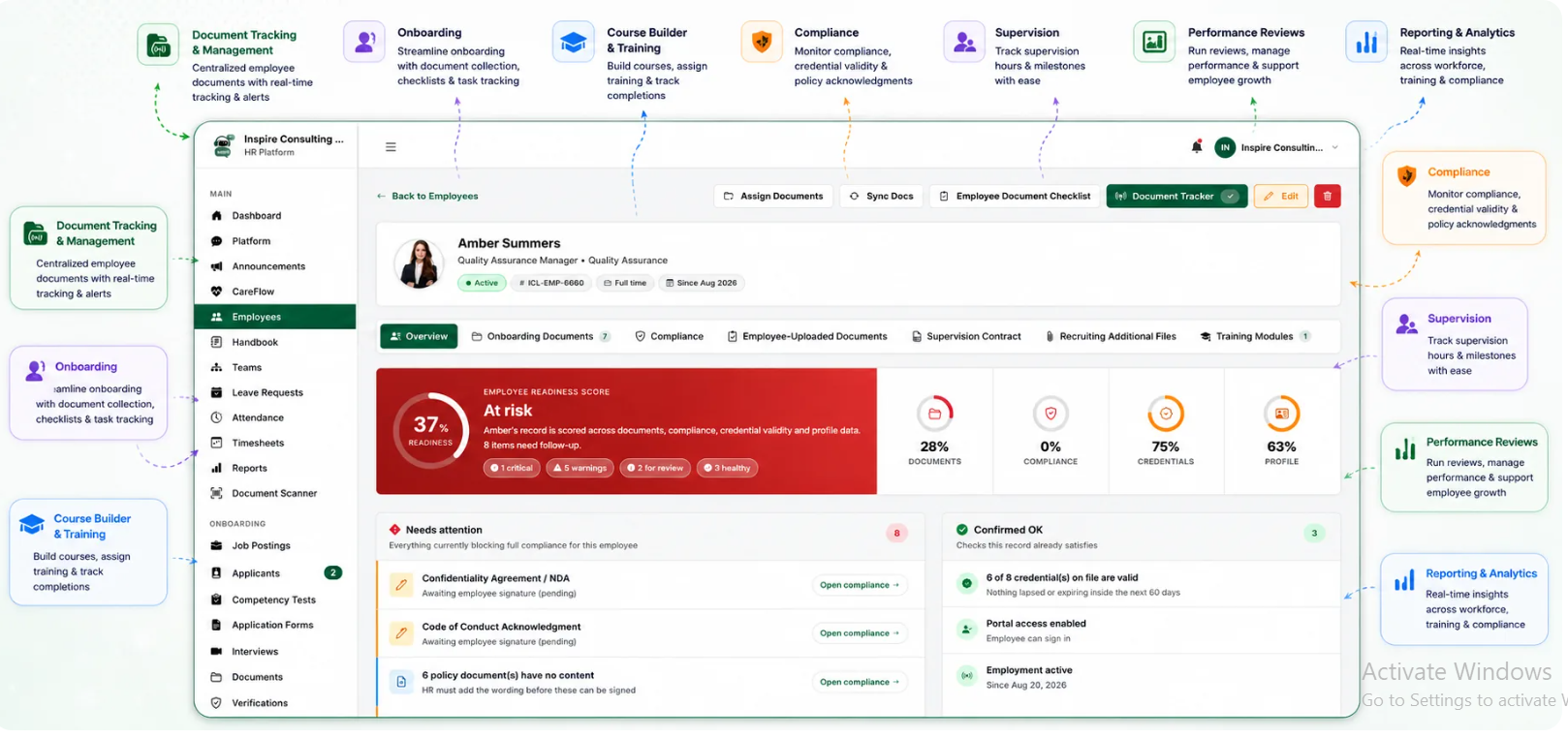
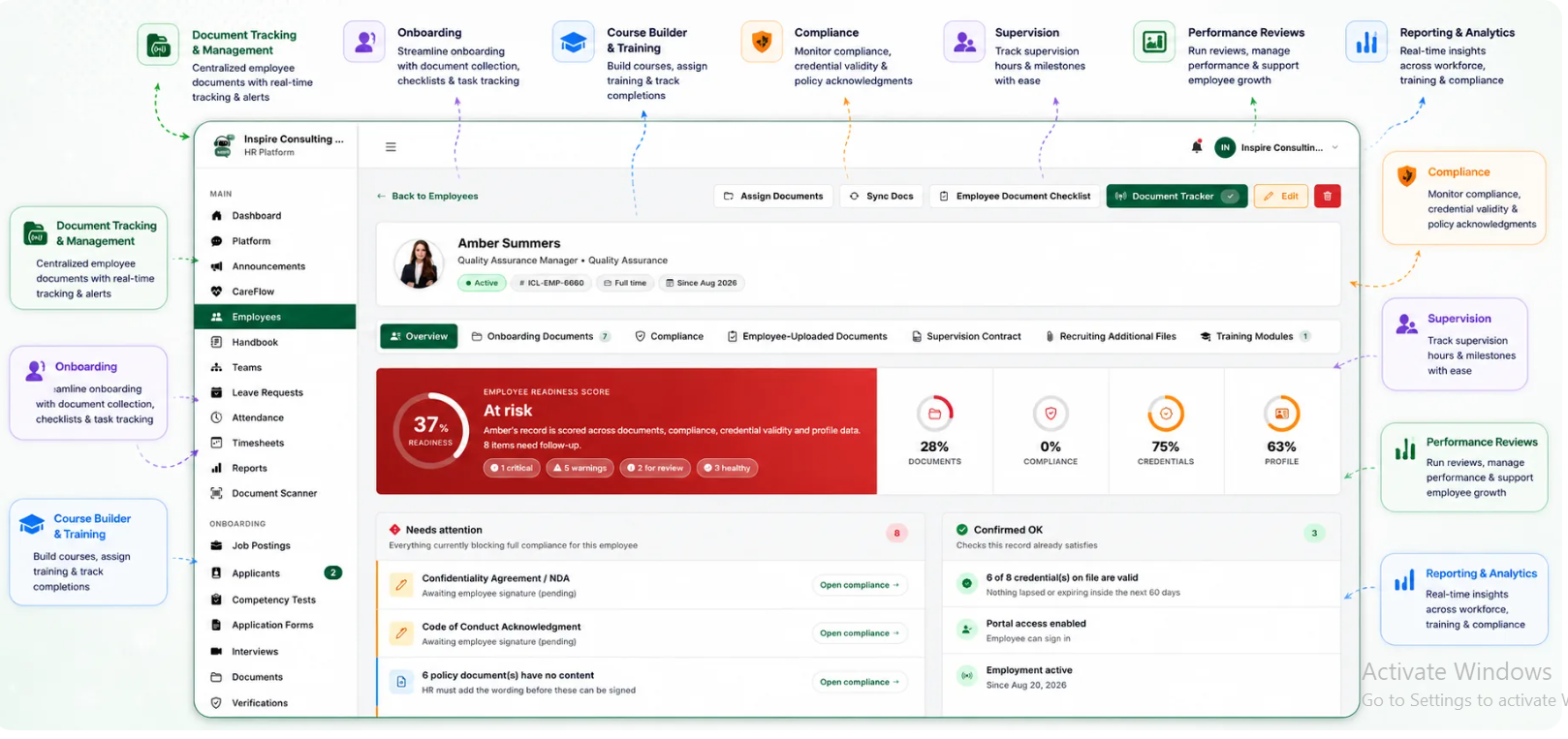
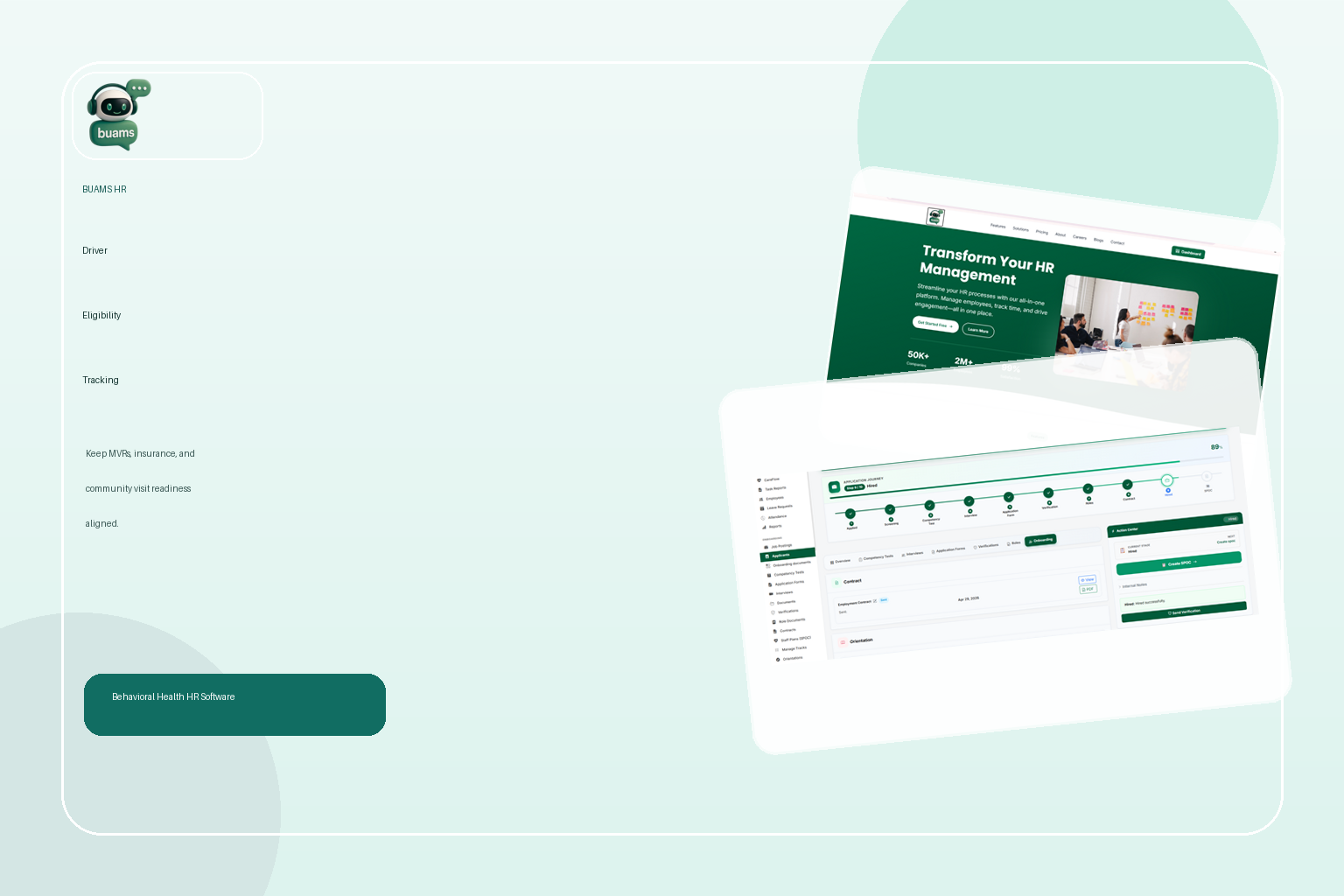
BUAMS HR helps behavioral health providers manage driver eligibility as part of a broader employee compliance workflow. Instead of treating driving documentation as a disconnected folder, agencies can keep license files, acknowledgments, review dates, document requests, and approval steps connected to the employee record. That gives HR a clearer picture of field readiness and makes it easier to respond when something changes.
For teams managing mobile staff across multiple programs, BUAMS HR supports consistent tracking without adding more manual chasing. HR can monitor expiring requirements, organize supporting documents, standardize review steps, and preserve a reliable history of what was collected and approved. Supervisors get better visibility into staff readiness, while compliance teams get cleaner documentation for internal checks and external review.
Final Thoughts
Driver eligibility tracking software is not just about document storage. For behavioral health providers, it is a way to protect community-based operations, reduce avoidable scheduling disruption, and make workforce decisions with better compliance visibility. When driving approval is handled through a repeatable HR workflow, organizations are better positioned to keep staff assignments safe, documented, and operationally realistic.
BUAMS HR gives behavioral health agencies a better way to connect employee files, recurring compliance requirements, and approval history in one place, so driver readiness stays current without turning into another spreadsheet problem.