As behavioral health organizations grow, job titles and pay structures often multiply faster than the HR systems meant to support them. A provider may add outpatient therapists, mobile crisis staff, peer support roles, supervisors, intake coordinators, and administrative employees across several sites. If the underlying job codes are inconsistent, payroll, onboarding, training assignments, approvals, and reporting start to drift out of alignment.
Job code management software gives HR teams a cleaner way to organize workforce roles at the system level. Instead of treating job codes as a back-office payroll detail, behavioral health providers can use them as a control point for role eligibility, compensation rules, onboarding steps, required documents, and compliance visibility.
Key Takeaways
What Is Job Code Management Software?
Job code management software is a system for creating, maintaining, approving, and applying standardized role codes across the workforce. In practical terms, it helps an organization define what a role is called, how it should be classified, which workflow rules apply to it, and what documentation or approvals should follow when an employee is assigned to that role.
For behavioral health providers, that matters because workforce structure is rarely simple. The same organization may have licensed and unlicensed roles, direct-care and administrative positions, program-specific responsibilities, grant-funded staff, per diem support, supervisors, and employees who split work across sites. If job codes are created informally or updated inconsistently, downstream systems can quickly become unreliable.
Why Job Code Structure Matters in Behavioral Health
Behavioral health organizations depend on accurate role data to make good operational decisions. HR needs to know which requirements belong to which positions. Supervisors need clarity about who can be assigned where. Finance teams need cleaner information for labor planning and payroll review. Compliance teams need confidence that training, documents, credentials, and supervision workflows are tied to the right workforce categories.
Weak job code governance creates hidden friction. A clinician might be placed into a general code that does not trigger the right checklist. A support employee may inherit the wrong document request because a legacy code was reused. A supervisor may approve a position change without realizing that the new role should have different readiness requirements. None of those problems look dramatic in isolation, but together they create rework, delays, and audit risk.
Job code management software helps reduce that drift. It gives the organization a shared structure for how roles are named, how they are grouped, and how important HR rules are applied when someone is hired, transferred, promoted, or reassigned.
Common Problems Caused by Poor Job Code Control
Duplicate or overlapping role definitions
When different teams create their own versions of similar job codes, reporting becomes muddy and workforce rules become harder to enforce. Two codes may describe nearly the same role but trigger different processes, which leads to inconsistent treatment across programs.
Broken workflow mapping
Many organizations rely on role-based workflows for onboarding, approvals, file collection, training, or supervisor review. If a job code is outdated or assigned incorrectly, the employee may move through the wrong workflow from day one.
Compensation and classification confusion
Job codes often influence how roles are grouped for internal planning, pay review, and organizational oversight. Poor maintenance makes it harder to compare positions accurately, especially when a provider is scaling quickly or adjusting services across multiple sites.
Compliance blind spots after role changes
Behavioral health providers regularly manage transfers, promotions, cross-training, and temporary assignments. If a role change updates a title but not the underlying job code structure, the organization can miss important follow-up tasks tied to the employee's new responsibilities.
What to Look for in Job Code Management Software
The best job code management software does more than store a list of positions. It helps HR teams apply structure, governance, and accountability to workforce data that drives daily operations.
Best Practices for Behavioral Health HR Teams
Create one owner for role structure
Job code governance often breaks down when no single team is responsible for maintaining the model. HR should have clear ownership, even if finance, operations, and compliance contribute to review. One accountable owner reduces the odds of duplicate codes and conflicting updates.
Define when a new code is actually necessary
Not every variation in schedule, funding source, or location needs a brand-new role code. Teams should document the difference between a meaningful role distinction and a minor local variation. That discipline keeps the structure usable as the organization grows.
Review workflow impact before approving changes
Any new or updated job code can affect much more than reporting. It may change document collection, training requirements, approvals, access, or supervision expectations. Reviewing those dependencies up front helps organizations avoid cleanup work later.
Audit active codes on a regular cadence
Behavioral health providers evolve quickly. Programs expand, service lines shift, and temporary workarounds become permanent unless someone checks them. A routine review of active job codes helps teams retire clutter, consolidate duplicates, and keep role structures aligned with current operations.
How BUAMS HR Helps
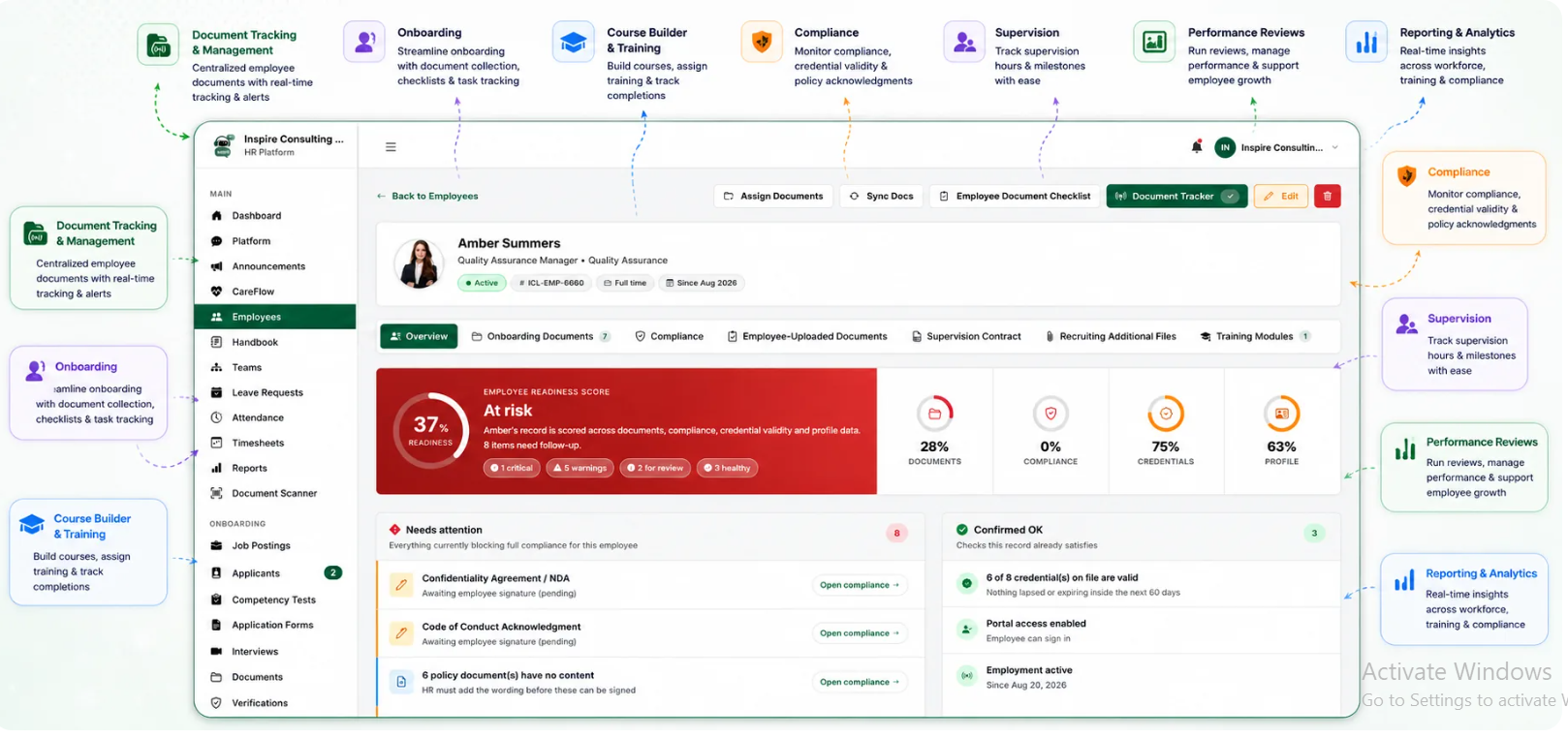
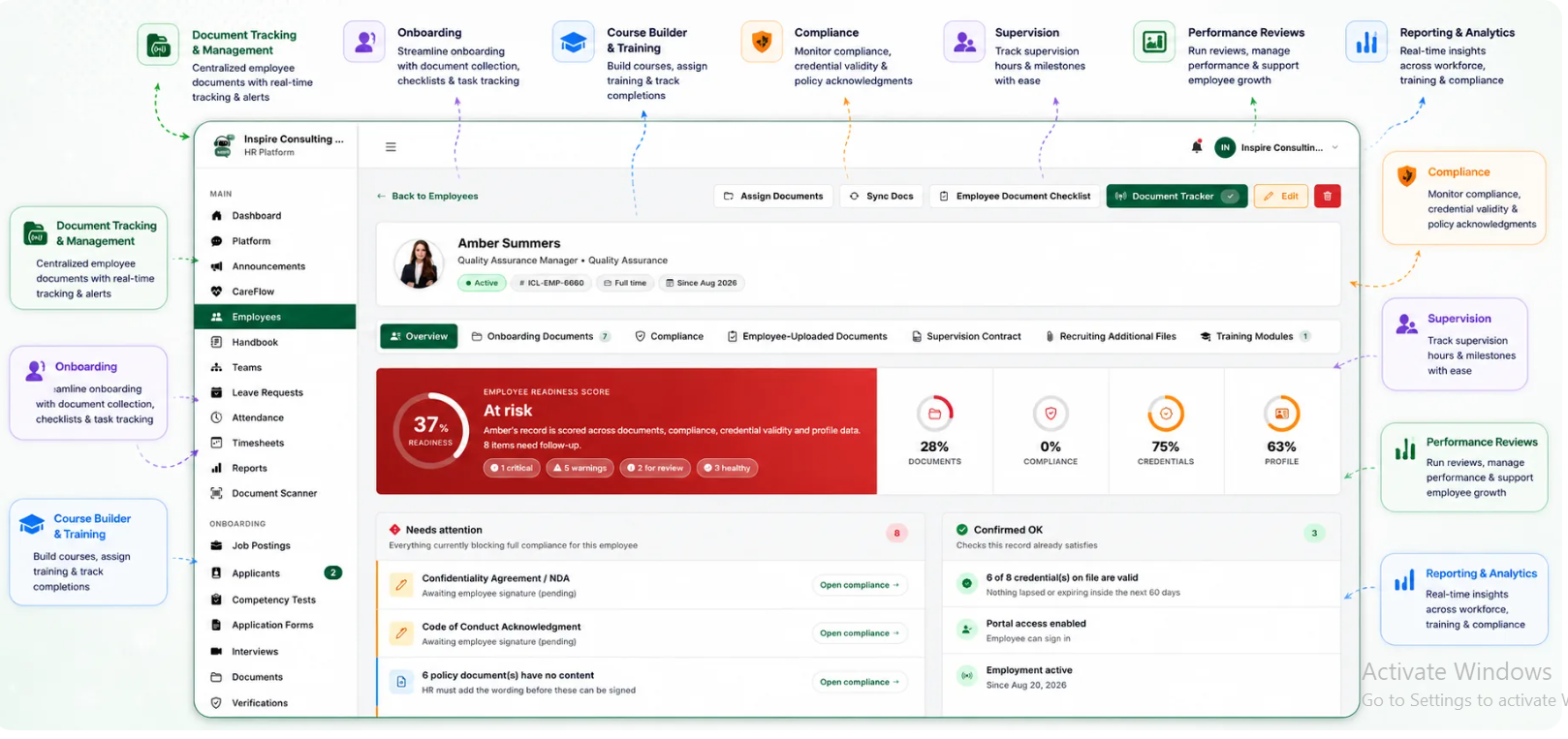
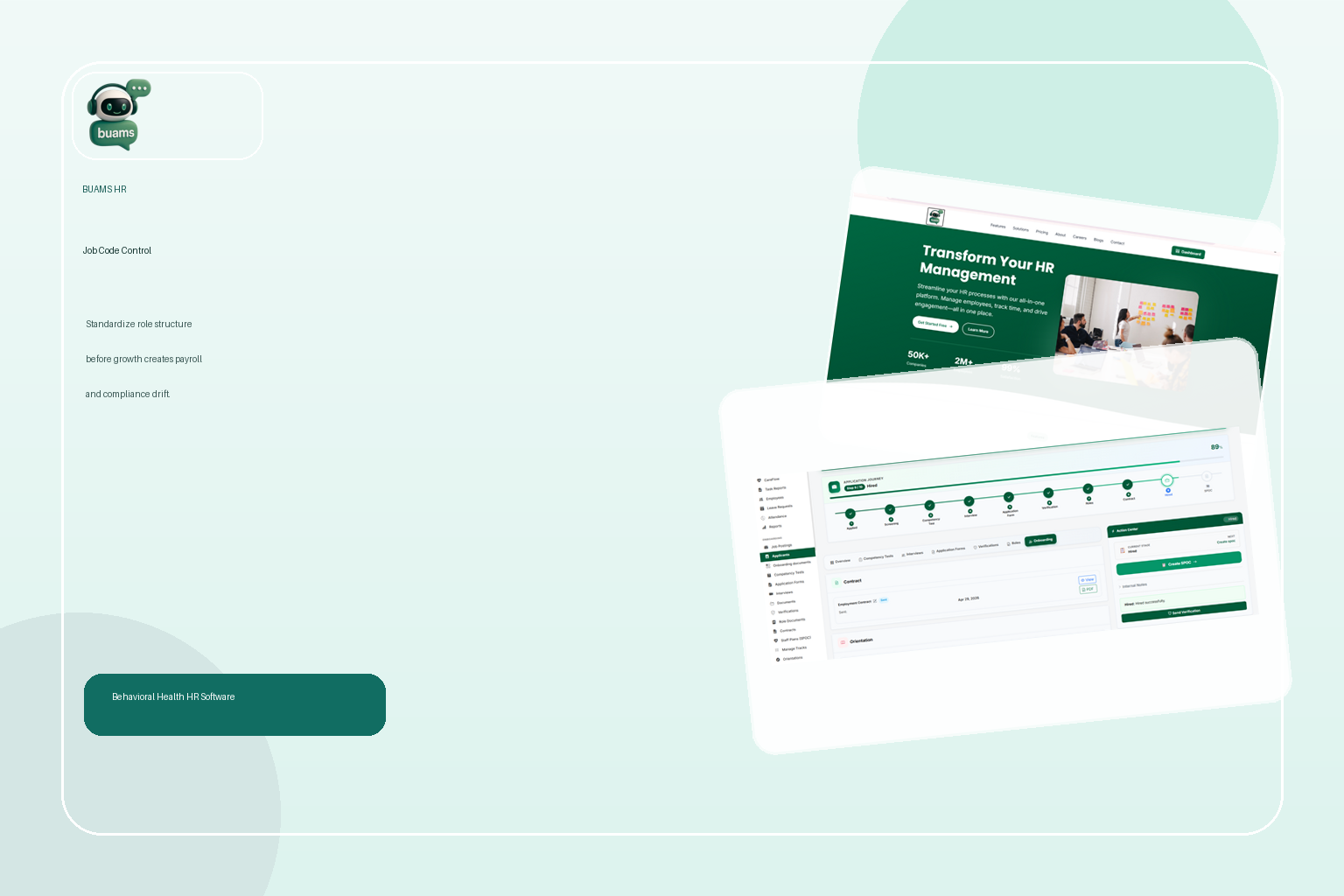
BUAMS HR can support cleaner job code management by giving behavioral health organizations a centralized place to maintain employee records, workforce structure, and HR workflow context. When role information is organized consistently, it becomes easier to connect each employee to the right documents, approvals, and readiness steps.
That is especially useful for providers managing multiple sites or programs. A centralized platform helps HR teams see how role changes affect staffing processes across the organization instead of fixing issues one record at a time. It also makes it easier to keep employee files, workforce assignments, and operational reporting aligned when a position is updated.
BUAMS HR helps reduce the manual cleanup that often follows inconsistent role setup. With cleaner structure around workforce data, teams can make faster decisions, improve process consistency, and respond more confidently when leadership needs answers about staffing, readiness, or role-based requirements.
Final Thoughts
Job code management software may sound like a small administrative detail, but in behavioral health organizations it has outsized impact. Role structure affects how employees move through hiring, onboarding, training, documentation, and day-to-day workforce oversight. When that structure is messy, the problems spread quietly through HR operations.
For providers that want stronger control without adding more spreadsheets and manual correction, a better job code process is worth prioritizing. The more clearly an organization defines and governs its roles, the easier it becomes to scale workforce operations without creating payroll confusion, workflow drift, or compliance gaps.