Clinical ladder tracking software helps behavioral health providers create a more structured path for employee growth without losing sight of compliance, supervision, or workforce readiness. As organizations expand programs and promote clinicians into more advanced roles, HR teams need a dependable way to connect advancement criteria, role-based competencies, training milestones, and supervisor approvals in one workflow. Without that structure, promotions can become inconsistent, documentation can get scattered, and leaders may struggle to prove that a staff member was truly ready for the next level.
Key Takeaways
What is clinical ladder tracking software?
Clinical ladder tracking software is a structured system for managing career progression across behavioral health roles that require documented competencies, approvals, and oversight. It gives HR and leadership teams one place to define advancement stages, assign role expectations, store supporting evidence, and monitor whether each employee has completed the steps needed for the next level.
In behavioral health settings, advancement is rarely just a title change. A move from one role level to another may depend on licensure status, orientation completion, training history, supervision experience, performance documentation, and site-specific readiness. When those details live in separate spreadsheets or inboxes, the organization can lose consistency. A dedicated workflow makes advancement decisions easier to coordinate and easier to defend.
Why it matters for behavioral health providers
Behavioral health organizations often rely on a mix of clinicians, supervisors, support staff, and program leaders whose responsibilities evolve over time. As employees grow, providers need a practical way to manage promotions that affect caseload expectations, documentation standards, supervision requirements, and workforce planning. If there is no consistent process, organizations may unintentionally create inequity, readiness gaps, or compliance blind spots.
A more reliable tracking process improves fairness, strengthens readiness, and helps organizations build internal mobility without increasing administrative confusion.
What to look for in clinical ladder tracking software
A useful system should do more than record a promotion date. It should help organizations define readiness, collect evidence, and keep every required step visible before a role change becomes official.
Role-based advancement criteria
The workflow should clearly show what is required at each level. That may include years of experience, training completion, documentation quality, clinical competencies, supervision hours, or manager review. When advancement criteria are explicit, employees and supervisors can prepare earlier and avoid last-minute confusion.
Competency and training alignment
Promotion readiness is stronger when learning milestones connect directly to role expectations. The right tracking software helps organizations link training requirements, required certifications, or competency assessments to each stage of the clinical ladder so advancement is based on real evidence rather than memory.
Supervisor review and approval visibility
Behavioral health providers need a documented way to capture supervisor input. A good system shows who must review readiness, what still needs attention, and whether the employee is waiting on coaching, documentation, or final approval. That visibility reduces bottlenecks and supports more consistent decisions.
Documented evidence inside the employee record
Advancement decisions often rely on evaluation forms, training proof, supervision notes, licensure records, and other supporting documents. Those records should be tied to the employee file so HR does not have to reconstruct the decision months later during an audit, internal review, or leadership transition.
Pipeline visibility for future workforce planning
Clinical ladder tracking becomes more valuable when it also helps leadership see who is nearly ready for the next role, where skill gaps are concentrated, and which programs may need extra development support. That kind of visibility helps providers plan growth without guessing about internal readiness.
How BUAMS HR helps
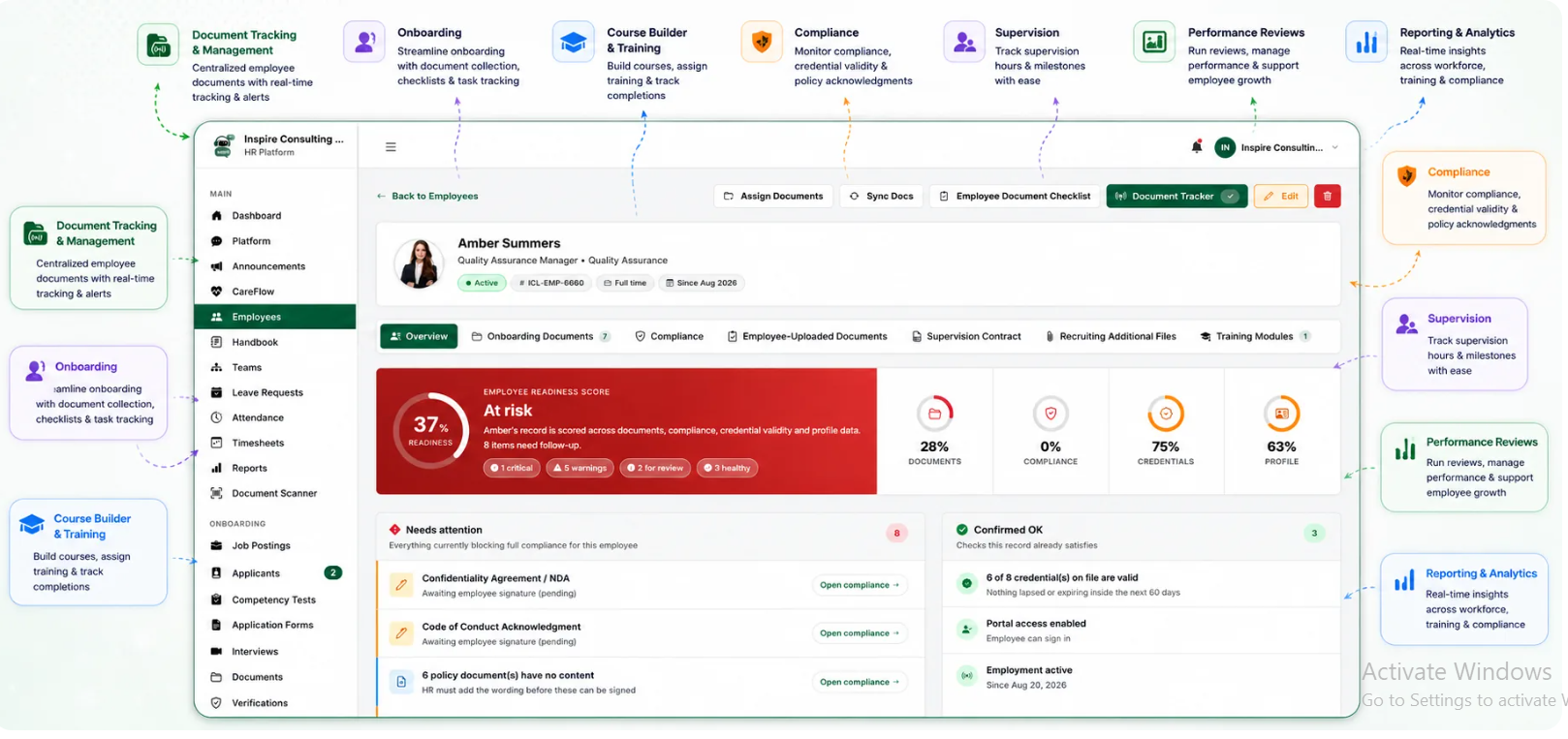
BUAMS HR helps behavioral health providers organize the employee data and documentation that support advancement readiness across the workforce. Instead of managing promotion-related evidence through scattered files and ad hoc follow-up, teams can keep records, documents, and required actions tied to the employee lifecycle in a more structured workflow.
For behavioral health organizations trying to grow from within, that structure matters. It helps create a more transparent advancement process, makes development planning easier, and keeps workforce readiness connected to the documentation leaders actually need.
Final Thoughts
Clinical ladder tracking software gives behavioral health providers a more dependable way to connect advancement paths, competencies, and supervisor readiness in one system. The result is not just cleaner HR administration. It is a stronger promotion process, better visibility into internal talent, and less risk that role changes will move faster than the supporting evidence behind them. BUAMS HR supports that approach by helping organizations keep employee records, training milestones, and advancement-related documentation organized and easier to act on.