Behavioral health organizations often manage more than licensure and onboarding. They also need a reliable way to document which clinicians are approved to provide specific services, when those approvals expire, and what supporting files sit behind each decision. A clinical privilege tracking software workflow helps HR and compliance teams keep that information organized so supervisors, credentialing staff, and operations leaders are not chasing spreadsheets before audits, payer reviews, or site inspections.
Key Takeaways
What Is Clinical Privilege Tracking Software?
Clinical privilege tracking software is a structured system for documenting which services a clinician is approved to perform, what evidence supports that approval, who reviewed it, and when the decision needs reevaluation. In behavioral health, that can include psychotherapy modalities, psychiatric evaluations, medication-related responsibilities, crisis response duties, telehealth eligibility, or specialty program assignments that depend on credentials, training, and internal review.
Unlike a basic employee file, a privilege tracking process focuses on role-specific authority. A licensed clinician may be active in the organization, but still need separate approval for a new service line, location, level of care, or supervision arrangement. That distinction matters because compliance problems often happen when employment records are current but service authorization details are scattered across email, committee notes, and disconnected folders.
Why It Matters for Behavioral Health Providers
Behavioral health providers operate in environments where clinical oversight, documentation standards, payer expectations, and internal policies all intersect. If privilege status is unclear, organizations can accidentally schedule staff into duties they are not fully cleared to perform, renew approvals late, or struggle to prove that a change was reviewed appropriately.
This becomes even more important for growing agencies with multiple sites, telehealth programs, intensive outpatient services, community-based work, or a mix of licensed and provisionally licensed clinicians. Each program may carry different requirements. A clinical privilege tracking software approach gives HR, compliance, and leadership a shared source of truth instead of relying on tribal knowledge.
What Behavioral Health Teams Need to Track
A strong process should capture the approval itself and the context around it. That usually includes the privilege name, service scope, effective date, renewal date, approving authority, supporting documents, and any restrictions or supervision conditions tied to the approval.
When those details live together, teams can answer practical questions faster. They can confirm whether a clinician is approved for a specific program, show why a decision was made, and identify which approvals need attention before coverage plans are finalized.
Common Failure Points Without a Centralized System
Many providers start with spreadsheets, shared drives, and separate email approvals. That may work briefly, but it becomes fragile as the workforce grows. Version control problems appear quickly. Dates are missed. Review notes get buried. Staff transfer between programs before supporting documentation is updated. In some cases, supervisors assume approval is complete because a clinician is licensed, even though a service-specific review was never finalized.
Another common problem is fragmented ownership. HR may hold employment documents, compliance may monitor licenses, and clinical leadership may manage privilege decisions in a separate format. Without a coordinated workflow, no single team can easily see the full picture. That creates risk during audits and slows operational decisions when teams need fast answers.
What to Look for in Clinical Privilege Tracking Software
The best clinical privilege tracking software for behavioral health providers should support more than a static checklist. It should help teams maintain defensible records and act before deadlines become problems.
Centralized employee records
Privilege details should connect to each employee profile so HR and compliance staff can review supporting files, training records, and status changes in one place.
Date-based alerts and review visibility
Organizations need reminders for upcoming renewals, provisional review dates, missing attachments, and changes that affect service eligibility. Dashboards and filters make those issues visible before they disrupt scheduling or accreditation readiness.
Clear approval history
Every privilege decision should show what was approved, by whom, under what conditions, and when it changed. That history is especially useful when programs expand, supervisors change, or questions arise months later.
Support for restrictions and exceptions
Not every approval is all-or-nothing. Some clinicians may be cleared only under supervision, only at certain sites, or only after a final document is uploaded. The system should make those nuances easy to document and review.
How BUAMS HR Helps
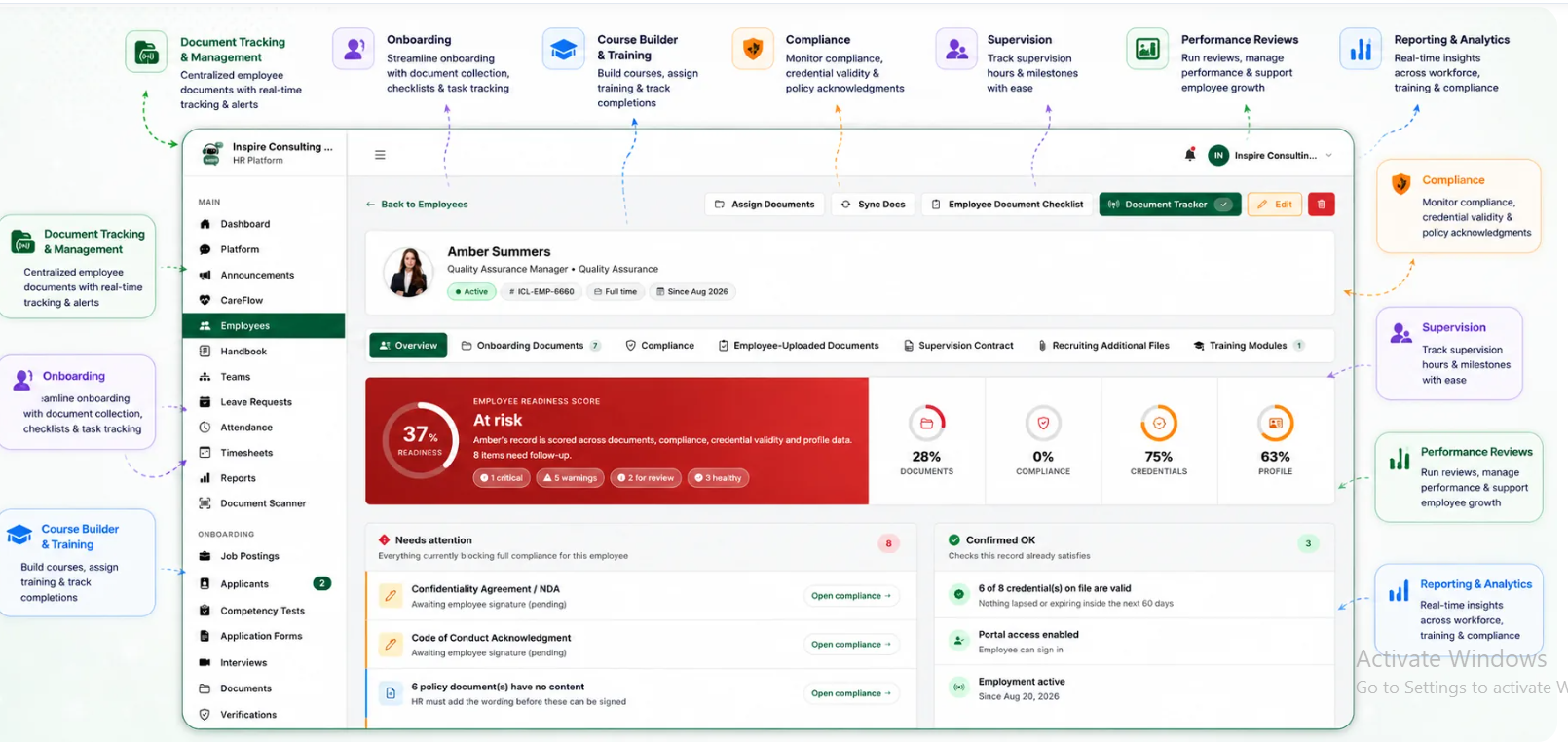
BUAMS HR helps behavioral health providers organize the workforce data that supports safer privilege decisions. Teams can keep employee files, training records, compliance documentation, and status changes in one connected system instead of splitting them across separate tools. That foundation makes it easier to review whether required records are complete before a privilege approval is finalized or renewed.
With BUAMS HR, organizations can standardize documentation workflows, reduce manual follow-up, and create more consistent oversight across programs and sites. HR leaders gain better visibility into missing records, supervisors have clearer context for employee readiness, and compliance teams can respond faster when they need to show supporting evidence behind workforce decisions.
Final Thoughts
Clinical privilege decisions affect quality, compliance, and day-to-day staffing in behavioral health organizations. When those decisions are tracked informally, small gaps can turn into service delays, audit findings, or unnecessary confusion across teams. A practical clinical privilege tracking software process gives providers a cleaner way to connect approval dates, scope changes, and workforce records.
For behavioral health agencies that want stronger documentation control without adding more administrative chaos, the right system is one that keeps privilege information aligned with the rest of the employee lifecycle. That is how teams stay ready for growth, oversight, and the everyday reality of clinical operations.