How to Choose Behavioral Health HR Software: 10 Questions to Ask
Choosing human resources software for a behavioral health organization requires more consideration than selecting
a standard HR platform.
Mental health clinics, outpatient programs, residential treatment centers, and group practices manage employees with different roles, credentials, training requirements, and supervision responsibilities. Their HR teams may also need to maintain personnel documents, monitor license expiration dates, coordinate schedules, and prepare records for internal reviews or external audits.
Generic HR software can support basic employee management, but some behavioral health workflows require more specialized features.
The right platform should help an organization manage employee information, organize documentation, monitor workforce requirements, and reduce the administrative effort involved in maintaining separate systems.
Before selecting a solution, clinic owners and HR managers should evaluate the following 10 areas.
1. Is the Software Designed for Behavioral Health Organizations?
Start by determining whether the platform understands the workforce structure of a behavioral health organization.
A typical clinic may employ licensed therapists, counselors, psychiatrists, clinical supervisors, case managers, administrative employees, and associate-level clinicians working toward professional licensure.
These employees may have different documentation, credentialing, training, and supervision requirements.
A generic HR platform might manage employee profiles and payroll effectively but may not provide dedicated workflows for clinical supervision or professional license monitoring.
When evaluating a platform, ask:
- Can employee records accommodate different clinical and administrative roles?
- Can requirements be assigned according to an employee's role?
- Can the organization track professional credentials and expiration dates?
- Can clinical supervision records be maintained?
- Can the platform support multiple locations and teams?
A platform built around behavioral health operations may require less adaptation than a generic system.
For an overview of a purpose-built solution, explore BUAMS HR's behavioral health HR management platform.
2. How Does Credential and License Tracking Work?
Credential tracking is an important consideration for behavioral health organizations.
Depending on the employee's role and applicable requirements, a clinic may need to maintain professional licenses, certifications, CPR cards, background checks, and other supporting documents.
Managing these records through spreadsheets can become difficult as the workforce grows. HR staff must keep information current, check expiration dates, follow up with employees, and identify documents that require renewal.
Ask potential software providers:
- Can different document types have their own expiration dates?
- Can administrators see which documents are valid, expiring, or expired?
- Are reminders available before expiration?
- Can missing documents be identified quickly?
- Can the organization retrieve records when they are needed?
A useful system should make document status visible instead of requiring administrators to inspect every employee file manually.
Where BUAMS HR fits: BUAMS HR provides document tracking and expiration monitoring designed for behavioral health personnel records. Organizations can explore the platform's features on the BUAMS HR website.
3. Can It Track Clinical Supervision Hours?
Clinical supervision is another area where behavioral health HR needs can differ from those of other industries.
Depending on the profession, jurisdiction, and licensing pathway, associates or pre-licensed clinicians may need documented supervision as they work toward licensure.
The organization may need to record supervision sessions, track accumulated hours, maintain supervisor information, and retain appropriate signatures.
Before purchasing software, ask:
- Can supervision sessions be recorded?
- Can hours be associated with the relevant clinician and supervisor?
- Can progress toward applicable requirements be reviewed?
- Can records be exported when documentation is needed?
- Can the organization maintain a clear record of completed supervision activities?
The software should support the organization's supervision process without replacing professional judgment or the rules established by the relevant licensing board.
For clinics managing several associates, centralized supervision records can make it easier to review progress and identify missing documentation.
4. Does Employee Onboarding Include Clinical Requirements?
Employee onboarding often involves more than collecting basic employment information.
A behavioral health organization may need to collect credentials, obtain signed acknowledgements, assign training, document policies, and establish supervision relationships before or during an employee's start.
When each task is managed separately, HR staff may spend time chasing missing information and checking whether every requirement has been completed.
Look for onboarding software that supports:
- Digital document collection
- Role-based onboarding checklists
- Credential collection and review
- Policy acknowledgements
- Required training assignments
- Visibility into incomplete onboarding tasks
A structured onboarding process can help HR teams identify outstanding requirements and maintain a more consistent experience for new employees.
It can also make onboarding easier to manage when the organization hires multiple clinicians or opens additional locations.
5. How Does the Platform Support HR Compliance?
Behavioral health organizations may need to maintain employee documentation related to privacy training, workplace policies, professional credentials, competency assessments, and other applicable requirements.
The exact requirements depend on the organization's services, workforce, location, contracts, and applicable regulations or accreditation standards.
The HR platform should help the organization maintain organized records and identify outstanding tasks.
Ask the provider:
- Can training completion be recorded?
- Can signed policy acknowledgements be stored?
- Can administrators identify overdue requirements?
- Can document changes and access be tracked where supported?
- Can relevant records be retrieved for review?
- Can access permissions be assigned according to job responsibilities?
Software can help organize compliance activities, but purchasing a platform does not automatically make an organization compliant. The organization must still establish appropriate policies, configure the system correctly, and follow applicable requirements.
6. Can It Manage Multiple Clinics and Locations?
Managing HR for one clinic is different from managing employees across several locations.
A growing organization may have different supervisors, schedules, staffing structures, and employee requirements at each site.
Without a centralized process, HR teams may maintain separate spreadsheets or document folders for individual locations. This can make it harder to obtain a consistent view of the overall workforce.
When evaluating software, ask whether it supports:
- Employee records organized by location
- Location-specific access permissions
- Centralized oversight for HR administrators
- Consistent onboarding and documentation processes
- Workforce reporting across multiple sites
- Scheduling and payroll workflows appropriate to the organization's structure
Multi-location capabilities are particularly important for organizations expanding through new clinics, treatment programs, or group practices.
Read more about multi-location HR management for behavioral health organizations.
7. Does It Connect Scheduling, Attendance, and Payroll?
Scheduling, attendance, and payroll often depend on overlapping employee information.
For example, an organization may need to account for employee shifts, approved leave, timesheets, overtime, and different compensation arrangements.
If these processes operate in disconnected systems, staff may need to enter the same information multiple times or reconcile differences before payroll is processed.
Evaluate whether the platform can support your actual workflow.
Questions to ask include:
- Can employee schedules be maintained centrally?
- Can attendance and timesheet information be reviewed?
- How are leave requests recorded?
- Can approved time information flow into payroll?
- Does the system support the employee and contractor arrangements used by the organization?
- Can administrators review payroll-related information before processing?
Do not assume every platform supports every payroll arrangement. Confirm the exact capabilities, integrations, and limitations during the product demonstration.
The goal is to reduce unnecessary administrative work while preserving appropriate review and approval steps.
8. Can HR Managers Generate Useful Workforce Reports?
As an organization grows, leadership needs more than individual employee records.
Managers may want to understand workforce size, credential status, training completion, turnover, payroll costs, and outstanding documentation.
If the information is stored across several systems, preparing reports can require manual data collection and spreadsheet work.
Look for reporting capabilities that help authorized users review:
- Employee counts by role or location
- Missing or expiring credentials
- Training completion status
- Clinical supervision records
- Employee turnover trends
- Payroll-related workforce information
- Outstanding documentation requirements
Reporting capabilities vary between platforms, so ask to see the actual reports available in the product rather than relying on general marketing claims.
For a deeper look at this topic, read the guide to behavioral health HR reporting and analytics.
9. How Does the Platform Protect Employee Information?
Behavioral health organizations maintain sensitive employee records, including employment documents, credentials, signed policies, and potentially other confidential information.
Before selecting HR software, evaluate its security controls and data-handling practices.
Questions to discuss with the provider include:
- What access controls are available?
- Can permissions be assigned by role?
- Are relevant access and document activities logged?
- How is information protected during transmission and storage?
- What backup and recovery arrangements are available?
- What retention and deletion controls can the organization configure?
- What security documentation can the provider supply?
Organizations should also review how the platform handles applicable privacy obligations and whether its configuration supports their internal policies.
Do not rely solely on a product's marketing statement that it is secure or compliant. Request supporting documentation and assess the platform against your organization's requirements.
10. What Is the Total Cost of Ownership?
Software pricing is important, but the subscription fee does not always represent the complete cost of adopting a new HR system.
Organizations should consider the time and resources required to implement, maintain, and use the platform.
Compare the following:
- Monthly or annual subscription fees
- Per-employee or per-user charges
- Setup or implementation fees
- Data import and migration costs
- Additional module charges
- Integration costs
- Staff training requirements
- Ongoing administrative effort
A lower-priced platform may not be the best value if it requires substantial manual work or additional software to manage important workflows.
Likewise, a more expensive solution may offer capabilities your organization does not need.
Create a list of essential requirements before comparing vendors. Then evaluate the cost of each platform against the workflows it can genuinely support.
How to Compare Behavioral Health HR Software
Use this checklist when reviewing potential platforms.
| Evaluation areaWhat to verify | |
| Behavioral health workflows | Support for relevant clinical and administrative roles |
| Credential tracking | Expiration dates, reminders, and document status |
| Clinical supervision | Session records, hour tracking, and reporting |
| Employee onboarding | Digital documents and role-based checklists |
| Compliance documentation | Training records, acknowledgements, and outstanding requirements |
| Multi-location management | Centralized oversight and location-based organization |
| Scheduling and payroll | Compatibility with the organization's actual processes |
| Reporting | Useful workforce and compliance reports |
| Security | Access permissions, logging, and data-handling practices |
| Cost | Subscription, setup, implementation, and ongoing expenses |
Ask each provider to demonstrate your most important workflows using realistic examples.
For instance, ask the vendor to show how an administrator would identify a clinician with an expiring credential, check an associate's supervision records, or determine which employees have not completed required training.
A practical demonstration will often reveal more than a feature list.
Why Behavioral Health Organizations Consider BUAMS HR
BUAMS HR is designed for behavioral health organizations that need to manage employee information and workforce processes in a more connected way.
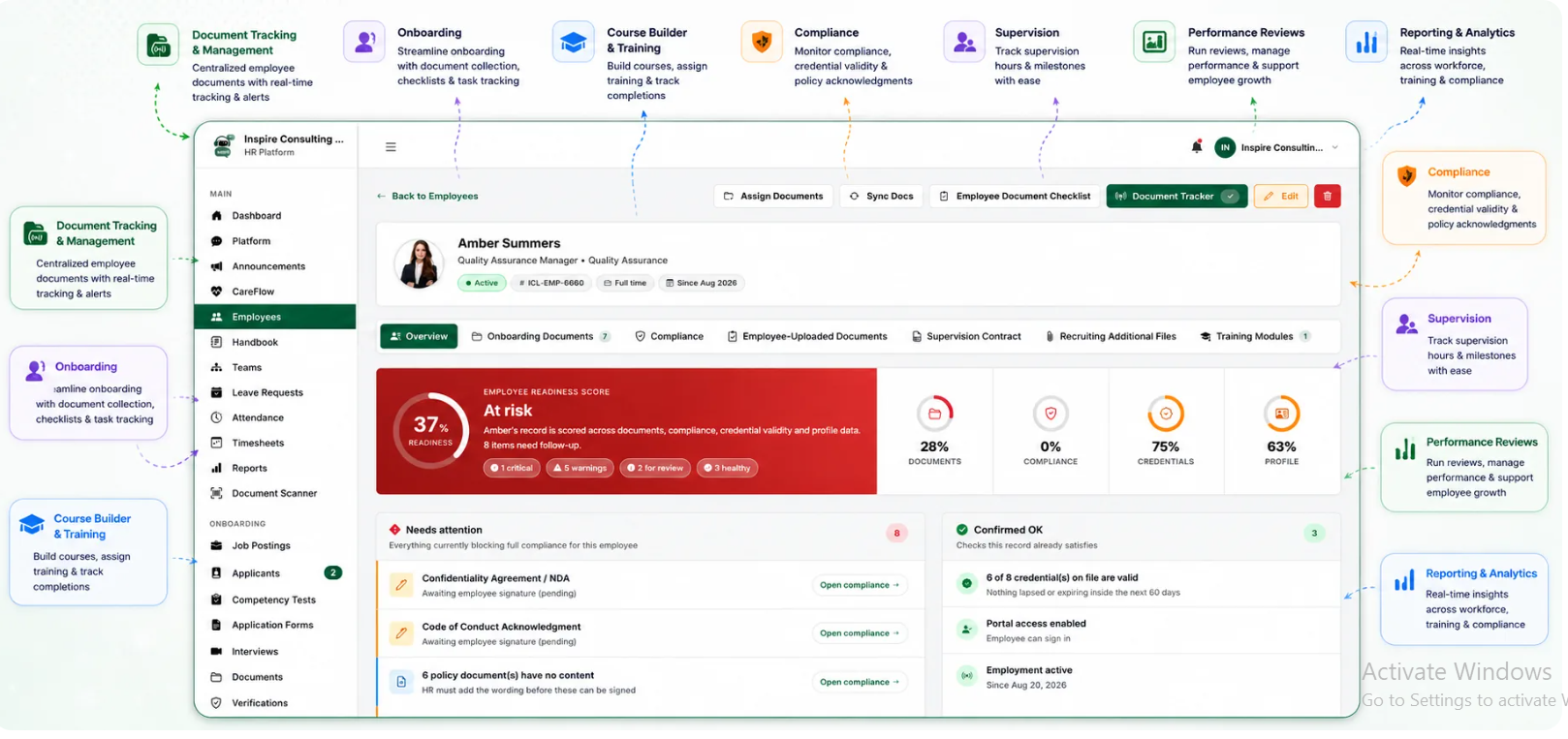
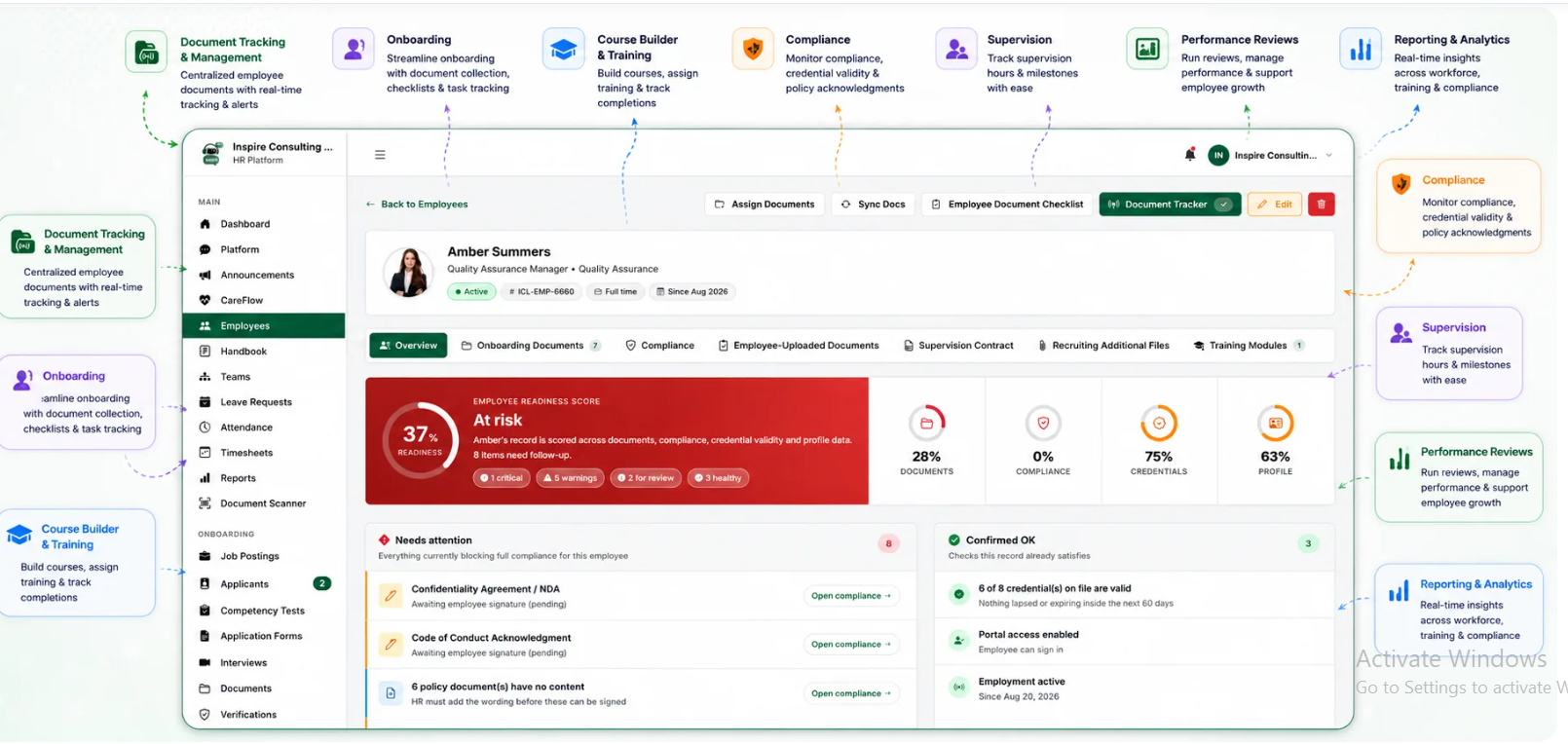
The platform brings together several HR functions, including:
- Employee management
- Employee onboarding
- Document and credential tracking
- Compliance monitoring
- Training management
- Clinical supervision tracking
- Performance reviews
- Scheduling and attendance
- Payroll-related workflows
- Workforce reporting
These capabilities are intended to help organizations manage related employee processes without relying entirely on separate spreadsheets, folders, and disconnected tools.
The right configuration depends on the organization's size, workforce structure, and operational requirements. During a product demonstration, administrators should confirm that the available workflows match their specific needs.
You can explore BUAMS HR to review the platform and determine whether it fits your organization's HR processes.
Frequently Asked Questions
What is behavioral health HR software?
Behavioral health HR software helps mental health clinics, treatment centers, and other behavioral health organizations manage employee information and workforce processes. Depending on the platform, it may include onboarding, credential tracking, training, compliance documentation, supervision tracking, scheduling, payroll, and reporting.
How is behavioral health HR software different from generic HR software?
Generic HR software typically focuses on common employee management tasks. Behavioral health HR software may also provide workflows for clinical supervision, professional credentials, role-specific training, and documentation requirements relevant to behavioral health organizations.
The available capabilities vary by provider, so organizations should compare features against their actual operational needs.
Can HR software track clinician license expiration dates?
Some HR platforms support credential and license tracking, including expiration dates and reminders. Before choosing a solution, confirm which document types can be tracked, how alerts work, and whether administrators can identify missing, expiring, or expired credentials.
Does behavioral health HR software replace compliance staff?
No. Software can help organize records, assign tasks, track deadlines, and improve visibility. HR professionals and organizational leaders remain responsible for interpreting applicable requirements, establishing policies, reviewing records, and addressing compliance issues.
What should a behavioral health clinic look for first?
Start with the workflows that create the greatest administrative burden or operational risk. For many organizations, these include credential tracking, employee onboarding, compliance documentation, clinical supervision, and reporting. Prioritize the requirements that matter most to your organization before comparing vendors.
Final Thoughts
Choosing behavioral health HR software is a decision about how your organization will manage its workforce as it grows.
The right platform should do more than store employee information. It should help connect onboarding, credentials, training, supervision, compliance documentation, scheduling, and reporting in a way that fits your organization's operations.
Before making a decision, identify your essential requirements, compare the total cost, and ask vendors to demonstrate real workflows.
BUAMS HR provides a centralized platform for behavioral health workforce management, with features designed around the needs of clinical teams and their administrators.
Ready to evaluate a more organized approach to behavioral health HR? Visit BUAMS HR to explore the platform and see whether it fits your organization's needs.