Behavioral health organizations depend on more than licensed staff to stay compliant and operational. They also need clear, documented supervision relationships that match each employee’s role, credentials, program setting, and level of independence. When supervisor assignments live across spreadsheets, email threads, org charts, and memory, small gaps can turn into larger risks. A clinician may report to one person on paper, receive case review from another person in practice, and be scheduled into a program where no current supervisory coverage is clearly documented.
Clinical supervisor assignment software gives behavioral health providers a more reliable way to manage those relationships. Instead of treating supervision as a static org chart field, teams can track who is assigned to oversee whom, where that assignment applies, when it changed, and whether the supervisor meets the requirements for that responsibility. That matters for organizations trying to protect documentation quality, continuity of care, staff readiness, and regulatory confidence at the same time.
Key Takeaways
What Is Clinical Supervisor Assignment Software?
Clinical supervisor assignment software is a workforce management approach that helps organizations document, maintain, and review supervision relationships across staff roles and service settings. In behavioral health, supervision is rarely a one-size-fits-all concept. Some employees require formal clinical oversight tied to licensure status. Others need program leadership review, documented check-ins, or assignment to an approved supervisor before they can work independently.
The purpose of clinical supervisor assignment software is to make those relationships visible and manageable. HR, compliance, and program leaders can see which supervisor is connected to each employee, whether the assignment applies to a specific site or service line, and whether the record still reflects current reality after transfers, promotions, leaves, or resignations.
Strong systems also support change control. If a supervisor departs, takes leave, changes caseload capacity, or loses eligibility for certain oversight responsibilities, the organization should be able to identify affected staff quickly. Without that visibility, agencies often discover supervision gaps only when an audit, incident review, credentialing check, or internal complaint exposes them.
Why It Matters for Behavioral Health Providers
Behavioral health services often depend on documented supervision structures to support quality, compliance, and staff development. Associate-level clinicians, peer support staff, trainees, interns, and employees working under role-specific oversight rules may all require clearly assigned supervision. Even fully licensed employees may still need designated reporting and case review relationships by program or location.
Those requirements become harder to manage as providers grow. Multi-site agencies may share supervisors across programs, move employees between locations, or adjust caseloads based on volume and staffing shortages. If no centralized supervision record exists, managers can make reasonable decisions in the moment while unintentionally creating documentation inconsistency across HR files, compliance records, and operational practice.
That inconsistency creates risk in several ways. Staff may not know who is responsible for approving clinical decisions, performance concerns, or documentation escalations. Compliance teams may struggle to confirm whether required supervision relationships were active during a given period. Leaders may also miss concentration risk, where too many staff depend on one supervisor who is overloaded, unavailable, or assigned beyond practical capacity.
Clinical supervisor assignment software helps reduce those problems by making supervision coverage easier to review before gaps spread. It turns a fragile people-memory process into a controlled workflow.
Common Breakdown Points When Supervisor Assignments Are Managed Manually
Many organizations do not realize how messy supervision tracking has become until something changes quickly. Manual processes tend to break at transition points, especially when staffing adjustments happen under pressure.
These are not abstract administrative issues. In behavioral health, unclear supervisory coverage can affect clinical quality, escalation paths, documentation accountability, and staff confidence. When organizations rely on scattered tracking, they make it harder to prove that oversight was appropriate and active.
What to Look for in Clinical Supervisor Assignment Software
The best clinical supervisor assignment software should help organizations manage supervision as part of the workforce record, not as a disconnected spreadsheet. Teams should be able to connect employees to supervisors with enough context to make the assignment useful during daily operations and compliance review.
Look for software that supports role-based assignment tracking, effective dates, location or program distinctions, and visibility into status changes. It should be easy to review when a supervision relationship began, whether it is current, and what other workforce records it should align with. If a clinician changes role, site, or credential level, the system should make it easier to review whether the supervisor assignment still fits.
It also helps if the software supports notes, document attachments, and audit history. Behavioral health providers may need to retain agreements, oversight plans, internal approvals, or documentation showing why a supervision change occurred. A clean audit trail reduces confusion later.
Reporting is another major consideration. Leaders should be able to identify staff without assigned supervisors, supervisors with unusually large oversight loads, and locations where a single absence could create a supervision gap. Good reporting turns supervision management into an ongoing readiness practice instead of an annual clean-up exercise.
How BUAMS HR Helps
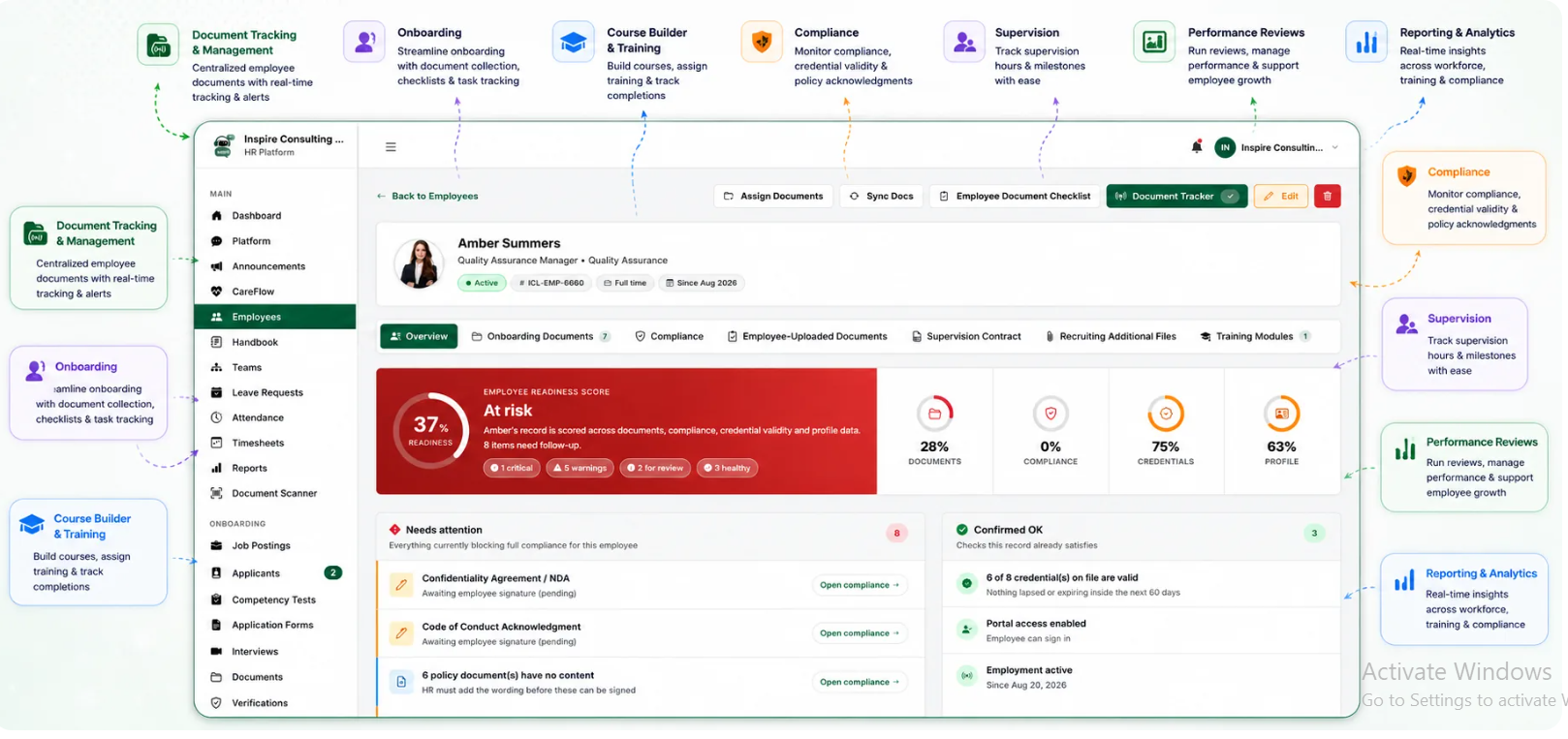
BUAMS HR helps behavioral health providers build a stronger foundation for tracking workforce relationships that affect compliance and operational readiness. By centralizing employee records, onboarding documentation, role details, and supporting files, BUAMS HR makes it easier to maintain a more reliable source of truth around staff status and assignment changes.
For organizations managing clinical supervisor assignment software needs, that foundation matters. HR can keep employee records current when staff move between roles, sites, or programs. Leadership teams can review workforce changes with better visibility into which records may need follow-up. Compliance teams can spend less time reconciling fragmented spreadsheets and more time identifying real gaps before they become findings.
BUAMS HR also supports a cleaner documentation workflow around workforce structure. When organizations maintain accurate employee files, status changes, supporting documents, and assignment-related records in one place, they are better positioned to manage supervision expectations consistently across the agency.
Final Thoughts
Supervision is too important to manage through informal memory and disconnected lists. Behavioral health providers need a documented, reviewable way to keep oversight relationships aligned with how staff actually work across programs and locations.
Clinical supervisor assignment software gives HR, compliance, and operational leaders a better way to manage those relationships before staffing changes create blind spots. It helps organizations protect accountability, strengthen workforce readiness, and respond more confidently when auditors, accreditors, or internal leaders need answers. BUAMS HR supports that effort by helping providers keep the employee records and documentation behind supervision decisions organized, current, and easier to trust.