Behavioral health HR teams rarely struggle because they lack deadlines. The problem is that deadlines live in too many places at once. License renewals may sit in one spreadsheet, annual training dates in another, policy attestations in email reminders, and file review schedules in a manager’s calendar. Compliance calendar software helps bring those moving parts together so teams can see what is due, what is overdue, and what could create risk if it is missed.
For behavioral health providers, this matters because workforce compliance is not limited to one event or one department. HR has to coordinate recurring requirements across employees, supervisors, locations, and programs while still supporting hiring, onboarding, status changes, and day-to-day operations. When deadlines are scattered, even strong teams can end up reacting too late. A centralized compliance calendar gives organizations a more reliable way to stay ahead of renewals, reviews, and documentation tasks before they become audit findings or start-date delays.
What compliance calendar software should help HR teams manage
Good compliance calendar software should do more than show dates on a screen. It should give behavioral health organizations a structured way to track recurring workforce requirements, assign responsibility, and document completion.
Why deadline visibility is harder in behavioral health than it looks
Behavioral health organizations often manage a workforce with varied roles, credentials, and program rules. One employee may need annual trauma-informed care training, another may need supervisor documentation, and another may need a license renewal tied to a specific position. Add multiple locations, expanding services, and frequent staff changes, and the calendar becomes more complicated than a standard HR reminder list.
The real challenge is that deadlines are connected. A late credential renewal can delay scheduling decisions. A missed policy acknowledgment can create file gaps during an audit. An overdue supervisor review can affect oversight expectations. If teams only notice deadlines when they are already due, the organization spends more time chasing paperwork, escalating exceptions, and explaining why something slipped through.
That is why a workforce compliance calendar needs context, not just dates. HR leaders need to understand which deadlines affect readiness, which ones affect audit exposure, and which ones require action from supervisors or employees outside the HR department.
Best practices for building a stronger HR compliance calendar
The most effective compliance calendar workflows are simple enough to maintain and structured enough to scale. Instead of creating one giant list of reminders, strong teams group deadlines by risk, ownership, and related workflow.
Organize deadlines by requirement type
Not every item should be handled the same way. Renewals, trainings, attestations, and file reviews all have different lead times and follow-up steps. Grouping deadlines by type makes it easier to automate reminders and standardize what happens next.
Assign clear ownership for each deadline
Deadlines are more likely to slip when everyone assumes someone else is watching them. Some items belong to HR, some to supervisors, and some to the employee. Compliance calendar software should make that ownership visible from the start.
Connect deadlines to records and proof
A reminder alone is not enough if the organization still has to search for evidence later. The best systems let teams move directly from a deadline to the file, form, or document that proves the requirement was completed.
How BUAMS HR helps behavioral health providers stay ahead of compliance deadlines
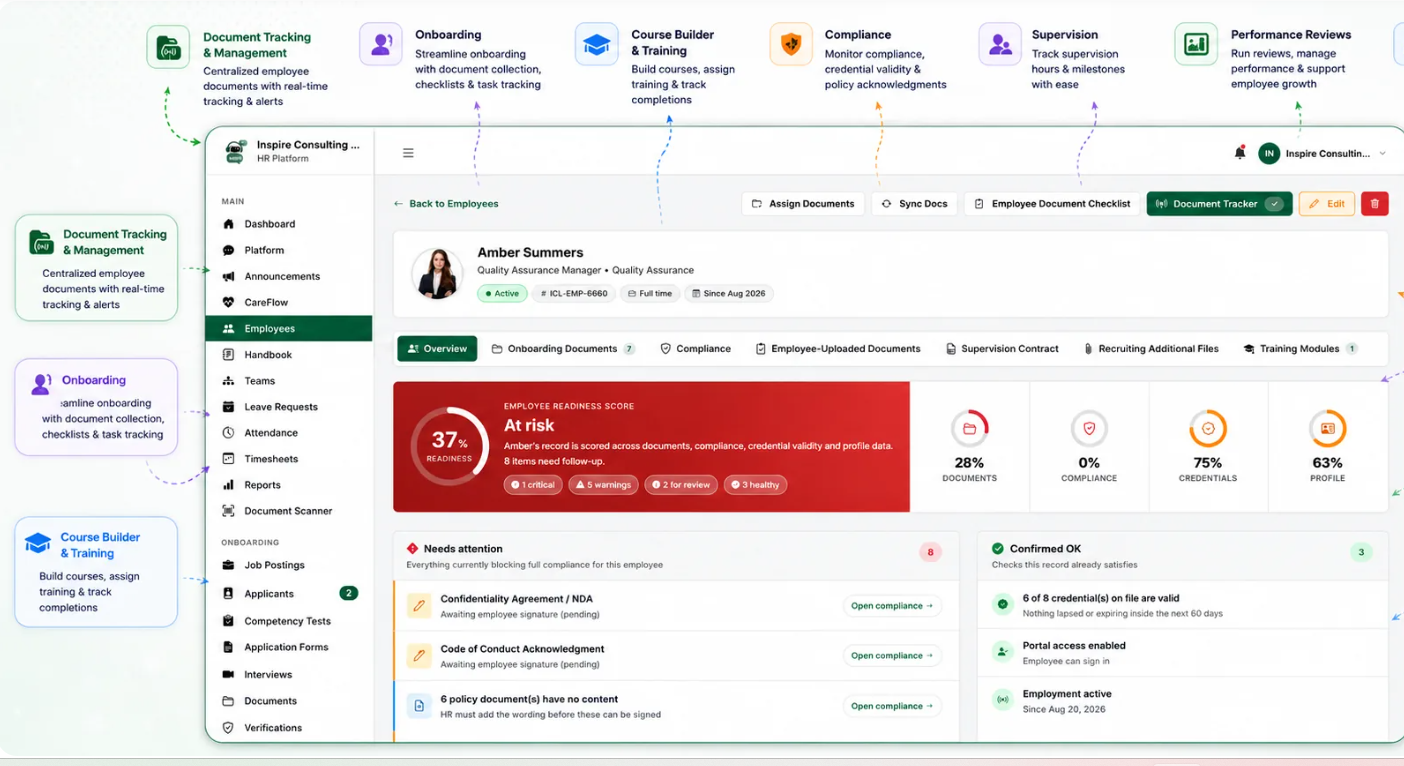
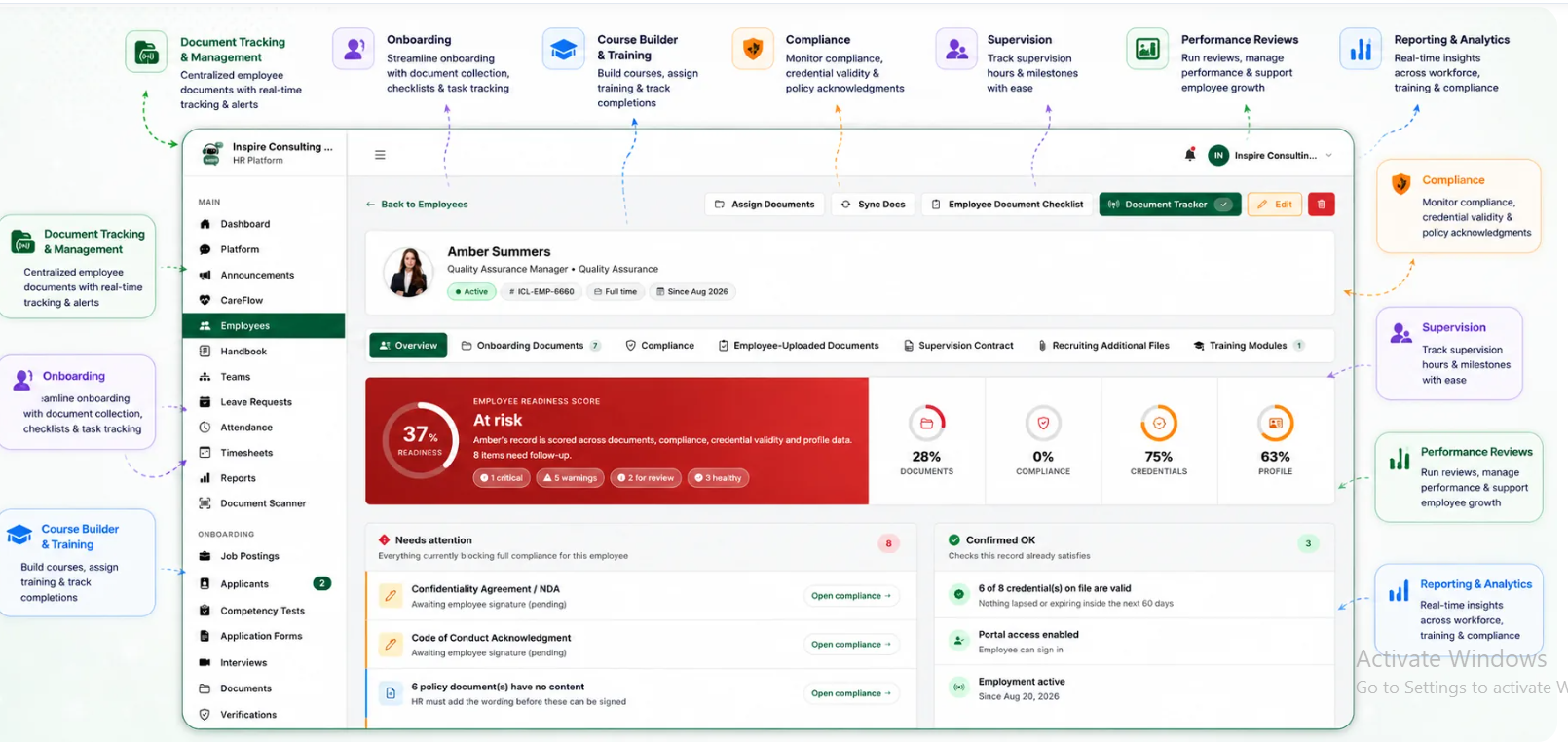
BUAMS HR helps behavioral health organizations manage workforce compliance in a more connected way. Instead of juggling separate calendars, spreadsheets, and inbox follow-up, teams can keep employee records, required documents, and deadline-driven tasks aligned inside one HR system.
That is especially valuable for providers balancing growth with accountability. As organizations add staff, locations, and services, the number of recurring workforce deadlines rises quickly. A centralized compliance calendar helps teams protect readiness without relying on manual memory or scattered tracking tools.
Final thoughts
Compliance calendar software gives behavioral health HR teams a practical way to turn deadline tracking into a repeatable process instead of a daily scramble. When renewals, trainings, file reviews, and attestations are organized in one system, teams can respond earlier, document work more clearly, and reduce avoidable compliance risk. For providers that want fewer last-minute surprises and better audit confidence, a stronger HR compliance calendar is a smart operational upgrade.