Behavioral health providers ask employees to acknowledge more than general policies. Staff may need to confirm they understand mandated reporter obligations, abuse and neglect escalation steps, documentation timelines, supervisor notification expectations, and role-specific response procedures. When those acknowledgments are managed through paper forms, scattered PDFs, or email reminders, HR teams can struggle to prove who reviewed the policy, which version was assigned, and where follow-up is still overdue.
Mandatory reporting attestation software gives behavioral health organizations a cleaner way to assign, collect, and track those workforce acknowledgments. Instead of rebuilding the process every year or every policy update, HR can standardize the workflow, keep date-stamped proof tied to each employee record, and reduce the risk that required sign-offs disappear into disconnected folders.
Key Takeaways
What is mandatory reporting attestation software?
Mandatory reporting attestation software is a system for managing employee acknowledgment of required reporting policies and related compliance expectations. In a behavioral health setting, that can include abuse and neglect reporting rules, incident escalation procedures, patient safety obligations, confidentiality boundaries related to reporting, and program-specific workflows that staff must understand before they begin or continue service delivery.
The goal is not simply collecting a signature. The goal is showing that the right employee received the right policy version, completed the acknowledgment on time, and can be tied back to a clear record for internal review, accreditation preparation, or HR follow-up. When leaders need to answer whether staff reviewed the current reporting standard, the system should provide a fast and defensible answer.
Why this matters in behavioral health HR
Behavioral health organizations operate in environments where delayed or inconsistent reporting can create serious legal, regulatory, and patient safety risk. HR may not own every reporting decision, but HR often helps manage the employee records, onboarding workflows, annual acknowledgments, and policy evidence that support a compliant workforce. If mandated reporting expectations are tracked inconsistently, agencies can end up with avoidable documentation gaps.
That risk grows when providers work across multiple programs, job types, and sites. A new outpatient therapist, a residential counselor, a peer support worker, and an administrative supervisor may each need different instructions, timing, or proof requirements. When the process lives in spreadsheets and email threads, it becomes difficult to confirm completion by role, identify missing acknowledgments, or prove which version of the policy an employee actually reviewed.
Mandatory reporting attestation software helps reduce that ambiguity. It creates a repeatable process that is easier to monitor, easier to audit, and easier to maintain as policies evolve.
Common problems with manual attestation workflows
Many behavioral health providers recognize the need for a better workflow after the same issues repeat during onboarding, annual reviews, or policy updates.
Those problems are not just administrative annoyances. They weaken confidence that the organization can show consistent workforce expectations and documented employee acknowledgment when it matters most.
What to look for in mandatory reporting attestation software
Role-based assignment
Different employees may need different reporting instructions based on license type, service setting, supervisory responsibility, or jurisdiction. A strong system should let HR assign attestations by role, program, or location so staff receive relevant obligations rather than a generic packet.
Version control for policy changes
If reporting language changes, the organization should be able to launch a new attestation cycle without losing the history of the prior version. That makes it easier to prove which policy was active, who acknowledged it, and when the change took effect.
Reminder and escalation visibility
HR and supervisors need a clear view of who is complete, who is overdue, and where follow-up is still pending. Reminder history should be visible so leaders are not guessing whether outreach already happened.
Employee file linkage
The attestation should stay connected to the employee record, not buried in a standalone folder. That connection matters when organizations need to review reporting acknowledgments alongside onboarding files, training records, supervision documentation, or disciplinary follow-up.
Searchable proof for audits and investigations
When a regulator, accreditor, or internal reviewer asks for evidence, teams should be able to retrieve date-stamped acknowledgment records quickly. Search and reporting tools should reduce scramble instead of creating more manual work.
How BUAMS HR supports policy acknowledgment workflows
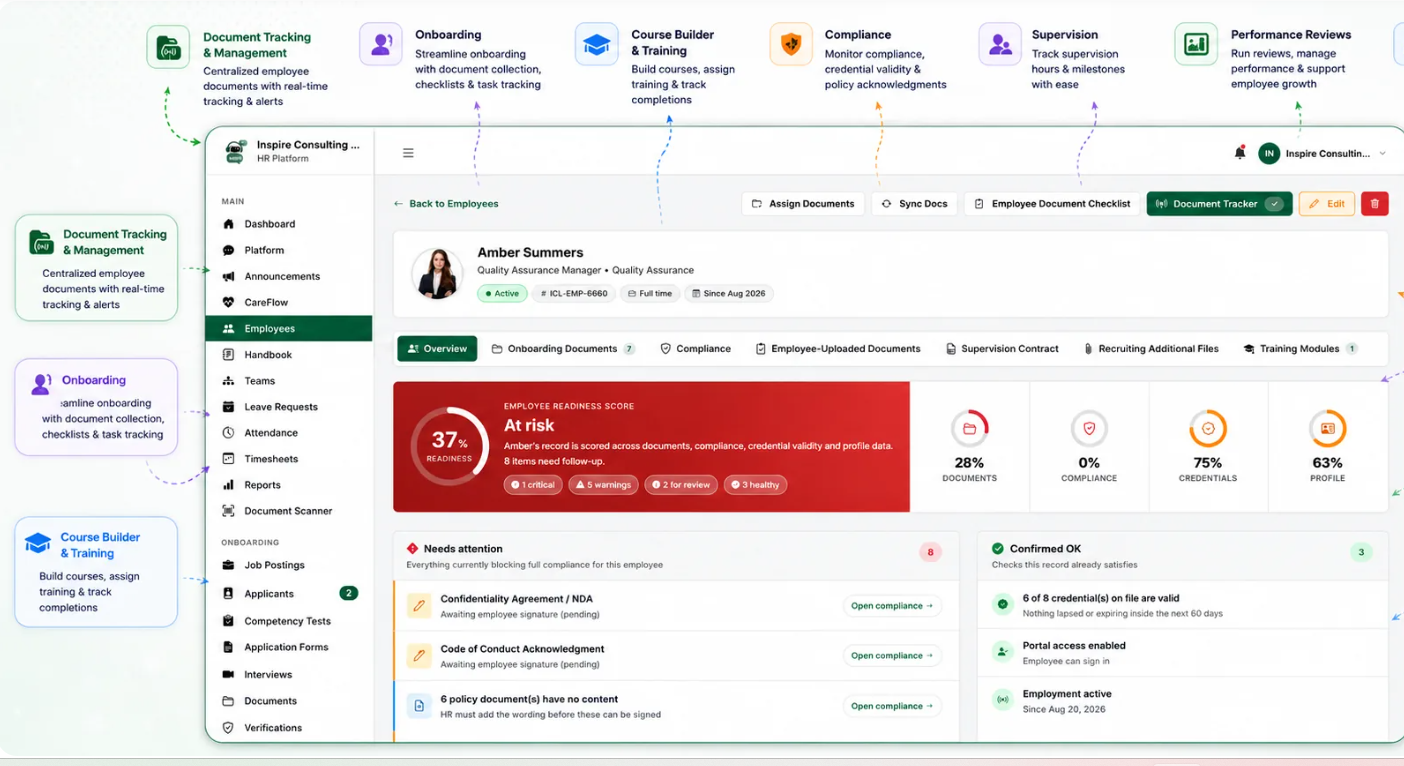
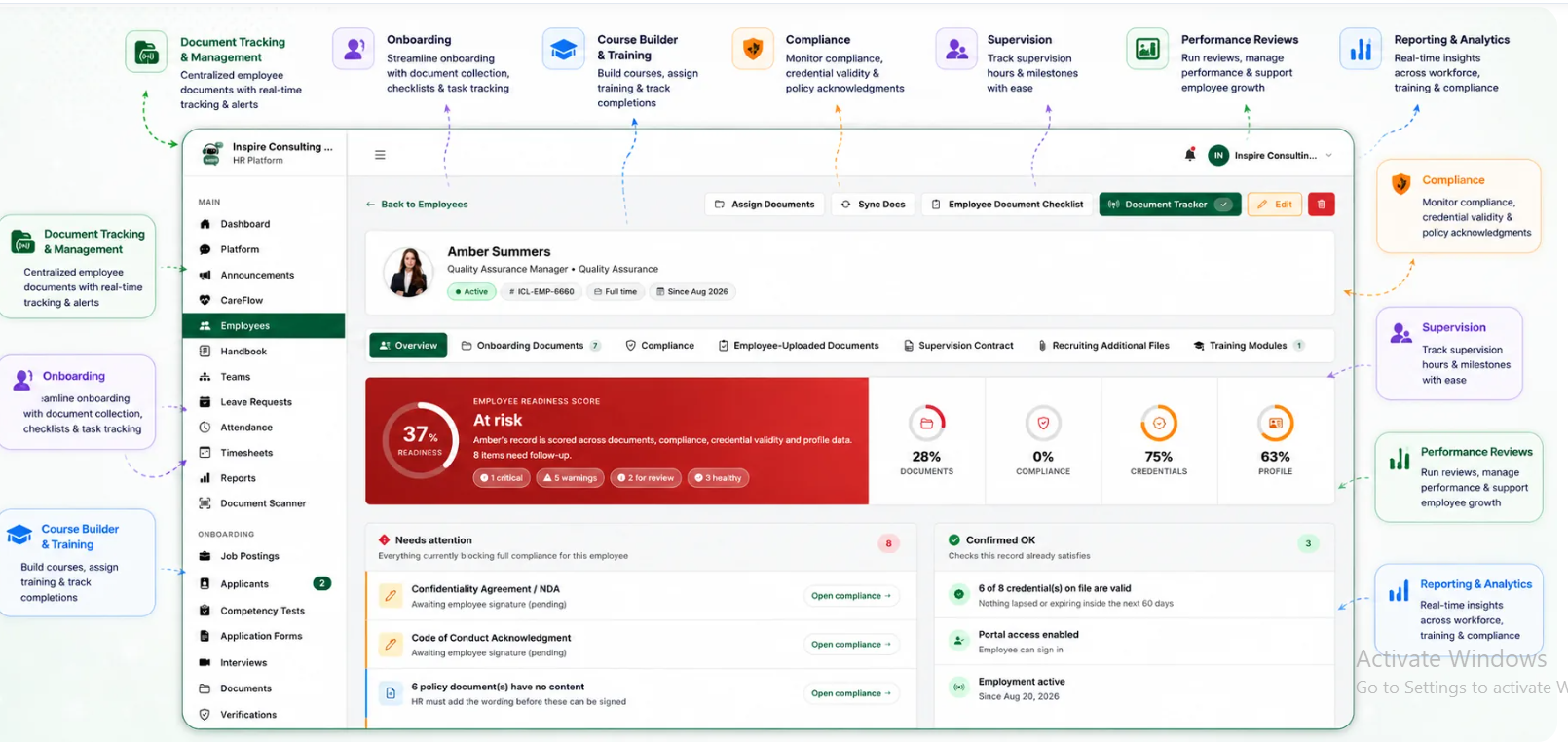
BUAMS HR gives behavioral health providers a centralized environment for employee records, compliance tasks, and workforce documentation. That makes it easier to keep mandatory reporting acknowledgments tied to the rest of the employee file instead of treating them as one-off forms that are easy to misplace.
With a more organized workflow, HR leaders can see which staff members have completed required sign-offs, which records need follow-up, and whether policy evidence is ready for review. Teams can also reduce duplicate storage by keeping acknowledgments, related documents, and compliance history in one system that supports broader audit readiness.
For agencies managing frequent onboarding, annual renewals, or multi-site policy updates, BUAMS HR helps standardize the process so acknowledgment tracking becomes part of everyday workforce management instead of a last-minute cleanup project.
Best practices for a stronger mandatory reporting acknowledgment process
These practices help providers move from reactive document chasing to a controlled workflow that supports accountability across HR, compliance, and operations.
Final thoughts
Mandatory reporting attestation software is a practical safeguard for behavioral health providers that need better visibility into policy acknowledgment, version history, and overdue follow-up. It helps organizations prove that staff received the right expectations at the right time and that compliance evidence is stored where leadership can actually use it.
As behavioral health agencies grow across programs and sites, manual acknowledgment tracking becomes harder to defend and harder to maintain. A structured workflow inside BUAMS HR gives teams a better way to keep policy sign-offs complete, accessible, and review ready without adding more spreadsheet work.