Behavioral health providers rarely get perfect staffing conditions. A clinician calls out sick, a supervisor is unavailable, a community program needs immediate backup, or a census spike creates coverage pressure before the day is over. In those moments, leaders still need to make fast decisions without breaking licensure rules, supervision expectations, orientation requirements, or internal approval processes. That is where contingency staffing approval software becomes valuable.
For HR and operations teams, the challenge is not just filling an open shift. It is making sure emergency coverage decisions are documented, reviewed, and connected to the employee records that prove a staff member was actually eligible for the assignment. When contingency decisions live in texts, email threads, sticky notes, or verbal approvals, compliance risk rises fast.
Key Takeaways
What Is Contingency Staffing Approval Software?
Contingency staffing approval software is a structured workflow for reviewing and documenting urgent workforce coverage decisions. Instead of handling emergency assignments informally, the organization uses a controlled process to confirm whether a staff member can safely and compliantly cover a role, site, shift, or program.
In behavioral health settings, those decisions often depend on more than simple availability. A provider may need to confirm licensure status, current training, supervisor assignment, background clearance, site orientation, and any role restrictions before moving someone into a new coverage situation. The software creates a repeatable path for making that decision quickly while preserving a defensible record.
Why It Matters in Behavioral Health
Behavioral health organizations operate in environments where staffing decisions affect patient safety, documentation quality, service continuity, and audit readiness at the same time. An unapproved shift fill might seem minor in the moment, but it can create downstream issues if the assigned employee lacked the right training, was pending a renewal, or was not cleared for that program.
Contingency staffing approval software matters because it reduces the gap between urgency and control. Leaders do not have to choose between moving fast and staying compliant. They can follow a short approval path that checks the most important workforce requirements before the assignment is confirmed.
This becomes especially important for providers that manage multiple sites, crisis services, residential programs, outpatient clinics, mobile teams, or mixed full-time and per diem staffing models. The more complex the workforce model becomes, the harder it is to trust memory and manual follow-up during an emergency.
Common Risk Points During Emergency Coverage Decisions
Without a defined contingency workflow, urgent staffing decisions often create the same predictable problems.
These are not just process issues. They can turn into audit findings, employee relations problems, billing exposure, or quality concerns if the organization cannot show that emergency staffing decisions were reviewed appropriately.
What to Look For in Contingency Staffing Approval Software
Role and site eligibility checks
The best systems help teams verify whether an employee is actually eligible for the emergency assignment. That can include role match, site requirements, supervisor coverage, active credentials, required training, and any restrictions that should block approval.
Fast approval routing
During a same-day staffing gap, a workflow cannot depend on long email chains. The software should route requests to the right approver quickly, show the reason for the request, and record the decision without adding unnecessary friction.
Exception documentation
Sometimes the organization may allow limited emergency coverage with conditions. In those cases, contingency staffing approval software should capture the reason for the exception, the risk review, the temporary duration, and the required follow-up steps.
Connection to employee records
An isolated approval log is not enough. The workflow should connect back to the employee's file so HR and compliance teams can see the staffing decision alongside qualifications, onboarding status, training records, and prior coverage history.
Audit-ready history
Behavioral health providers need more than a yes or no. They need a history that shows request date, approver, assignment details, supporting notes, and closure status. That record becomes important when reviewing incidents, investigating policy exceptions, or preparing for external review.
Best Practices for a Strong Contingency Coverage Workflow
Software works best when the workflow reflects clear internal rules. Behavioral health providers should define what counts as a contingency staffing event, who can request approval, who can authorize exceptions, and what minimum checks must happen before coverage is assigned.
That last point is especially useful. If a provider sees frequent emergency approvals in the same program, the problem may not be scheduling alone. It may point to hiring delays, weak cross-training, poor supervisor coverage, or incomplete readiness planning.
How BUAMS HR Helps
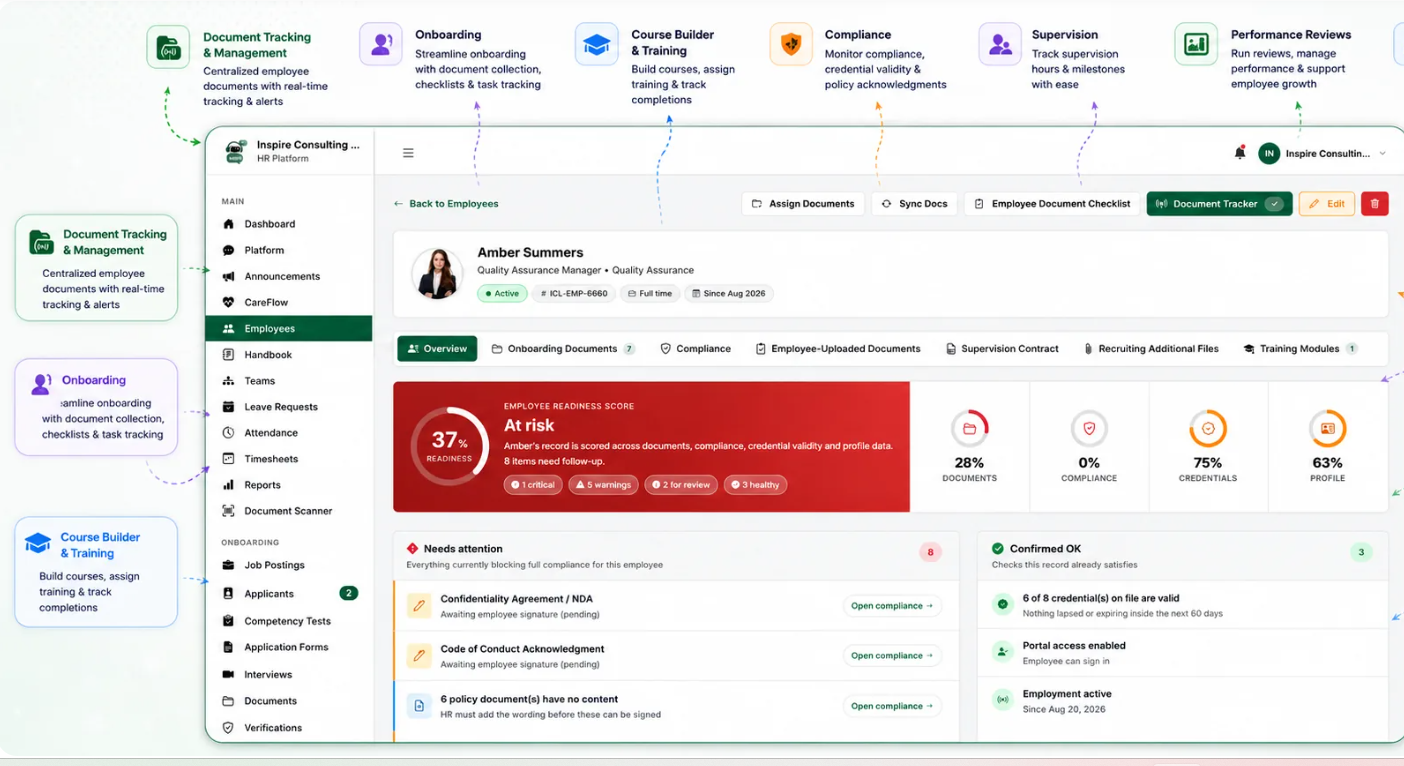
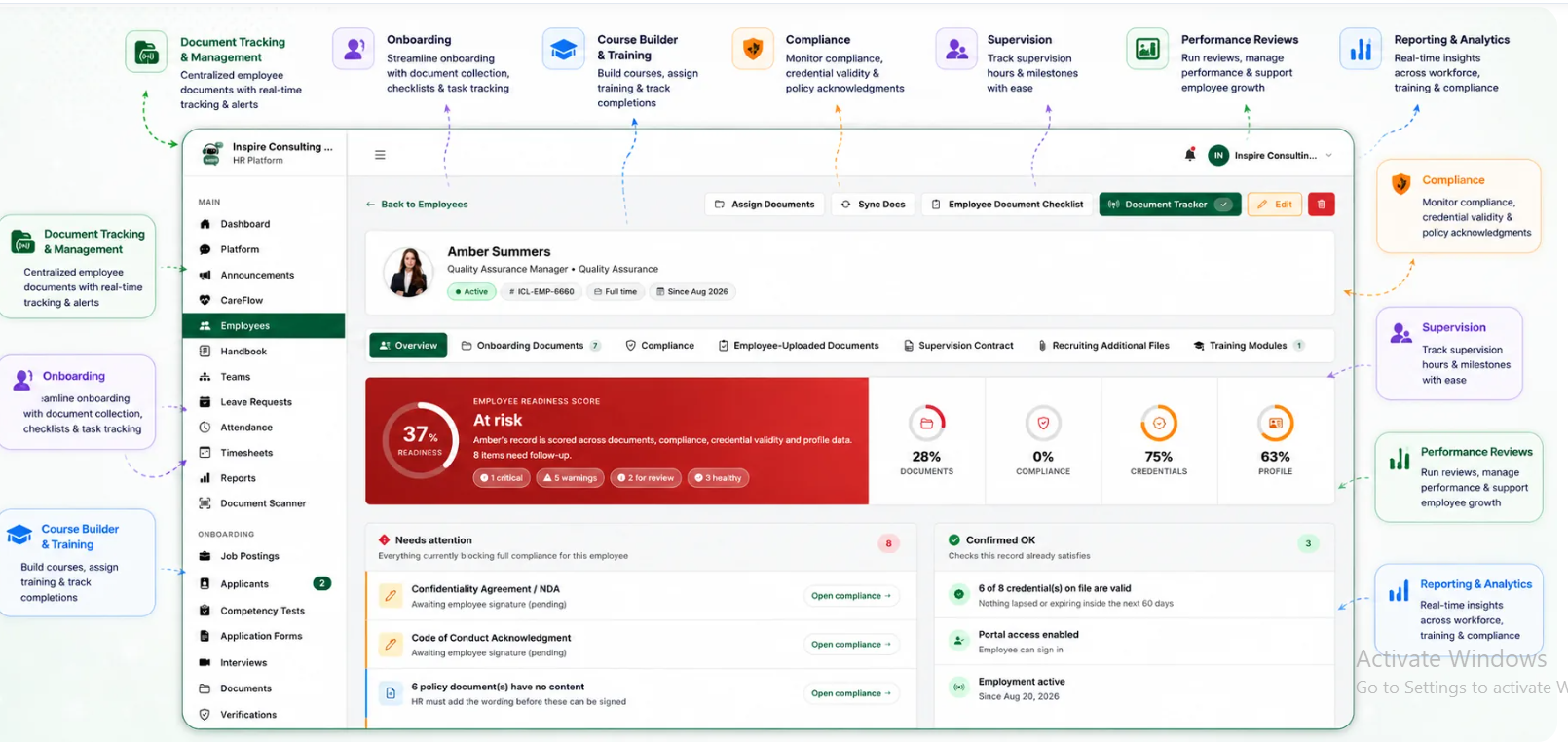
BUAMS HR gives behavioral health organizations a practical way to manage workforce information that supports smarter contingency decisions. Instead of searching across folders, spreadsheets, and disconnected reminders, teams can centralize employee files, compliance records, onboarding steps, and role-related documentation in one system.
That foundation makes contingency staffing approval software more effective. When the approver can quickly review the employee's active records, required documents, and readiness indicators, emergency coverage decisions become faster and more defensible. BUAMS HR also helps organizations maintain the documentation trail needed for audits, internal reviews, and leadership reporting.
For providers operating across multiple programs or locations, that visibility matters. A clean workforce system helps leaders understand not only who is available, but who is actually ready to cover the assignment under organizational and compliance rules.
Final Thoughts
Emergency staffing decisions will always be part of behavioral health operations. The goal is not to eliminate contingency coverage. The goal is to manage it with enough structure that fast decisions do not create hidden HR and compliance problems later.
Contingency staffing approval software helps providers document urgent coverage requests, validate assignment readiness, and preserve accountability across HR, compliance, and operations. For organizations that want to strengthen both responsiveness and control, it is a practical next step.