Behavioral health HR teams rarely struggle because they lack documents. More often, the problem is that they have too many versions of the same document spread across email, shared drives, desktop folders, and paper files. An outdated TB form sits next to a current one. A revised job description is emailed but never matched to the personnel file. A supervisor downloads a training certificate twice, and nobody is sure which copy belongs in the official record. That confusion creates real compliance risk when leaders need to prove what was active, signed, approved, or replaced at a specific moment.
Employee file version control software gives behavioral health providers a structured way to manage replacements, updates, and historical records across HR documents. Instead of asking staff to guess which file is current, organizations can keep a clear record of what changed, when it changed, who updated it, and which version should be used for audits, supervision, onboarding, and workforce decisions.
Key Takeaways
What is employee file version control software?
Employee file version control software is a system for organizing and tracking changes to workforce documents over time. In a behavioral health setting, that can include offer letters, licenses, CPR cards, supervision agreements, acknowledgments, annual health forms, disciplinary documentation, job descriptions, and onboarding packets. The goal is not simply storing PDFs. The goal is keeping the active version visible while maintaining a trustworthy history of prior versions.
For example, if a clinician renews a license, HR should be able to confirm the new document is the active record, see when it replaced the old one, and still retain the previous copy for historical context. If a policy acknowledgment form changes, the organization should know which staff signed the older version, which staff signed the revised version, and whether any records still need follow-up.
Why version control matters in behavioral health HR
Behavioral health organizations deal with a high volume of regulated workforce records. Many documents expire, renew, or change because of role updates, site transfers, accreditor expectations, payer requirements, or internal policy revisions. When file updates are handled manually, teams often lose track of the official version and create extra work for HR, compliance, and supervisors.
That matters during audits and internal reviews. If surveyors ask for the current confidentiality agreement, the prior job description, and proof of the most recent training renewal, the organization needs a clean answer. Without employee file version control software, staff may spend hours hunting through duplicate folders and still feel uncertain about whether the record is complete.
It also matters operationally. Supervisors should not rely on outdated forms when making staffing decisions. HR should not accidentally overwrite an important historical record. Recruiting and onboarding teams should not launch employees with old packets because a newer set of forms was shared elsewhere. Clear version control reduces those risks while making everyday work faster.
Common file problems version control should solve
Behavioral health providers usually notice the need for stronger version control after small documentation issues begin to repeat. These issues often include staff working on outdated versions of the same document, important files being accidentally overwritten, duplicate copies saved in different folders, missing signatures or approvals, difficulty identifying who made the latest changes, and delays caused by employees searching for the correct version of a file.
If those patterns sound familiar, the organization does not just need more storage. It needs a better employee file control process with proper version tracking, audit history, and controlled access to ensure every team member is working from the most current and accurate document.
What to look for in employee file version control software
Clear active versus historical status
The system should make it obvious which document version is active and which versions are retained for history. Staff should not need to open multiple files to guess which record is official.
Effective dates and change history
Each file update should include meaningful timing details, such as upload date, effective date, expiration date when relevant, and the user responsible for the change. That audit trail helps explain why a document changed and what record applied at a given time.
Employee-level context
Version control works best when files stay connected to the employee record, role, site, and compliance requirements. A stored document is more useful when HR can immediately see whose file it belongs to and what it supports.
Support for renewals and replacements
Behavioral health teams frequently replace existing documents with updated ones. The right system should support one-to-many histories, not a single upload slot that forces teams to overwrite prior proof.
Searchable retrieval during reviews
When accreditation, payer, or internal review requests arrive, teams need to retrieve the current version and prior versions quickly. Search and filtering should reduce scramble, not create more of it.
How BUAMS HR helps teams control document history
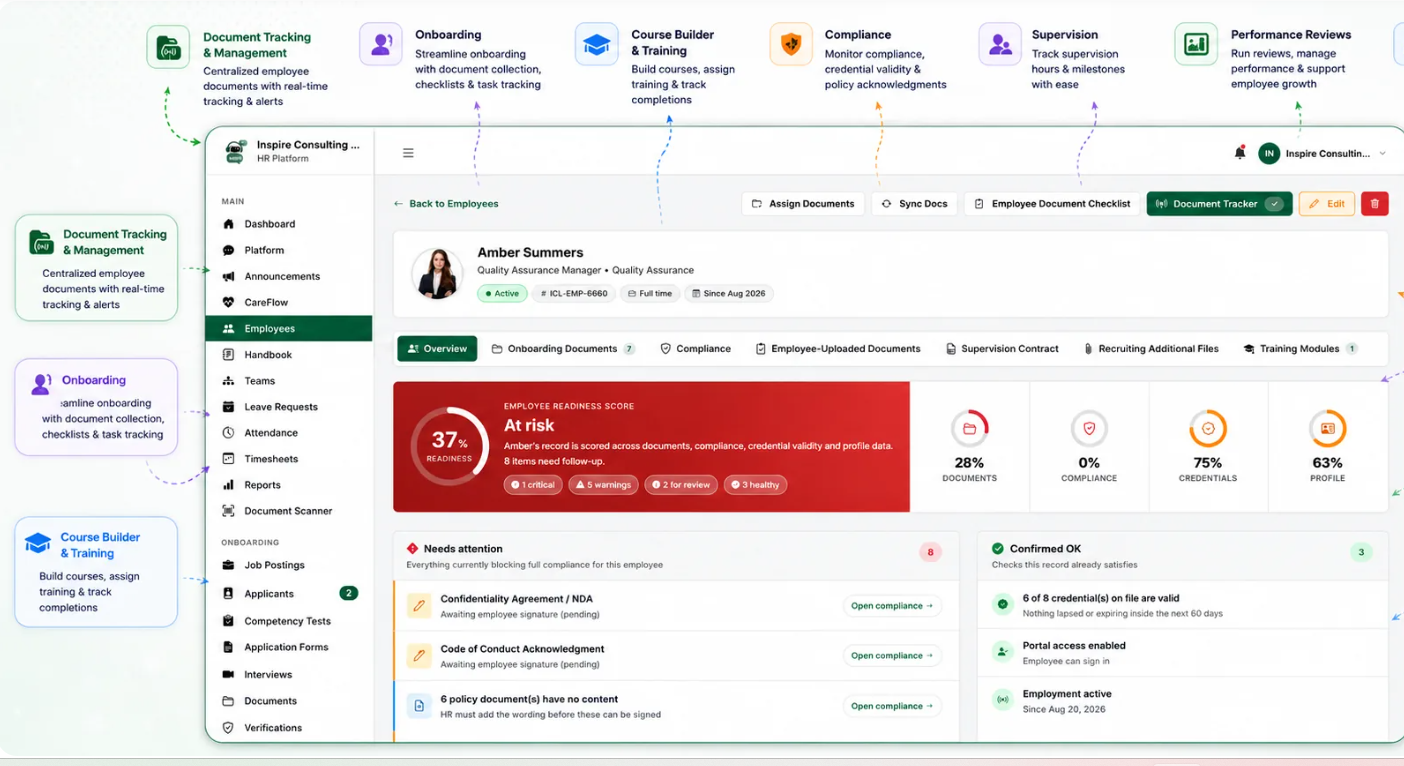
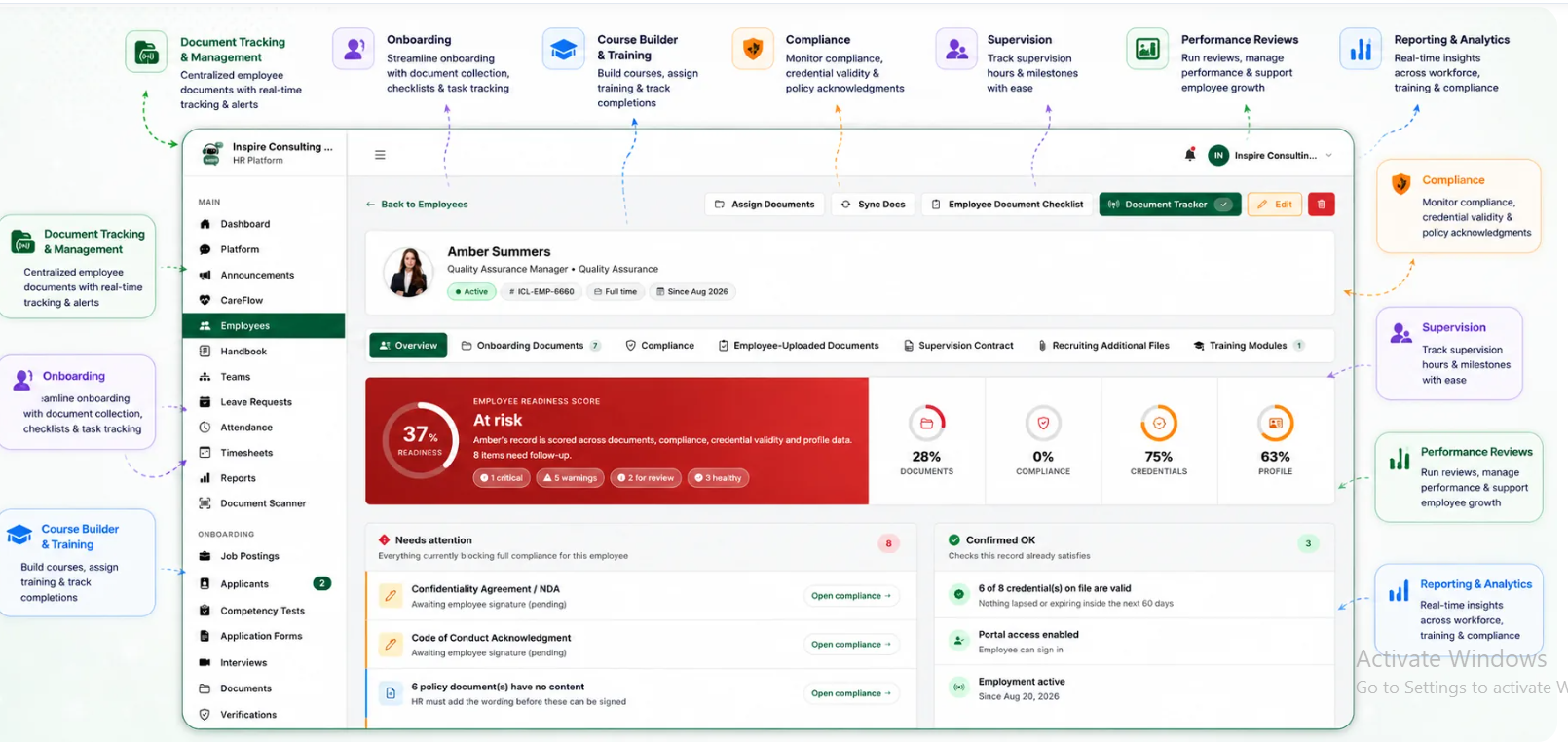
BUAMS HR gives behavioral health organizations a centralized environment for employee records, compliance documents, and workforce tracking. Instead of letting file replacements live across inboxes and disconnected folders, teams can keep documents linked to the employee record and maintain visibility into updates over time.
That helps HR leaders answer practical questions faster. Is the current file complete? Which version was in effect before a role change? Has the renewal been uploaded and reviewed? Are supervisors using the latest documentation? With a centralized HR platform, those answers become easier to verify and share.
For organizations managing frequent renewals, policy updates, and multi-site staffing, BUAMS HR supports a more reliable file workflow by reducing duplicate storage, improving document access, and helping teams keep compliance evidence organized. That is especially valuable when audit readiness depends on both current accuracy and historical proof.
Final thoughts
Employee file version control software is not just a document management convenience. For behavioral health providers, it is a practical safeguard against outdated forms, missing history, and avoidable audit stress. The strongest approach keeps active files easy to use while preserving the document trail behind every change.
When behavioral health HR teams can track replaced forms, renewed credentials, and historical records with confidence, they spend less time chasing paperwork and more time supporting safe, compliant workforce operations. That is the kind of structure growing providers need as their teams, programs, and documentation demands become more complex.