Confidentiality agreement software helps behavioral health providers collect, store, and verify signed privacy commitments without turning onboarding and compliance follow-up into a paper chase. In mental and behavioral health settings, employee confidentiality forms are not just administrative checkboxes. They support privacy expectations, reinforce workforce accountability, and give HR teams proof that staff members received and signed required agreements before they begin handling sensitive information. A structured workflow makes those records easier to complete, easier to retrieve, and easier to trust.
Key Takeaways
What is confidentiality agreement software?
Confidentiality agreement software is a workflow used to issue employee privacy agreements, capture signatures, store completed records, and confirm completion status across the workforce. Instead of managing signed forms through inboxes, shared folders, or printed packets, organizations can standardize how agreements are distributed and how proof is retained. For behavioral health providers, that matters because employees often work with highly sensitive client information, and the organization needs a clear, repeatable way to show that privacy expectations were communicated and acknowledged.
The right workflow also supports more than initial onboarding. HR teams may need to reissue agreements after policy changes, role changes, mergers, location moves, or updated privacy practices. A good system keeps those events tied to the employee record so leaders can see not only whether a form was signed, but also which version was acknowledged and when.
Why it matters for behavioral health providers
Behavioral health organizations operate in environments where privacy expectations must be clear from day one. When confidentiality agreements are handled inconsistently, the resulting risk is not limited to missing paperwork. It can create uncertainty around employee readiness, complicate internal reviews, and slow responses when leadership needs proof that required documents were completed.
Confidentiality agreement software reduces those gaps by making document status visible and controlled. It helps HR teams move from passive record storage to active compliance management, which is especially valuable for growing providers with multiple programs, supervisors, or service locations.
What to look for in confidentiality agreement software
Not every document collection workflow is strong enough for behavioral health HR operations. The best setup should support timely completion, reliable storage, and clean follow-up across the employee lifecycle.
Structured document collection during onboarding
Privacy agreements should be part of a defined onboarding checklist, not a separate task that depends on memory. HR should be able to see whether a form has been issued, signed, or is still outstanding before the employee begins work that involves protected information.
Version control for updated agreements
When confidentiality language changes, organizations need to know which employees signed which version. A strong system should support reissuance and make it easy to distinguish current acknowledgments from outdated ones.
Centralized storage inside the employee file
Signed documents should live with the broader employee record so HR, compliance, and authorized leaders can retrieve them quickly. This reduces confusion, shortens response times, and lowers the chance that staff rely on incomplete records.
Reminders and exception visibility
HR teams should not have to manually chase every missing signature. Automated reminders and clear status views help organizations identify overdue forms early and resolve issues before they affect start dates, internal reviews, or leadership confidence.
Controlled reporting for audits and reviews
When questions come up, teams need more than a folder full of PDFs. They need a practical way to show completion status, locate the current agreement, and confirm that follow-up happened consistently across employees and programs.
How BUAMS HR helps
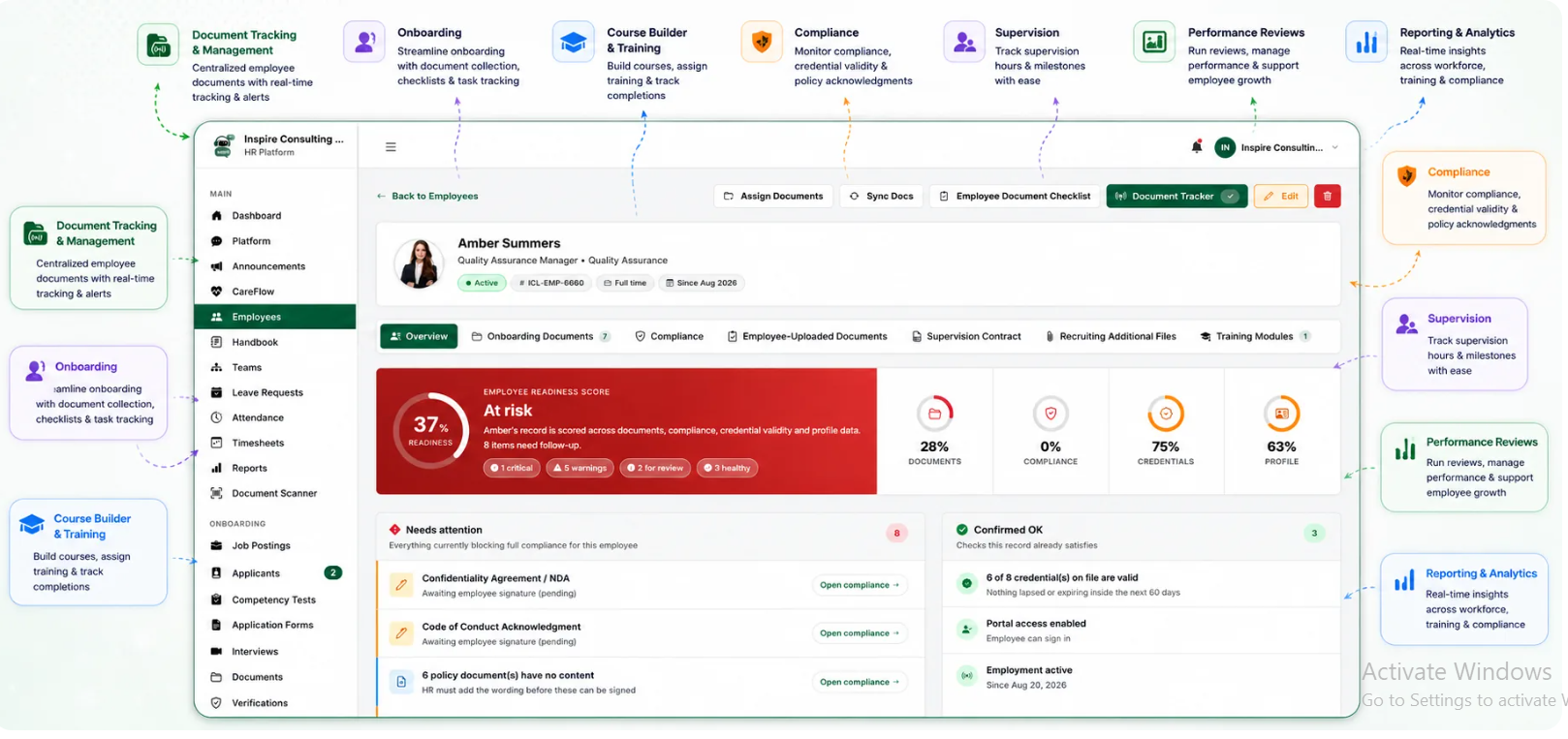
BUAMS HR gives behavioral health providers a more organized way to manage confidentiality documentation alongside the rest of the employee lifecycle. Instead of separating signed agreements from onboarding tasks and employee records, teams can keep privacy acknowledgments connected to the workflows that determine workforce readiness.
For organizations balancing privacy obligations, hiring speed, and day-to-day operational pressure, BUAMS HR helps make confidentiality documentation more dependable and less manual.
Final Thoughts
Confidentiality agreement software is not just about collecting one more signature. For behavioral health providers, it helps establish privacy expectations clearly, maintain organized proof, and reduce the friction that comes with scattered document handling. When signed agreements are tied to onboarding, employee files, and compliance follow-up, HR teams can respond faster and operate with more confidence. BUAMS HR supports that kind of connected workflow, helping providers stay organized as they grow.