Behavioral health organizations often rely on contracted clinicians, telehealth specialists, assessors, and supervisors to expand access without waiting for full-time headcount approvals. The problem is that contractor onboarding can easily become a patchwork of emails, PDFs, credential requests, and last-minute compliance checks. When that happens, start dates slip, documentation lives in too many places, and HR teams lose visibility into whether a contractor is truly ready to begin work.
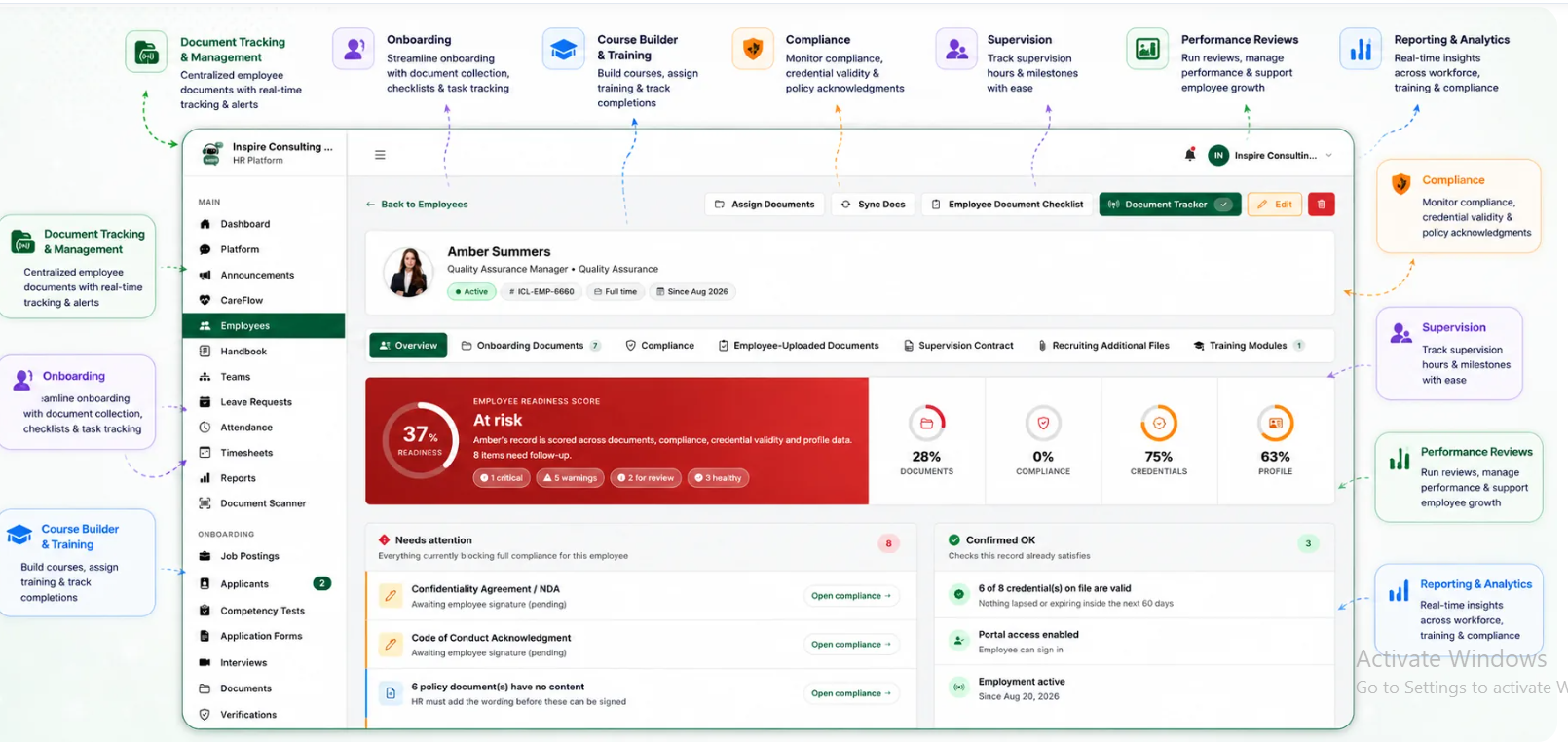
Contractor onboarding software gives behavioral health clinics a more structured way to launch 1099 clinicians and other non-employee workers. Instead of chasing forms and approvals across inboxes, HR teams can centralize task tracking, document collection, required acknowledgments, and readiness status in one workflow. That matters even more for providers operating across Maryland, DC, or multiple programs where documentation standards and role requirements can vary.
Key Takeaways
What Contractor Onboarding Software Covers
Contractor onboarding software helps HR teams manage the administrative and compliance steps needed before an outside worker can begin providing services or supporting operations. In behavioral health, that can include independent therapists, psychiatrists, group facilitators, interpreters, PRN staff, and other specialists who are not onboarded through a standard employee process.
The software should support the collection of core agreements, role-specific forms, credential documents, tax paperwork, policy acknowledgments, and access-related requests. It should also make it easy to assign due dates, notify the right internal owners, and show whether the contractor is fully cleared, partially ready, or still blocked by missing items.
Without a defined system, clinics tend to rely on shared folders, email threads, and manual checklists that are hard to audit later. That may work for a small volume of contractors, but it becomes risky once the organization expands services, adds locations, or depends on quick contractor ramp-up to meet client demand.
Why Contractor Readiness Breaks Down in Behavioral Health
Contractor onboarding looks simple on paper, but several operational realities make it harder in behavioral health settings. The first challenge is variation. A contracted therapist, a telehealth prescriber, and a community-based evaluator may all need different forms, different supervisors, and different documentation reviews before they can start.
The second challenge is split ownership. HR may collect foundational records, while program leaders confirm service readiness, compliance teams review credentials, and IT or operations handle access. If those steps are not connected, everyone assumes someone else is following up.
The third challenge is timing. Contractors are often brought in to solve urgent staffing gaps, extend evening coverage, or support new referrals. That urgency can pressure teams to move fast without a reliable readiness checkpoint. The result is a higher chance of incomplete files, delayed access, or work beginning before all documentation is in place.
What to Look for in Contractor Onboarding Software
Role-Based Onboarding Paths
Behavioral health clinics should be able to create different onboarding paths for different contractor categories. A prescriber may need license review and collaborative documentation, while a contracted intake specialist may need confidentiality agreements, scheduling access, and policy sign-off. Role-based workflows prevent teams from over-collecting or missing required steps.
Centralized Document Collection
Contractor files should not be scattered across personal inboxes or local desktops. A better system gives HR one place to store agreements, compliance records, insurance documents, identification materials, and other onboarding items tied to the contractor record.
Task Ownership and Status Tracking
Each onboarding requirement should have a clear owner and visible status. That lets HR answer practical questions quickly: What is still missing? Who needs to act next? Which contractors are ready to start this week? Visibility is especially important when multiple departments share responsibility.
Location and Program-Specific Requirements
Providers working across Maryland, DC, or multiple service lines may need different forms, attestations, or internal approvals depending on where the contractor will work. Good contractor onboarding software supports that complexity without forcing teams to rebuild the process each time.
Audit-Friendly Records
When contractor documentation is reviewed later, organizations need to show more than a folder of files. They need evidence of completeness, timing, and approval. A system that preserves timestamps, task completion history, and document access makes that easier.
Best Practices for a Stronger Contractor Launch Process
How BUAMS HR Helps Behavioral Health Teams
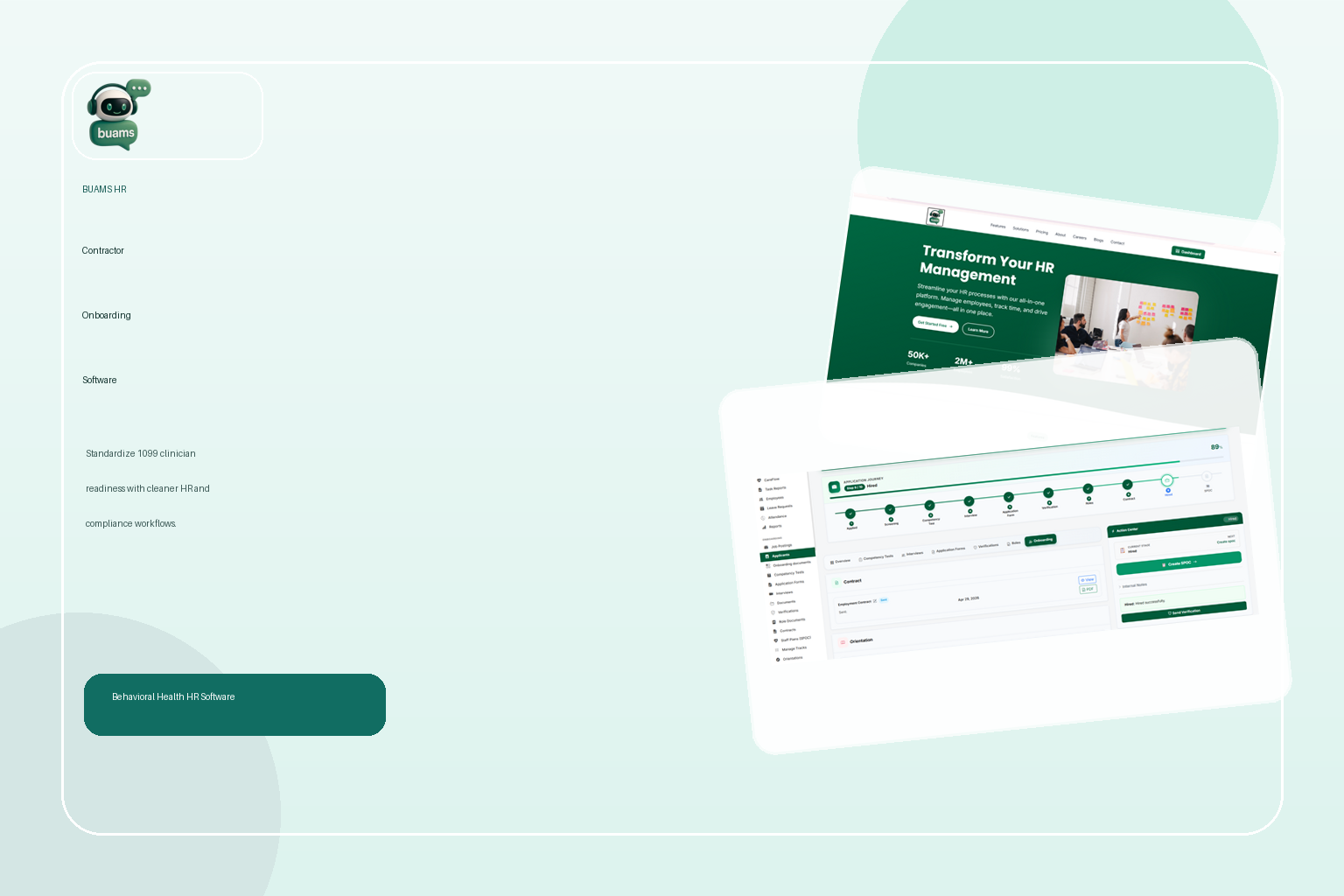
BUAMS HR gives behavioral health organizations a more organized way to manage contractor onboarding alongside broader workforce operations. Instead of treating contractors as an exception handled outside the system, HR teams can standardize document collection, assign onboarding tasks, track completion status, and maintain cleaner records for future review.
That is valuable for providers who need better coordination between HR, compliance, and program leadership. BUAMS HR can help teams keep onboarding requirements visible, reduce manual follow-up, and create a more consistent readiness process before contractors start serving clients or supporting operations.
Because behavioral health organizations often balance hiring urgency with documentation risk, a centralized workflow helps both sides of the equation. Leaders can move faster when they can see what is complete, what is blocked, and what still needs review before a contractor is cleared.
Final Thoughts
Contractors can be essential to coverage, growth, and service continuity in behavioral health, but the onboarding process needs structure if organizations want speed without compliance gaps. Contractor onboarding software helps clinics replace ad hoc coordination with a repeatable workflow that supports readiness, documentation quality, and operational clarity.
For behavioral health clinics trying to launch 1099 clinicians without losing control of HR records, BUAMS HR offers a practical path to a cleaner, more scalable process.