Behavioral health organizations depend on consistent supervision, documented oversight, and timely follow-up when staff credentials, training, or performance issues need attention. The problem is that many HR teams still manage supervisor attestations through email chains, spreadsheets, and paper sign-off forms that are hard to monitor across programs. When the process is scattered, leadership loses confidence that required check-ins actually happened, and compliance teams struggle to prove it during audits or accreditation reviews.
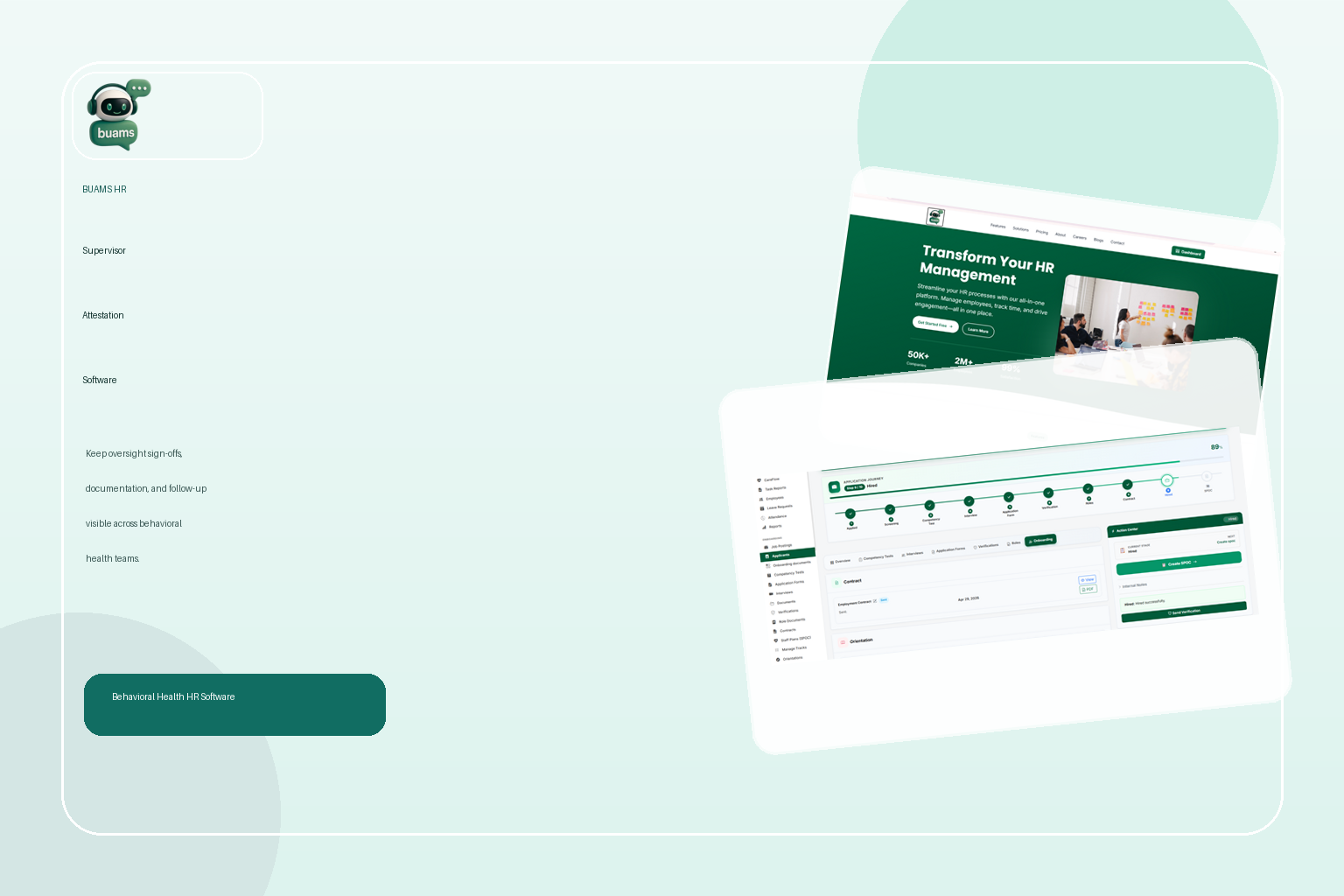
Supervisor attestation software gives behavioral health providers a structured way to confirm that supervisors completed required oversight tasks, reviewed the right records, and documented next steps on time. Instead of chasing signatures at the end of the month, HR can build a repeatable workflow that surfaces exceptions early and keeps audit evidence organized.
Key Takeaways
What Is Supervisor Attestation Software?
Supervisor attestation software is a workflow tool that asks supervisors to confirm specific actions or reviews, captures their responses, timestamps completion, and stores proof in a searchable system. In a behavioral health setting, those attestations may cover supervision session completion, review of expiring credentials, confirmation of onboarding readiness, acknowledgment of corrective action follow-up, or sign-off that staffing assignments match policy requirements.
The point is not just collecting a yes-or-no answer. A strong workflow should connect each attestation to the employee, supervisor, due date, location, and supporting records behind it. That creates a cleaner chain of evidence and helps HR distinguish between a completed review, a late review, and a review that uncovered a problem requiring escalation.
Why It Matters for Behavioral Health Providers
Behavioral health providers often operate across multiple sites, programs, and service models. Supervisors may oversee licensed clinicians, support staff, peer support workers, case managers, and contract workers under different documentation rules. If attestations are handled inconsistently, one program may be highly organized while another relies on memory and inbox follow-up. That creates uneven oversight and increases the chance that required reviews are missed.
Supervisor attestation software is especially useful when organizations need to prove that oversight is happening regularly, not just after an issue is found. Monthly or quarterly attestations can show that supervisors reviewed staff readiness, flagged gaps, and completed required follow-up before those gaps turned into service disruptions or compliance findings.
It also supports stronger internal accountability. Operations leaders can see which teams finish reviews on time, which locations accumulate overdue attestations, and where HR may need to simplify a process that supervisors are not completing consistently.
Common Problems With Manual Attestation Processes
What To Look For in Supervisor Attestation Software
Program-specific templates
Behavioral health organizations need more than a generic sign-off form. The workflow should let HR create different attestation templates for outpatient programs, residential services, mobile teams, and administrative departments so supervisors confirm the right items for each role and setting.
Automated reminders and escalations
If a system only stores completed forms, it still leaves HR doing the chasing. Look for automated reminders before deadlines, escalation paths for overdue attestations, and visibility into which supervisors need follow-up right now.
Links to employee records and compliance data
The best supervisor attestation software connects sign-offs to employee files, licenses, training records, and supervision assignments. That way, the attestation sits in context and leadership can quickly verify what the supervisor was expected to review.
Exception tracking
Sometimes the attestation reveals a real issue: a missing training document, an overdue supervision note, or a role assignment that needs to be corrected. The workflow should let HR capture that exception, assign follow-up ownership, and track resolution without starting over in a separate system.
Audit-ready reporting
When an accreditor or internal reviewer asks for proof, teams should be able to filter attestations by date, site, program, supervisor, or employee. Fast retrieval matters because compliance pressure is usually highest when time is shortest.
How BUAMS HR Helps
BUAMS HR can support a more disciplined supervisor attestation workflow by keeping workforce records, employee files, and compliance tracking in one place. Instead of treating supervisor sign-offs as isolated paperwork, HR teams can align them with onboarding status, required documents, credential dates, and employee record updates that already live inside the broader system.
For growing behavioral health providers, that matters because supervision is rarely a standalone process. A supervisor may need to confirm that a new hire is ready for client-facing work, that an annual requirement was reviewed, or that a staff member with expiring credentials has a follow-up plan. When those tasks live in separate spreadsheets and folders, delays are almost guaranteed. When the workflow is centralized, HR has a clearer operating picture.
BUAMS HR also makes it easier to standardize expectations across sites. Organizations can use consistent workflows, clearer documentation practices, and shared visibility so leadership is not relying on informal habits that differ from one manager to another.
Practical Use Cases
Final Thoughts
Supervisor attestation software helps behavioral health providers move from informal oversight to a documented, repeatable process that HR can trust. It reduces the risk of missed reviews, improves visibility into overdue follow-up, and gives leadership stronger proof that supervision-related responsibilities are being completed as expected.
For organizations trying to keep growth, compliance, and workforce accountability aligned, a structured attestation workflow is not just administrative cleanup. It is a practical way to keep oversight consistent before small documentation gaps become larger operational problems.