Behavioral health providers cannot treat staff availability as a simple scheduling issue. Coverage decisions affect supervision ratios, service continuity, onboarding timelines, training deadlines, and whether the right employee is available for the right program, location, and level of care. When availability updates live in text threads, spreadsheets, and supervisor memory, HR teams lose visibility just when they need it most.
Employee availability tracking software gives behavioral health organizations a more reliable way to see who is available, what constraints apply, and what follow-up is required before coverage gaps turn into compliance problems. For growing providers, the value is not just convenience. It is better workforce coordination with less manual chasing.
Key Takeaways
What is employee availability tracking software?
Employee availability tracking software is a system for recording when employees can work, when they are unavailable, and what workforce constraints may affect assignments. In a behavioral health environment, that can include regular working patterns, approved leave, temporary restrictions, orientation status, supervisor changes, credential-related limitations, and site-specific coverage needs.
The best approach goes beyond a calendar. HR leaders need a dependable record of updates, a consistent approval path, and a way to share accurate availability information with operations and supervisors. Instead of asking several people to confirm whether someone is cleared, scheduled, and ready, teams can work from one current source of truth.
Why it matters for behavioral health providers
Behavioral health organizations often manage a mix of clinicians, direct care staff, support workers, supervisors, and administrative employees across multiple programs. Availability can change quickly because of client needs, documentation demands, leave requests, training sessions, credential renewals, or urgent coverage adjustments. When those changes are not tracked well, the burden lands on HR.
That burden usually shows up in familiar ways: supervisors asking for last-minute confirmation, HR trying to verify who can step into a role, managers working from old spreadsheets, and preventable service disruptions because the latest update never reached the right person. Even when teams recover, the process is inefficient and stressful.
Availability visibility also matters because workforce readiness is not only about whether someone is free on the schedule. Providers need to know whether the employee has completed required onboarding tasks, has the right documentation on file, and can be assigned confidently to the location or program in question. That is where a connected HR system becomes more valuable than a standalone tracker.
Common gaps in manual availability tracking
Scattered updates across too many tools
Many providers still rely on email, text messages, paper notes, and shared spreadsheets to manage staff availability. That creates delays and conflicting versions of the truth. HR may update one record while a supervisor is using another.
No consistent workflow for changes
Availability often changes for legitimate reasons, but without a standard process, those changes are hard to review and document. Teams may know that a staff member cannot work a certain shift or location, but not why, when the restriction ends, or who approved the change.
Coverage decisions disconnected from HR records
When availability data is separated from onboarding, employee files, and role information, managers can make fast decisions with incomplete context. That increases the risk of assigning someone before paperwork is complete or overlooking a workforce readiness issue that HR would have caught.
What to look for in employee availability tracking software
Centralized employee records
The system should keep availability details close to the rest of the employee record. HR teams should not have to jump between separate tools to understand a staffing update. A connected record makes it easier to review current status, supporting documentation, and recent changes.
Clear status visibility
Managers need a quick way to understand whether an employee is active, temporarily unavailable, pending start, or affected by a temporary workforce constraint. Clear statuses reduce guesswork and make handoffs faster between HR and operations.
Documented change history
Availability changes should be traceable. A reliable history helps teams understand what changed, when it changed, and whether follow-up is still needed. That matters when providers are coordinating across multiple programs or responding to questions after the fact.
Coordination with leave, onboarding, and compliance workflows
The strongest systems support availability as part of a larger workforce process. If a new hire is still completing paperwork, if an employee is on approved leave, or if role readiness is still being confirmed, that context should not be hidden from the people planning coverage.
How BUAMS HR helps behavioral health teams stay organized
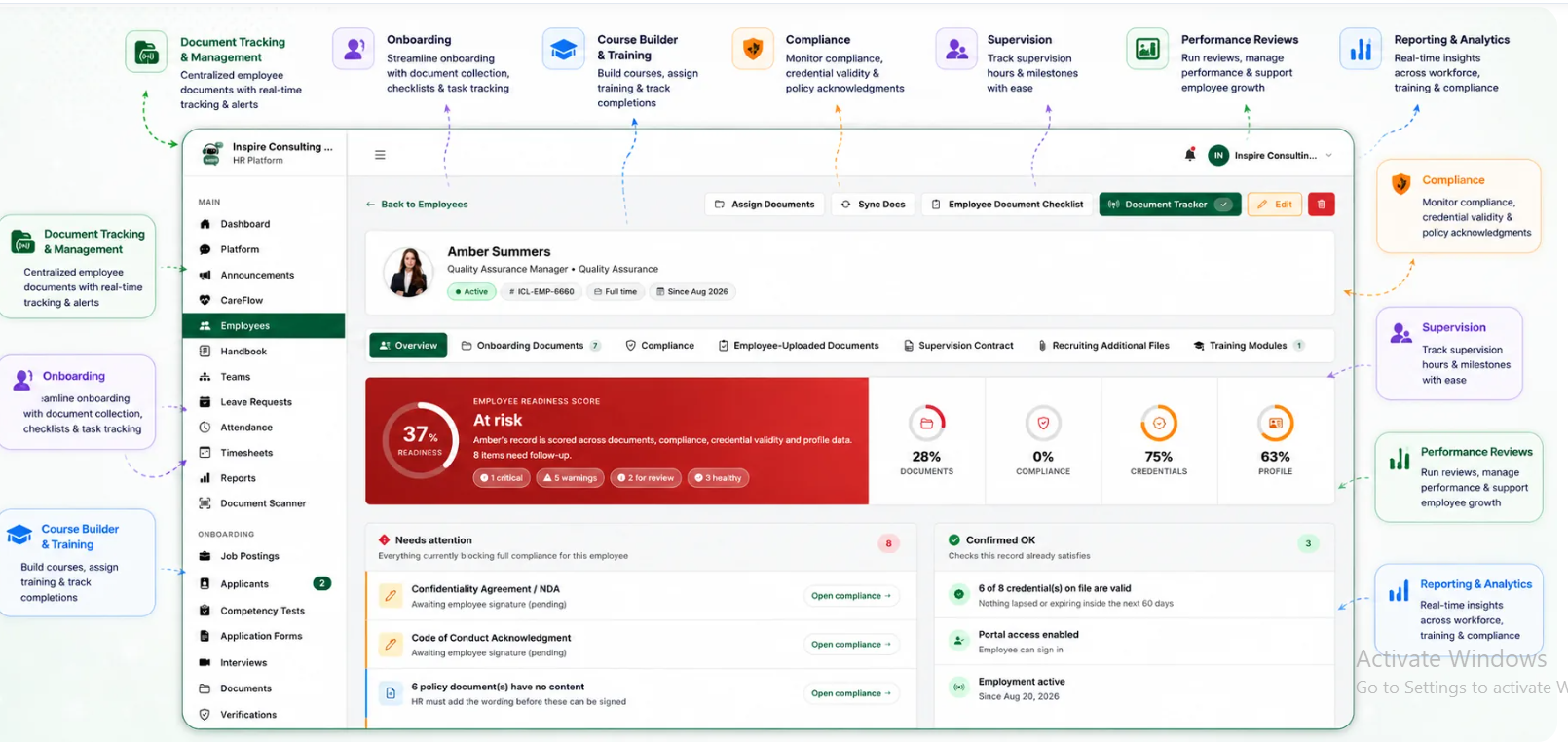
BUAMS HR helps behavioral health providers manage workforce information in one structured platform instead of spreading it across disconnected trackers. HR teams can keep employee records organized, support consistent follow-up, and maintain better visibility into changes that affect readiness and coverage.
Because the platform is built for behavioral health workforce operations, it supports the kind of coordination providers actually need: organized employee files, clearer process control, and easier access to the information that supervisors and HR teams use every day. That means fewer manual handoffs and less time spent reconciling conflicting updates.
For organizations trying to grow without increasing administrative friction, a more connected workflow can make a real difference. Instead of reacting to staffing surprises after they cause delays, teams can build a cleaner process for tracking changes and responding earlier.
Final thoughts
Employee availability tracking software is most useful when it helps providers make better workforce decisions, not just record schedule preferences. In behavioral health, availability touches service delivery, staff readiness, and operational stability. A system that keeps those updates organized can reduce unnecessary scrambling and help teams protect both coverage and compliance visibility.
For providers that want a more dependable way to coordinate workforce changes, BUAMS HR offers a practical foundation for bringing employee information, documentation, and HR process management together in one place.