Behavioral health organizations often spend a lot of time tightening controls around employee files, credentials, and training, but physical access can still lag behind. Staff badges, door permissions, restricted areas, medication rooms, records storage, and site-specific entry rules may be managed in separate systems or informal checklists. When HR, operations, and supervisors are not working from the same employee status information, badge access can drift away from the employee’s current role.
That gap creates real risk. A terminated employee may still have active access to a site. A clinician who transfers programs may keep permissions they no longer need. A new hire may be ready to work on paper but still lack the right building access on day one. Employee badge access review software helps behavioral health providers bring those decisions into a more structured workflow by connecting access reviews to role changes, onboarding milestones, and offboarding steps.
Key Takeaways
What Is Employee Badge Access Review Software?
Employee badge access review software is a workflow approach that helps organizations confirm whether an employee’s physical access permissions still match their current responsibilities. In behavioral health settings, those permissions can include entry to specific clinics, residential programs, administrative suites, records rooms, after-hours doors, staff-only areas, or other controlled spaces.
The goal is not just issuing badges. It is reviewing access at the right moments and documenting whether permissions should stay the same, expand, or be removed. That matters when someone is hired, promoted, transferred, put on leave, restricted from certain duties, or separated from employment.
Strong employee badge access review software also creates accountability across teams. HR can confirm workforce status changes, supervisors can validate role-based needs, and operations or security staff can update access with a clearer record of why the change happened. That is much safer than relying on scattered emails or assumptions that someone else handled it.
Why It Matters for Behavioral Health Providers
Behavioral health organizations operate in environments where physical access is tied to both privacy and safety. Different sites may serve different populations, use different security protocols, or limit access to certain staff groups. If badge permissions are not reviewed consistently, organizations can end up with unnecessary exposure even when clinical and HR documentation appears complete.
This becomes harder as providers grow across multiple locations and programs. Employees may split time between outpatient clinics, community-based services, residential settings, crisis programs, and administrative offices. A badge access setup that made sense six months ago may no longer reflect where that employee should go today. Without a review process, access rights can quietly accumulate instead of staying role-appropriate.
Employee badge access review software helps reduce that drift. It gives behavioral health leaders a way to treat physical access as part of workforce governance rather than a side task. That can support stronger offboarding, cleaner internal transfers, better audit readiness, and more confidence that site access rules match actual staffing decisions.
When Access Reviews Should Happen
The most effective review process is event-driven instead of occasional and reactive. Behavioral health providers should not wait for a security concern or internal audit to ask whether badge permissions still make sense.
When these checkpoints are documented, badge access becomes easier to manage because changes are tied to real workforce events instead of memory.
What to Look for in Employee Badge Access Review Software
If a provider is evaluating employee badge access review software, the key question is whether the workflow connects access decisions to dependable employee data. A useful system should make it easier to see employment status, assigned location, job role, department, supervisor, and related compliance notes when an access review is needed.
It also helps when the organization can standardize review triggers. For example, HR may want automatic checkpoints for transfers, separations, and site changes. Supervisors may need a simple review step before new access is granted. Leadership may want reporting that highlights employees with permissions that no longer match their assigned program or active status.
Documentation is another major requirement. Behavioral health providers should be able to show when access was reviewed, who approved the decision, and what underlying employee change prompted the update. That history is especially useful during investigations, internal control reviews, and policy audits.
How BUAMS HR Helps
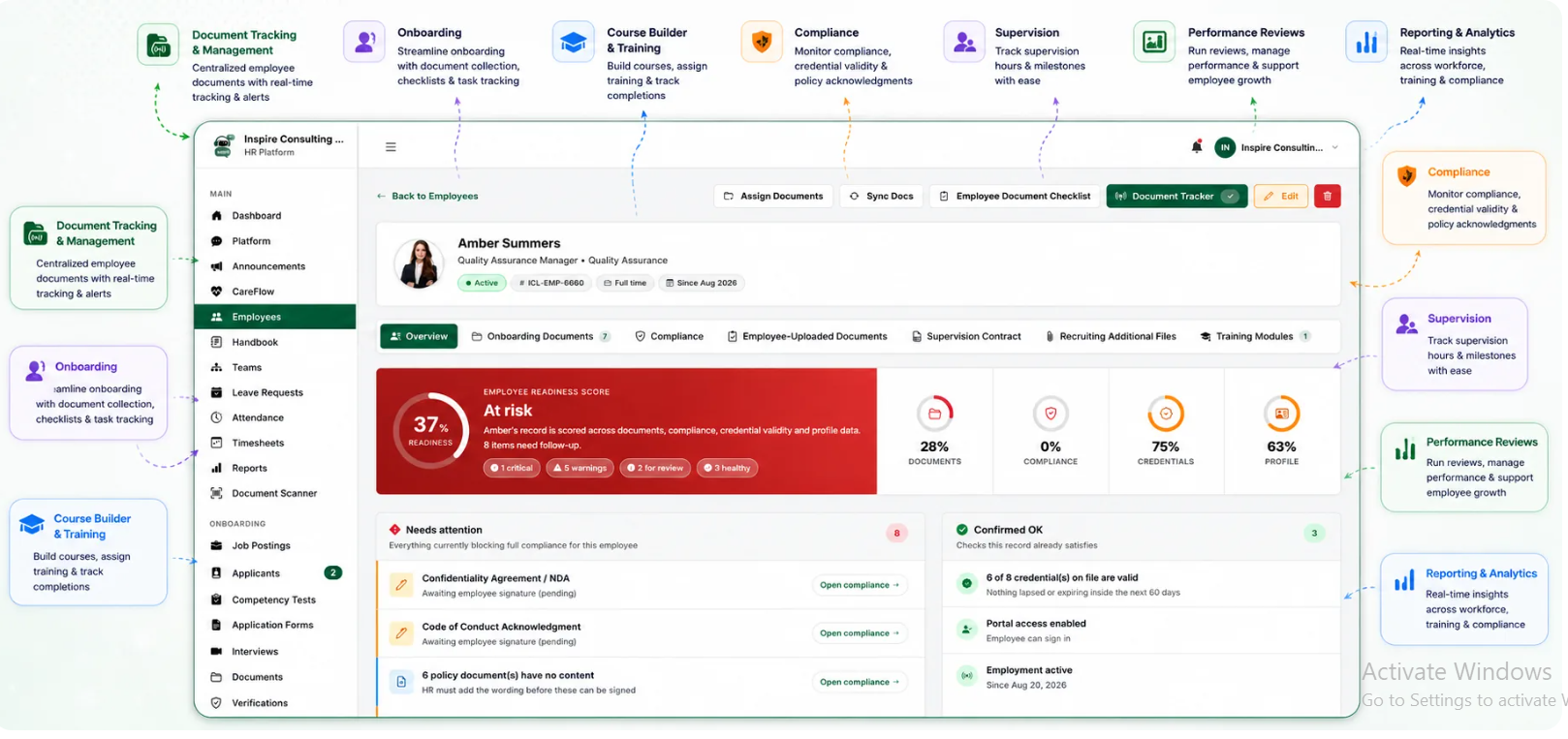
BUAMS HR helps behavioral health providers strengthen the employee recordkeeping that makes badge access reviews more reliable. By centralizing onboarding details, workforce status updates, employee documents, role changes, and separation workflows, BUAMS HR gives teams a cleaner source of truth when physical access decisions need to be reviewed.
That means HR can better support operations and site leaders with accurate information about who is active, where they are assigned, what role they hold, and whether a status change should trigger an access update. Instead of chasing multiple spreadsheets or inbox threads, teams can work from more organized employee lifecycle records.
For growing behavioral health organizations, that structure matters. Better employee records make it easier to align physical access with real workforce conditions, reduce offboarding gaps, and keep site permissions from drifting beyond what the role requires.
Final Thoughts
Physical access controls are easy to overlook until something goes wrong, but they are closely connected to everyday HR operations. Badge permissions should change when employee status changes. If that connection is weak, the organization carries avoidable risk.
Employee badge access review software gives behavioral health providers a more disciplined way to connect onboarding, transfers, role changes, and offboarding to physical access decisions. BUAMS HR supports that process by keeping the workforce data behind those decisions organized, current, and easier to review whenever access needs to be confirmed.