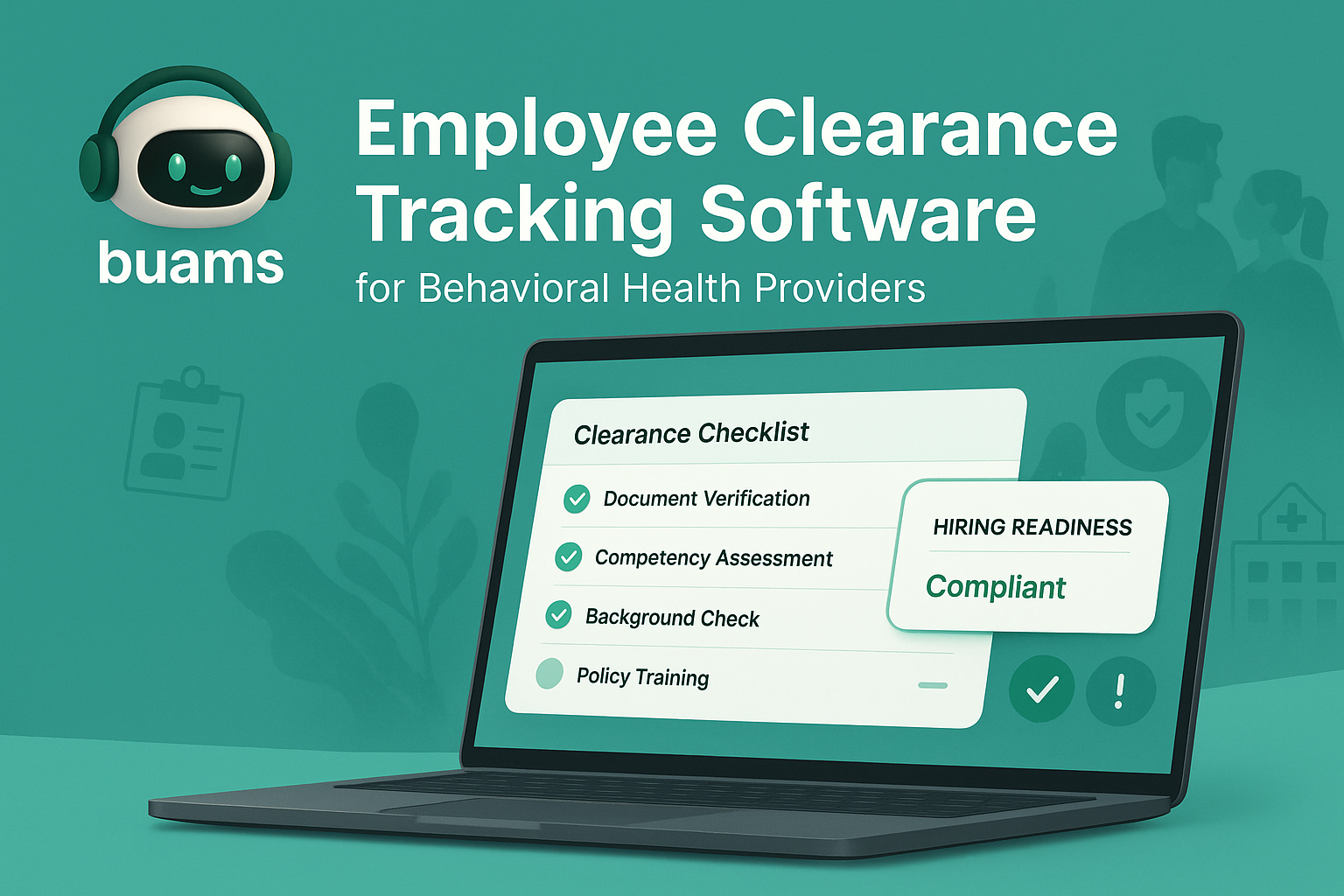
Employee Clearance Tracking Software for Behavioral Health Providers: How to Prevent Start-Date Delays and Compliance Gaps
Hiring in behavioral health often moves on tight timelines, but a candidate is not truly ready to start until every required clearance is complete, documented, and easy to verify. That can include background checks, license verification, health screenings, role-based training, signed policies, and program-specific requirements. When those items live across inboxes, spreadsheets, and paper files, HR teams can lose visibility fast.
Employee clearance tracking software helps behavioral health providers organize these moving parts in one workflow. Instead of chasing updates manually, teams can see what is complete, what is missing, and what could delay a start date or create a compliance issue.
Key Takeaways
What Is Employee Clearance Tracking Software?
Employee clearance tracking software is a system that helps HR teams manage the requirements an employee must satisfy before starting work or changing roles. In behavioral health, those requirements often extend beyond basic onboarding paperwork. They can include criminal background screening, CPR certification, license checks, tuberculosis documentation, reference verification, orientation completion, and acknowledgments tied to policies or supervision rules.
The goal is not just to store files. It is to make every requirement visible, assign responsibility, track due dates, and show whether a staff member is actually cleared for work in a specific position or program.
Why It Matters in Behavioral Health
Behavioral health providers operate in an environment where staffing readiness affects care delivery, compliance posture, and reimbursement risk. If a clinician starts before required documentation is complete, the issue can reach far beyond HR. It can create exposure during audits, disrupt scheduling, and force last-minute corrections that consume leadership time.
Clearance gaps also create avoidable hiring friction. A candidate may accept an offer, but if HR cannot quickly identify which items are missing, the start date may slip. That delay can affect caseload coverage, supervisor planning, and the candidate experience. For growing providers, the problem compounds when multiple programs or locations use slightly different requirements.
What Strong Clearance Tracking Looks Like
Role-Based Requirement Lists
Different roles need different clearance steps. A therapist, direct support professional, nurse, and administrative employee may each require a different mix of documents, training, and approvals. Strong software lets HR define requirement sets by role, site, or program instead of relying on one generic checklist.
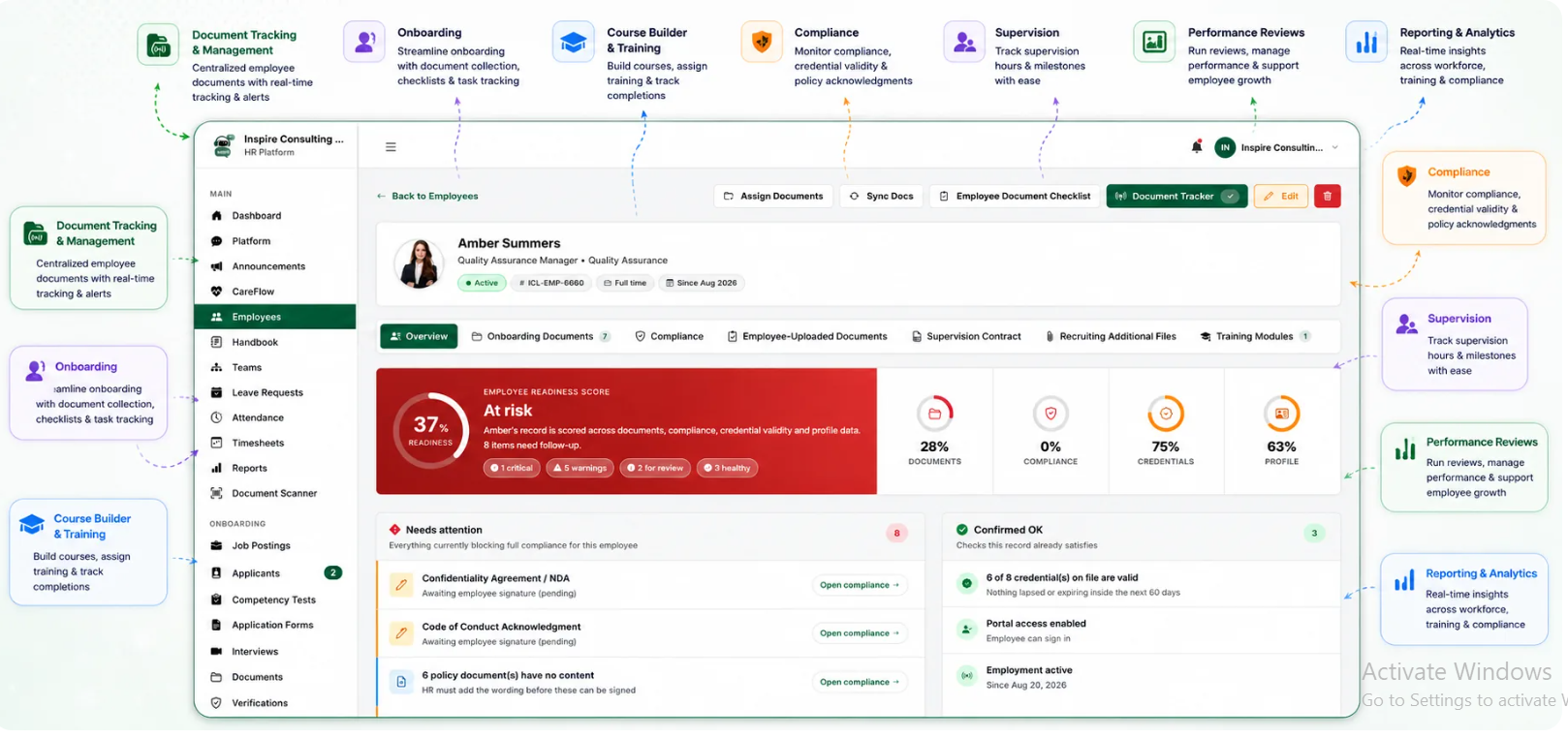
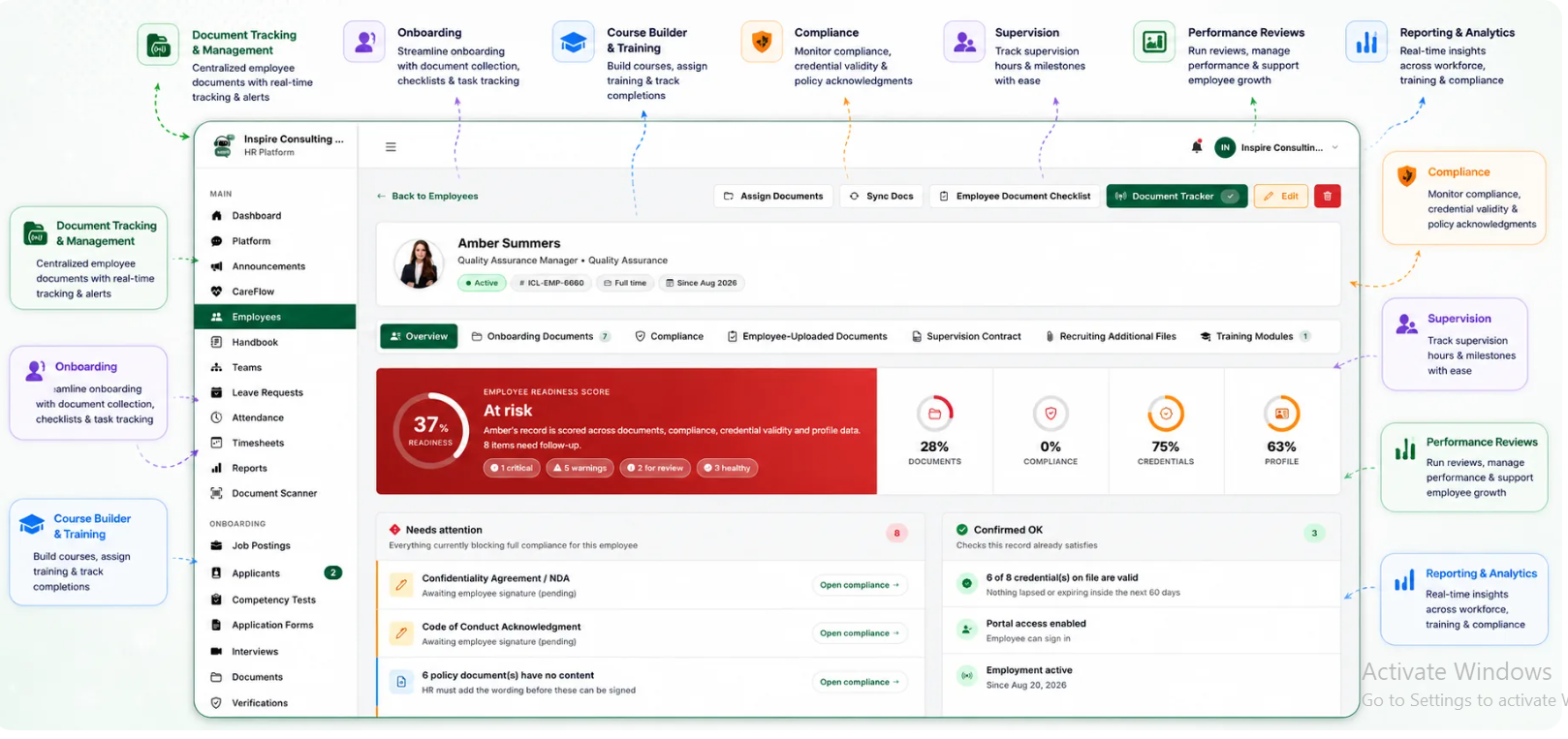
Status Visibility Across Every Hire
HR teams should be able to see each candidate or employee at a glance: complete, in progress, overdue, or blocked. That visibility helps recruiters, HR coordinators, and managers act sooner instead of discovering issues the day before orientation.
Document Collection With Proof Attached
A task marked complete is not enough if the supporting file is missing or buried in email. Each requirement should connect to the relevant document or verification note, making it easy to confirm completion and respond during internal reviews or external audits.
Deadlines, Reminders, and Escalation
Some clearance items are time-sensitive. Background screening authorizations, health documents, and license checks can delay onboarding when there is no reminder system. Automated alerts help staff follow up before an item becomes a problem.
Clear Ownership
Behavioral health onboarding often involves HR, supervisors, operations leaders, and the employee. Effective clearance tracking shows who owns each task so nothing sits untouched because everyone assumed someone else was handling it.
Common Problems With Manual Clearance Processes
These problems are common, especially in organizations balancing hiring pressure with strict compliance expectations. The solution is not more manual follow-up. It is a workflow that brings requirements, progress, and proof together.
How BUAMS HR Helps Behavioral Health Providers Stay Ready
BUAMS HR gives behavioral health organizations a structured way to manage hiring readiness and employee compliance in one place. Instead of splitting work between disconnected tools, teams can coordinate onboarding tasks, collect documents, and maintain organized employee records tied to each person.
For clearance tracking, that means HR leaders can standardize what is required, monitor completion progress, and keep supporting documentation accessible in the employee file. If a manager asks whether a new hire is ready to begin, the answer does not depend on checking multiple systems or sending several follow-up emails.
Because BUAMS HR is designed for workforce operations in behavioral health, it supports the real-world need to balance speed with compliance. Teams can improve start-date confidence while creating a cleaner trail of evidence for reviews, accreditation preparation, and day-to-day oversight.
What to Evaluate When Choosing a Solution
Final Thoughts
Employee clearance tracking software helps behavioral health providers do more than move candidates through a checklist. It helps them protect start dates, reduce compliance gaps, and give leaders a reliable picture of workforce readiness. When the process is organized, documented, and visible, HR teams spend less time chasing updates and more time supporting growth.
For organizations that want a more dependable way to connect hiring readiness with employee records and compliance oversight, BUAMS HR offers a practical path forward.