Behavioral health organizations depend on consistent workforce documentation, especially when employee incidents affect safety, operations, supervision, or compliance review. A missed follow-up note, an inconsistent timeline, or a report stored in the wrong place can create unnecessary risk for HR teams trying to respond quickly and responsibly. When reporting workflows live across email threads, paper forms, shared drives, and supervisor memory, it becomes harder to prove that the organization handled the issue in a timely and organized way.
Employee incident documentation software gives behavioral health providers a more reliable way to capture workplace issues, route follow-up, and keep supporting records connected to the right employee file. Instead of treating incidents as isolated events, providers can create a repeatable workflow for intake, review, action tracking, and record retention. That helps HR leaders reduce confusion while improving documentation quality across multiple sites, programs, and supervisors.
Key Takeaways
What Is Employee Incident Documentation Software?
Employee incident documentation software is used to record and manage workforce-related events that require formal HR attention. That may include workplace injuries, safety concerns, policy issues, employee disputes, conduct concerns, incidents involving de-escalation, or other situations that need a documented record and follow-up path. The point is not only to save a note. The point is to create a structured process so important details are captured consistently and can be reviewed later with confidence.
For behavioral health providers, this matters because the workforce often operates across clinics, community settings, residential programs, transportation environments, and administrative offices. Incidents can involve supervisors, direct care staff, clinical teams, or support staff working in different locations and shifts. If each program documents issues differently, HR loses visibility and the organization ends up with uneven records that are difficult to compare, escalate, or defend.
Why Incident Documentation Matters in Behavioral Health HR
Behavioral health organizations work in fast-moving environments where safety, supervision, and documentation discipline all matter. When an employee incident occurs, the organization may need to confirm who was involved, what happened, what immediate action was taken, who reviewed the situation, and whether any ongoing follow-up is still open. If that information is scattered, incomplete, or delayed, the organization can struggle to respond consistently.
That risk is not limited to major events. Small documentation failures add up over time. A missing witness note, an unsigned supervisor summary, or an unclear resolution status can weaken later reviews and make patterns harder to spot. HR leaders also need confidence that incidents are being handled with the same level of structure across all programs rather than depending on who happened to be on shift when the issue occurred.
In behavioral health settings, documentation quality also supports organizational trust. Staff need to know that workplace concerns are recorded carefully, handled professionally, and not left to informal memory. A reliable workflow helps supervisors escalate appropriately and helps HR maintain a more complete record of what actions were taken and when.
Where Manual Workplace Reporting Breaks Down
Many organizations still manage employee incidents through email chains, shared folders, paper forms, or one-off spreadsheets. Those approaches may seem workable until a case needs follow-up weeks later and nobody is sure which version is complete.
These gaps create administrative friction and can increase exposure during internal investigations, accreditation review, or legal consultation. Once documentation is fragmented, rebuilding the full story becomes harder and slower than it should be.
What to Look For in Employee Incident Documentation Software
The best employee incident documentation software for behavioral health providers should support structured intake, consistent follow-up, and clean record retention.
Standardized reporting fields
Organizations should be able to capture consistent core details such as incident date, location, involved employees, summary, immediate actions, and follow-up ownership. Standardization helps reduce vague reporting and makes cross-program review more practical.
Connected supporting documentation
Incident records are stronger when related files, notes, and follow-up materials stay linked to the same employee record instead of being split across folders or inboxes. This improves continuity and makes later review much easier.
Clear status and follow-up visibility
HR and supervisors need to know whether a case is open, under review, escalated, or closed. Good software reduces guesswork by making ownership and next steps more visible.
Controlled access to sensitive workforce records
Incident documentation often contains sensitive employee information. Providers need an organized way to keep records available to the right people without turning them into uncontrolled shared files.
Alignment with broader HR operations
Incident records should not sit outside the employee lifecycle. The strongest systems support coordination with employee files, policy acknowledgments, disciplinary records, leave management, and other HR workflows that may be connected to the situation.
Best Practices for Standardizing Incident Reporting
Start by defining what belongs in an employee incident record. Supervisors should know which facts must be captured every time, which documents should be attached, and when the issue must be escalated to HR. If expectations are vague, record quality will vary from one manager to the next.
Next, set clear turnaround expectations for review and closure. Some incidents need immediate escalation, while others need structured follow-up over several days. A documented process helps organizations avoid situations where a report is submitted but ownership is unclear.
It also helps to connect incident documentation with other workforce records. If a workplace issue leads to coaching, accommodation review, schedule adjustment, or policy acknowledgment, those related actions should not disappear into separate systems. HR teams work more effectively when the documentation trail stays connected.
Finally, review records for consistency across programs. Behavioral health providers often grow through multiple service lines and sites, which makes process drift common. Periodic review helps confirm that employee incident reporting is being handled with similar standards everywhere.
How BUAMS HR Helps
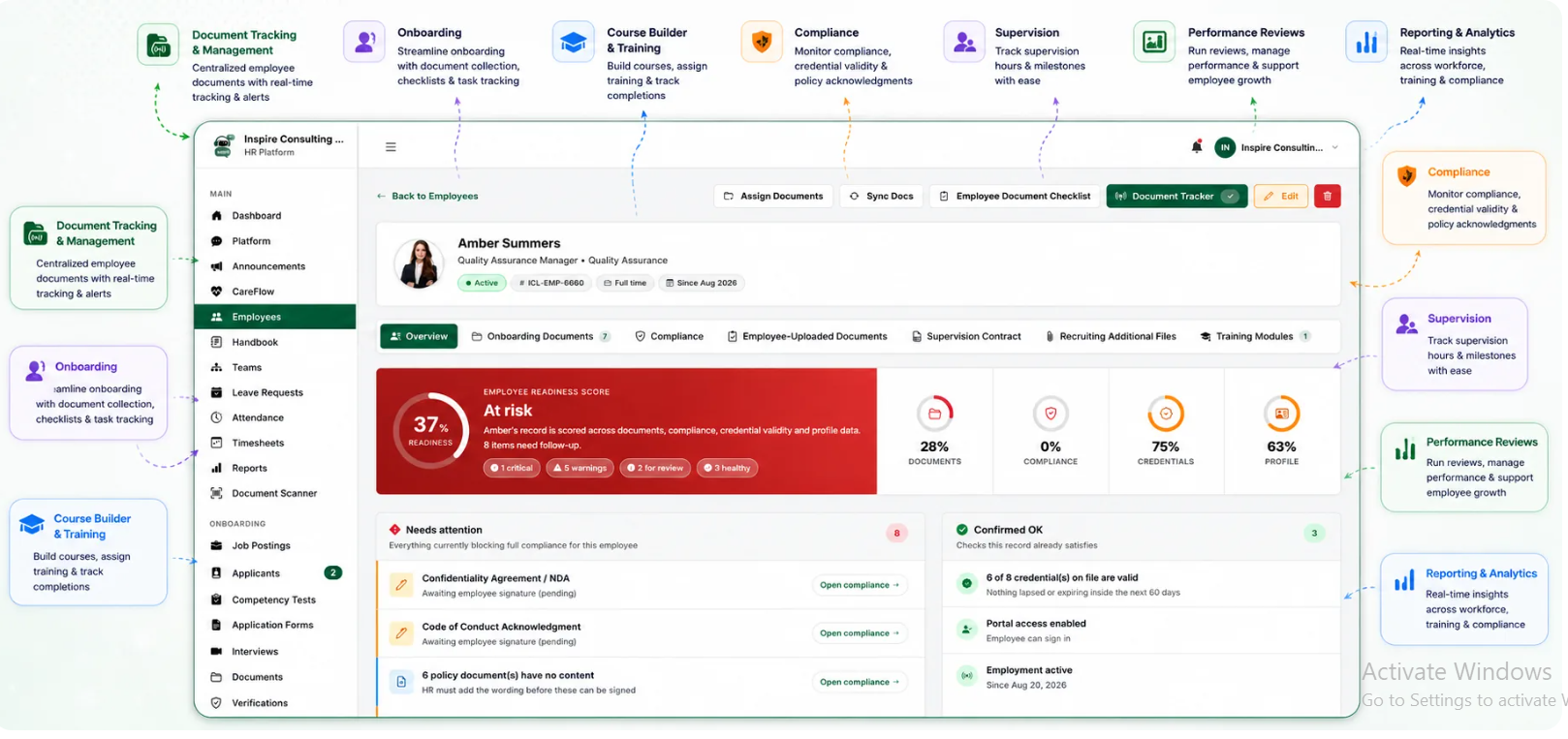
BUAMS HR helps behavioral health organizations centralize workforce documentation so important employee records are easier to organize, review, and maintain. Instead of relying on disconnected files and inconsistent reporting habits, teams can manage HR information in one system that supports stronger documentation continuity.
That matters when providers need to keep employee files, compliance records, status changes, and other workforce documentation aligned. A more structured system makes it easier for HR leaders to reduce administrative sprawl, support cleaner follow-up, and maintain better visibility into the records that shape workforce decisions.
For organizations operating across multiple programs or sites, BUAMS HR also helps create more consistent documentation practices. That gives supervisors and HR teams a stronger foundation for handling employee-related reporting in a way that is organized, practical, and easier to review later.
Final Thoughts
Employee incident documentation software helps behavioral health providers move beyond informal reporting and build a more dependable process for workplace issues. When incident details, follow-up actions, and supporting records are handled consistently, organizations are better positioned to reduce confusion, strengthen accountability, and maintain cleaner workforce documentation.
BUAMS HR gives providers a practical way to keep employee records organized across the full HR lifecycle, including the reporting workflows that matter most when incidents need timely review and clear follow-through.