Behavioral health providers cannot afford to treat workplace investigations as informal side work. A complaint about harassment, retaliation, boundary concerns, attendance disputes, supervision breakdowns, or policy violations can quickly pull HR, program leadership, and compliance staff into a messy scramble for notes, timelines, and follow-up steps. When those details are scattered across email threads, handwritten notes, and disconnected files, organizations lose time and increase risk. Workplace investigation tracking software gives behavioral health providers a structured way to document complaints, assign ownership, store evidence, record findings, and monitor corrective actions without letting the process drift.
Key Takeaways
What Is Workplace Investigation Tracking Software?
Workplace investigation tracking software is a system that helps HR teams manage the lifecycle of an internal employee matter from intake through closure. Instead of relying on ad hoc folders or memory, the software creates a durable record of when the concern was raised, who reviewed it, what information was gathered, what decisions were made, and which follow-up actions remain open. In behavioral health organizations, that kind of structure matters because employee issues often intersect with supervision, site coverage, staff safety, credentialed roles, and sensitive documentation standards.
A strong process does not replace judgment. It supports judgment with better organization. HR leaders still need to assess facts carefully, protect confidentiality, and involve legal counsel when appropriate. The value of the software is that it gives the organization a cleaner way to track the process itself. That reduces the chance that a deadline is missed, a witness interview is forgotten, or a corrective action is left incomplete after the initial urgency fades.
Why It Matters for Behavioral Health Providers
Behavioral health providers operate in environments where workforce issues can affect client care, employee retention, and regulatory confidence at the same time. A complaint about supervisor conduct may influence team stability. A policy violation may raise site safety concerns. A dispute involving documentation expectations or role boundaries may also affect coverage decisions, training needs, or supervision plans. When investigations are handled inconsistently, leadership can struggle to show that concerns were reviewed promptly and fairly.
This becomes harder in multi-site or community-based settings. Managers may work in different programs, interviews may involve field-based staff, and the records needed to understand the issue may live in separate systems. Without a centralized workflow, HR can end up rebuilding the case each time someone asks for an update. That creates unnecessary delay and increases the risk of conflicting notes, unclear findings, or uneven follow-up across teams.
Workplace investigation tracking software helps behavioral health providers create consistency. It gives HR and leadership a more dependable way to assign investigators, track milestones, preserve relevant documents, and confirm that outcomes were communicated and acted on. In a field where documentation discipline matters, consistency is not just an administrative preference. It is part of risk control.
Common Failure Points in Manual Investigation Workflows
Many organizations already know how to investigate employee concerns. The real problem is that the process often lives in too many places. Intake may start in a manager email, interviews may be stored in separate documents, evidence may sit in a shared drive, and next steps may live in someone's calendar. That fragmentation makes it harder to maintain a reliable timeline or prove that required follow-up happened.
Another common issue is inconsistent closure. An investigation may reach a conclusion, but the organization still needs to document policy reminders, supervisor coaching, training assignments, schedule changes, or disciplinary steps. If those actions are not tied back to the investigation record, the case can look complete on paper while important follow-up remains unfinished. Behavioral health organizations need a process that handles both the fact-finding stage and the operational cleanup that follows it.
What to Look for in Workplace Investigation Tracking Software
Structured intake and case assignment
The software should make it easy to capture the initial concern, assign an owner, and record the case status from the start. Clear intake fields help teams avoid vague summaries that later cause confusion about what was reported and when.
Secure evidence and note management
Investigation materials may include interview notes, attachments, policy references, timeline details, and communication records. Teams need one place to organize that information with appropriate access control and a clear chain of review.
Timeline and milestone visibility
Behavioral health HR teams benefit from seeing where each case stands. Useful software should show open interviews, overdue tasks, pending findings, and unresolved follow-up items so cases do not stall after the initial response.
Connection to employee records and supervisory context
Investigations are easier to manage when the organization can quickly see reporting relationships, prior acknowledgments, position details, and relevant HR documents. That context helps HR review issues faster without jumping across disconnected systems.
Documented closure and follow-up accountability
The system should support final findings, action tracking, and confirmation that post-investigation steps were completed. Whether the next step is coaching, retraining, policy acknowledgment, reassignment, or discipline, teams need a record that the action actually happened.
Best Practices for a Stronger Investigation Process
First, standardize your case categories. Behavioral health providers should define common issue types so intake and reporting stay consistent across programs. Second, document facts separately from conclusions. Clean records make later review easier and reduce the risk of unclear summaries. Third, assign deadlines for each major step, including witness interviews, leadership review, and employee communication. Cases tend to drift when ownership exists but timing expectations do not.
Fourth, protect confidentiality without creating silos that block necessary review. Investigation records should be controlled, but the right leaders still need timely visibility into status and follow-up. Finally, treat closure as a workflow stage instead of a note at the bottom of the file. The real value comes from confirming that findings led to action, documentation updates, and risk reduction.
How BUAMS HR Helps
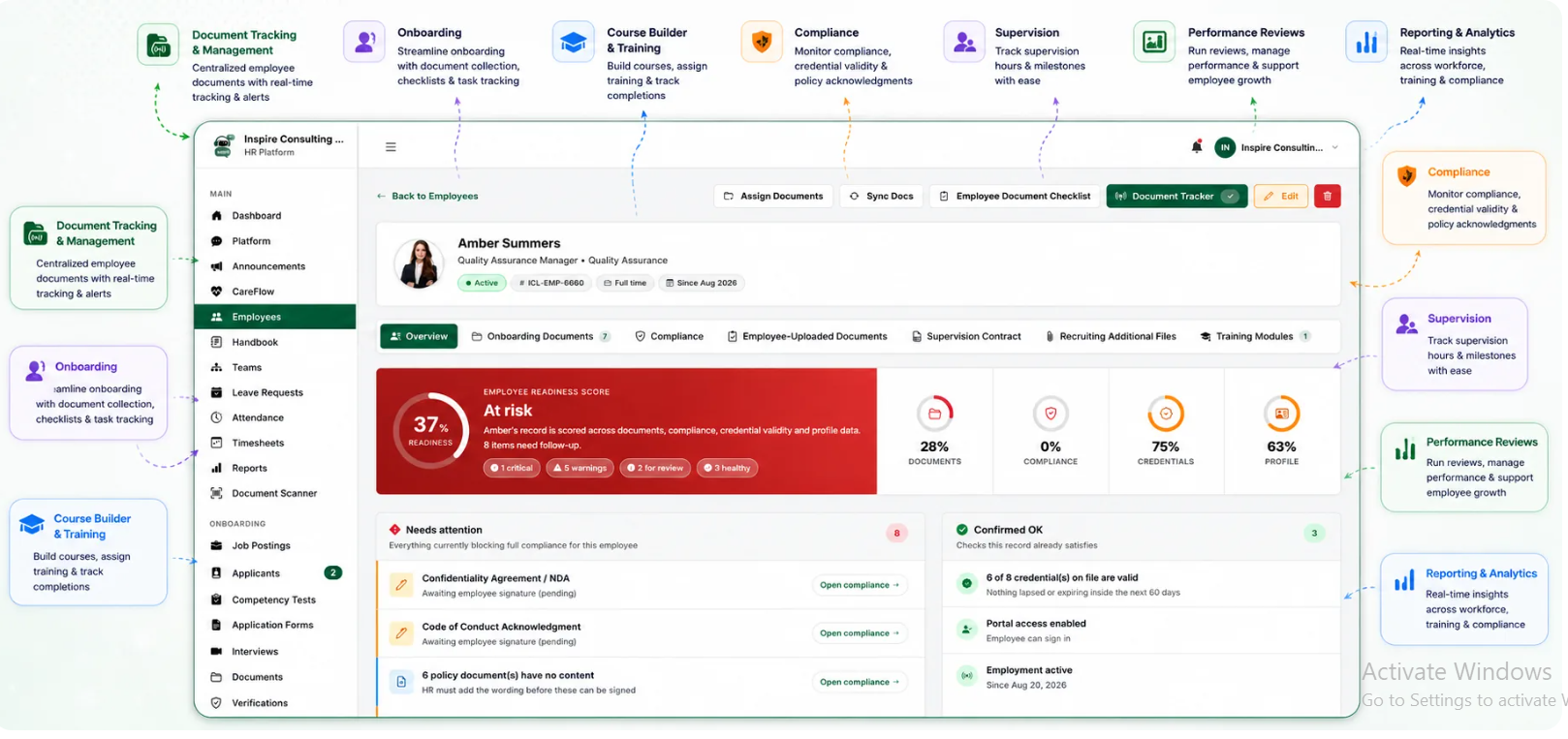
BUAMS HR helps behavioral health providers manage workforce information in a more connected and defensible way. When employee files, supervisor relationships, acknowledgments, and compliance records are organized in one system, HR teams can respond to workplace concerns with better context and less administrative friction. That matters when investigations involve questions about role expectations, prior documentation, or follow-up accountability.
For growing providers, a stronger HR foundation also supports more consistent internal processes. Teams can keep records centralized, reduce time spent chasing documents, and maintain better visibility into what has been reviewed and what still needs action. Even when a case requires human judgment and careful escalation, the surrounding workflow becomes easier to control.
BUAMS HR is especially valuable for organizations that want workforce operations to stay organized under pressure. Investigations rarely happen at convenient moments. A connected HR system helps leadership move faster, document more clearly, and keep sensitive employee matters from turning into prolonged operational disorder.
Final Thoughts
Workplace investigation tracking software gives behavioral health providers a more reliable way to manage complaints, document findings, and follow through on corrective action. In environments where workforce issues can affect safety, morale, and compliance at once, a structured process helps organizations respond with greater consistency and less confusion. Providers that centralize documentation and strengthen follow-up are better positioned to protect employees, support leaders, and maintain stronger HR control as they grow.