Behavioral health organizations cannot afford uncertainty when a new hire is about to start, move programs, or pick up client-facing responsibilities. A role may require an active clinical license, a board registration, a state certification, or internal approval from HR before the employee can work independently. When that verification work lives in inboxes, spreadsheets, and scattered PDF attachments, start dates slip and compliance risk grows. Employee license verification software gives HR teams a structured way to confirm status, collect proof, and document decisions before a scheduling problem becomes a service problem.
Key Takeaways
What employee license verification software solves
Verification is different from simple tracking. Tracking tells you when a license may expire. Verification proves that the employee held the correct, active credential for the role at the moment the organization approved them to work. In behavioral health, that distinction matters when agencies prepare for audits, respond to payer questions, or investigate whether a staff member was cleared correctly for a specific assignment.
Employee license verification software creates a repeatable process for collecting source documents, reviewing state board information, attaching supporting files, and logging the approval outcome. Instead of relying on memory or ad hoc checklists, HR can follow a consistent path every time a clinician, supervisor, or support professional needs formal review.
Why start-date delays happen so often
Many workforce bottlenecks are not caused by a missing license alone. Delays usually come from handoff failures. Recruiting may think a document was submitted. HR may be waiting on a clearer copy. A supervisor may assume verification is complete because onboarding is moving forward. Compliance may discover at the last minute that the wrong license type was checked for the role. Without a shared workflow, each team sees only part of the picture.
Behavioral health providers also manage role complexity that general HR systems often miss. One employee may work across sites, programs, or service lines with different supervision rules and credential expectations. Contract staff, per diem coverage, and internal transfers can make verification timing even harder. When organizations do not have a central process, they end up chasing proof at the exact moment they need confidence.
What to look for in employee license verification software
Role-based verification requirements
The system should support different requirements by position, department, or service type. A therapist, psychiatric rehabilitation coordinator, nurse, and program director may each need different documents and review steps. HR should be able to assign those expectations consistently instead of rebuilding a checklist for every hire.
Document capture with clear ownership
Strong verification workflows identify who owes what. That includes the employee, recruiter, HR coordinator, compliance reviewer, and hiring manager. The best setup makes it obvious which file is missing, which review is pending, and which person is responsible for the next action.
Approval history and audit evidence
Verification decisions should not disappear into email. HR teams need a durable record that shows what was reviewed, when it was reviewed, and who approved it. That history matters during accreditation reviews, internal investigations, and payer inquiries that ask the organization to prove readiness for a specific period.
Connection to employee files
Verification should feed the employee record directly. If HR confirms a license today, that proof should remain tied to the file instead of being stored in a separate folder that only one person can find later. Centralized records reduce repeat work and make future renewals easier to manage.
Best practices for behavioral health HR teams
How BUAMS HR helps reduce verification friction
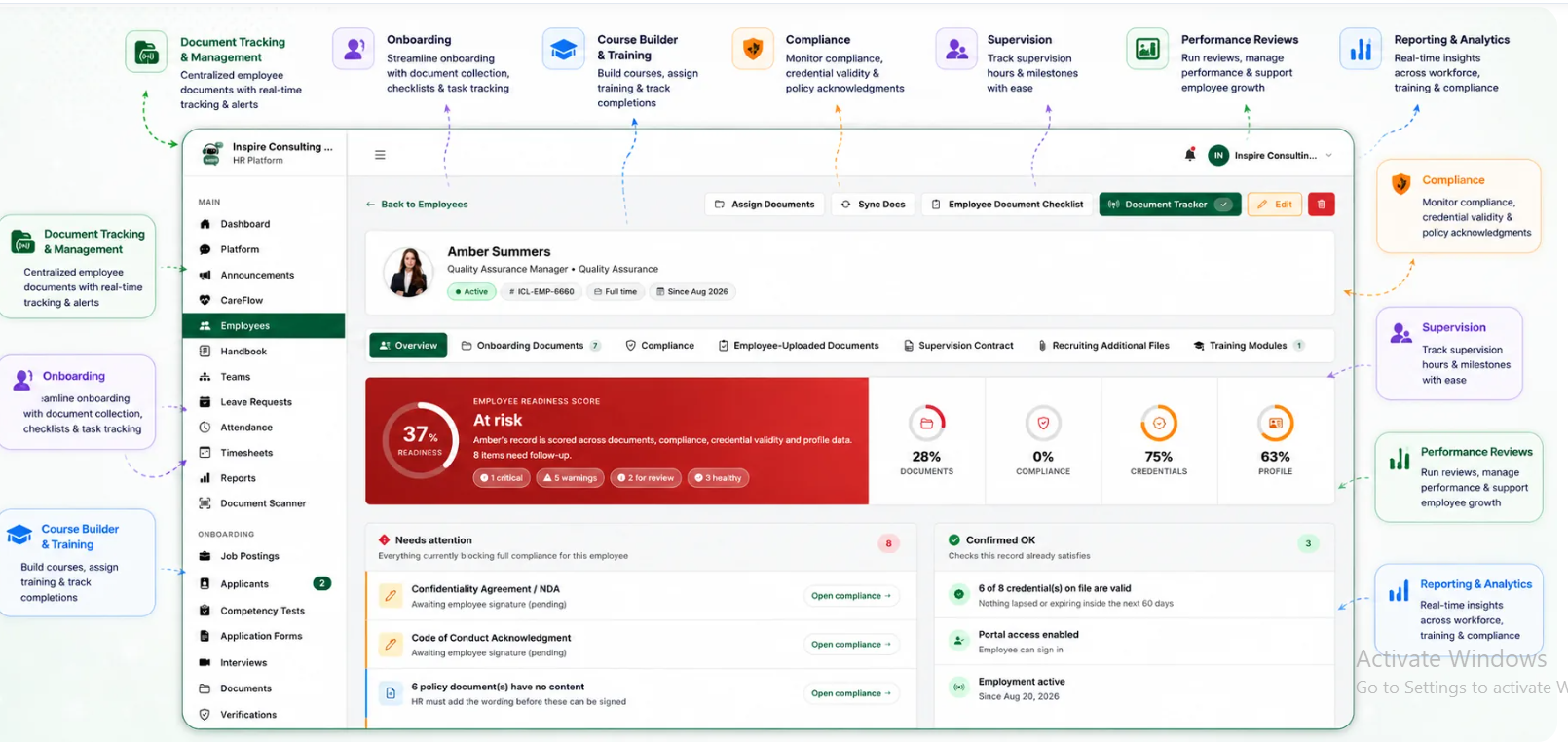
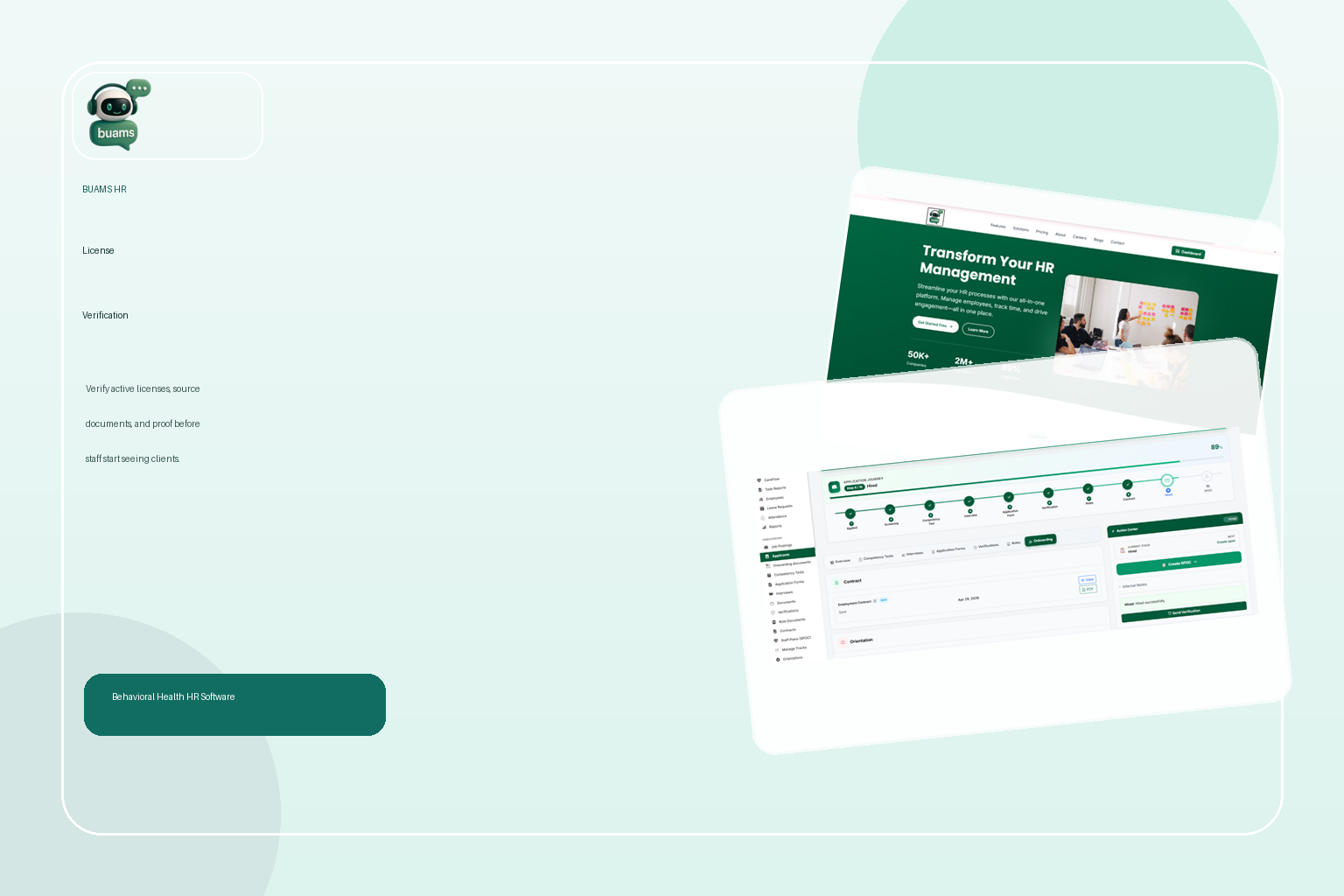
BUAMS HR gives behavioral health organizations a practical place to manage employee readiness work without splitting records across multiple tools. HR teams can organize employee files, keep required documentation attached to the right person, and maintain a clearer operational trail around review activity. That matters when hiring volume increases, multiple locations are involved, or leadership needs faster answers about who is truly ready to start.
Because BUAMS HR is built for behavioral health workforce operations, it supports the real administrative pressure behind compliance. Organizations need more than a reminder that a license exists. They need dependable workflows that connect hiring, employee files, approvals, and readiness evidence. A centralized system helps teams move faster while staying disciplined about what has actually been verified.
Final thoughts
Employee license verification software is valuable because it turns an anxious last-minute check into a documented operating process. For behavioral health providers, that means fewer delayed start dates, fewer manual follow-ups, and stronger proof that regulated roles were cleared correctly. When HR has a reliable verification workflow, the organization can hire with more confidence and protect compliance without slowing care delivery.