Behavioral health organizations cannot afford uncertainty on a staff member’s first day. A clinician, case manager, residential worker, or support team member may have a signed offer, but that does not mean they are truly ready to begin work. Readiness depends on completed onboarding tasks, verified documents, required training, active credentials, and clear visibility for HR and supervisors. Employee readiness software gives behavioral health providers a practical way to see whether each hire is actually prepared for their role before a missed step creates a compliance risk or delays services.
Key Takeaways
What Is Employee Readiness Software?
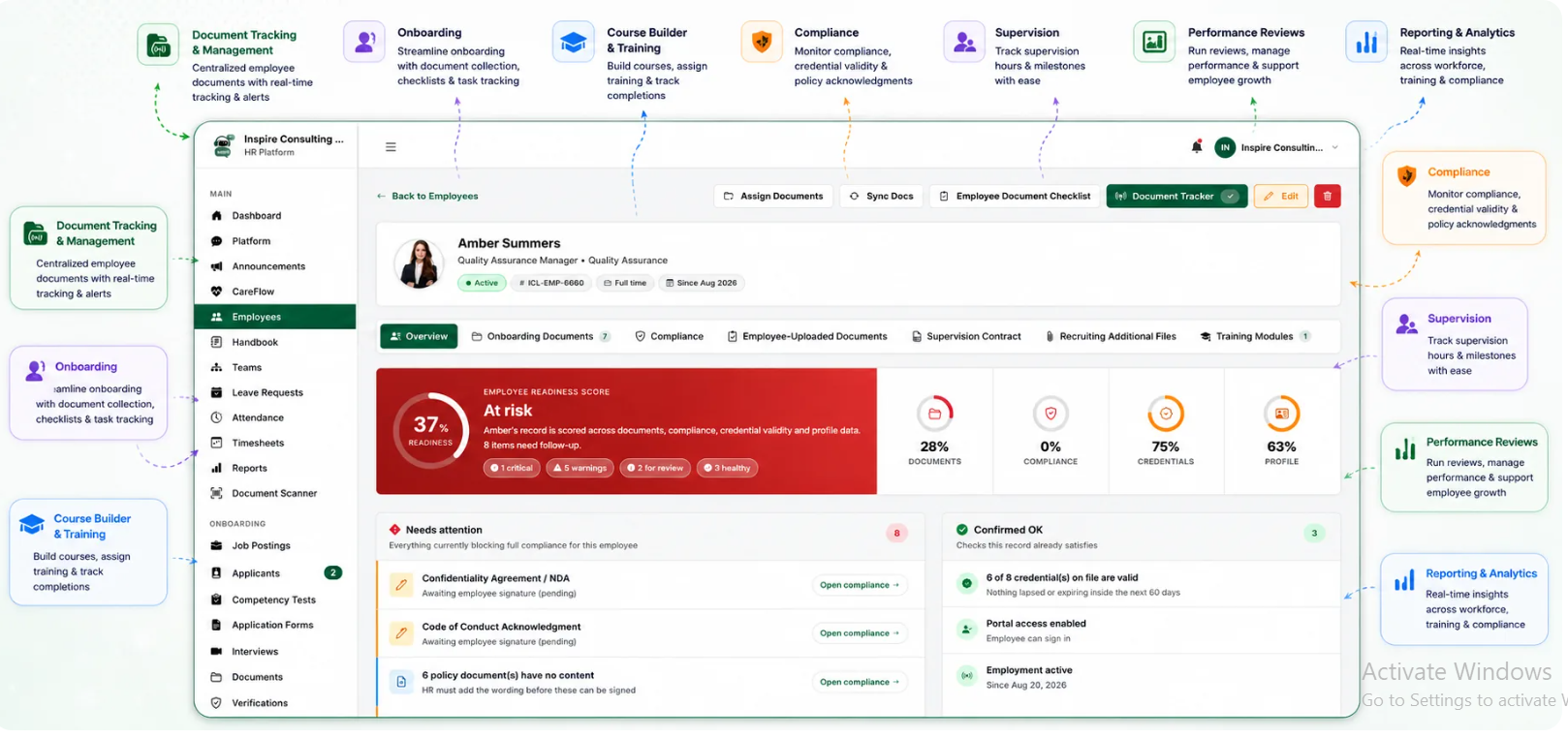
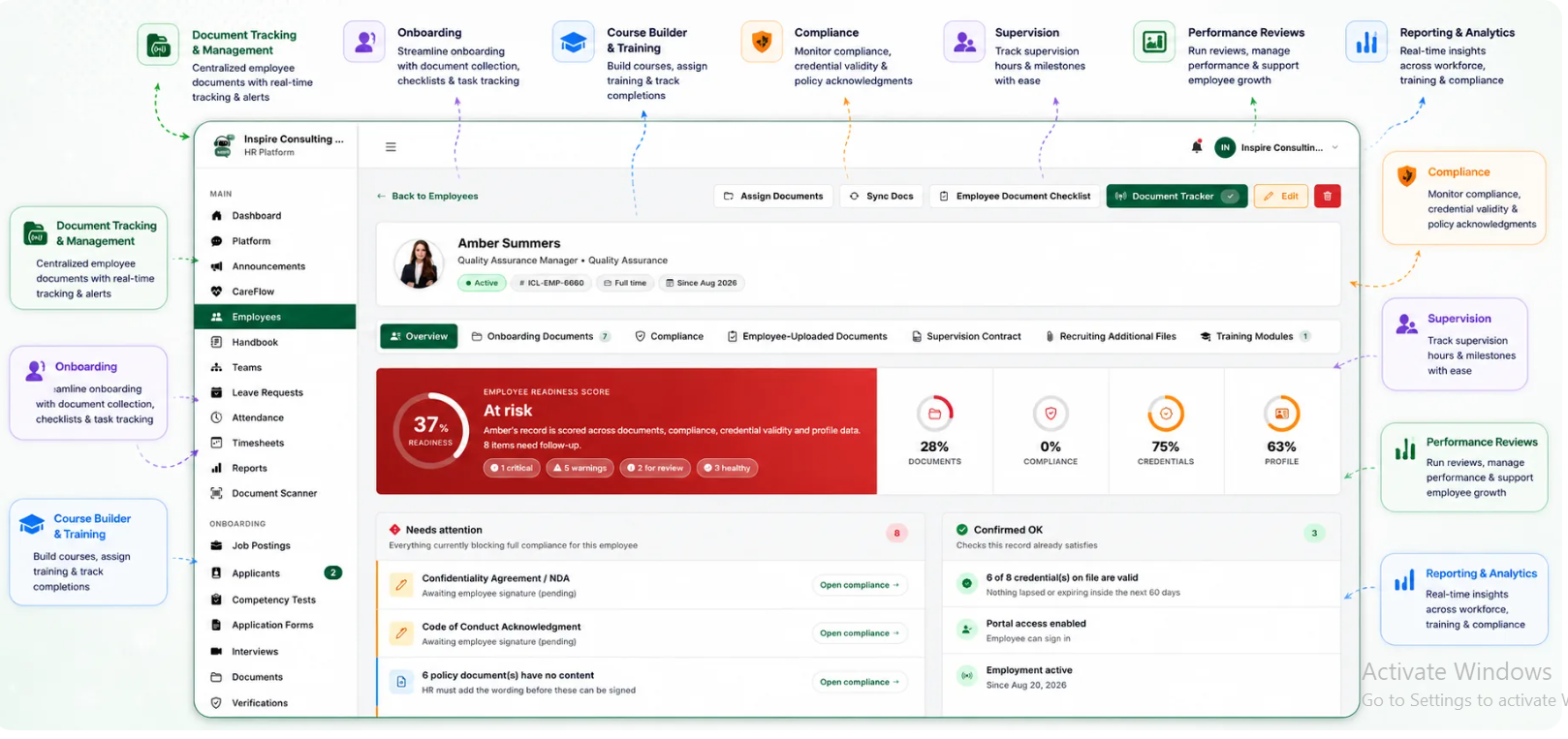
Employee readiness software is a system that shows whether a worker has completed the tasks and requirements needed to begin or continue work in a specific role. In behavioral health, readiness often includes offer and hiring documents, background screening status, policy acknowledgments, job-specific training, license or certification verification, supervision setup, and other role-based requirements.
Instead of asking HR, supervisors, and compliance staff to assemble this picture manually, the software organizes each requirement into a visible checklist or workflow. Teams can quickly see who is ready, what is still missing, who owns the next step, and whether the staff member can safely and compliantly begin work.
Why Readiness Matters in Behavioral Health
Behavioral health organizations deal with more than routine hiring logistics. They often manage multiple programs, shifting service settings, and roles with different documentation and training needs. A missed item can mean more than inconvenience. It can delay a start date, create risk during an audit, or place a worker into a role before all expectations have been met.
Readiness matters because providers need confidence that each employee has the right foundation for the work ahead. That includes not only paperwork, but also practical preparation for the environment in which they will serve clients. When readiness is unclear, organizations often see the same problems repeat:
A readiness-focused workflow solves these issues by turning scattered tasks into a shared operational view.
What To Look For in Employee Readiness Software
Role-based readiness requirements
Behavioral health providers rarely have a single hiring path for every position. Therapists, psychiatric rehabilitation staff, supervisors, and administrative employees may each need different forms, training, and approvals. The software should let HR define readiness requirements by role, location, program, or employment type so that staff complete only the tasks that truly apply.
Clear status tracking
A good readiness system should show whether each requirement is complete, pending, overdue, or blocked. This visibility helps HR and managers make better start-date decisions without digging through separate systems. It should be easy to identify the exact item preventing readiness and who needs to act next.
Document and acknowledgment collection
Readiness depends on complete records. Look for software that supports secure document collection, signed acknowledgments, and organized storage for hiring and onboarding files. This is especially important for behavioral health providers that need to respond quickly to internal reviews, accreditation requests, or funder oversight.
Training and compliance alignment
Employee readiness software should not stop at forms. It should connect required learning, compliance tasks, and proof of completion to the employee’s record. When a role requires specific orientation content, annual training, or program-level documentation, the system should make those items part of the readiness process rather than a separate afterthought.
Manager and HR coordination
Readiness improves when supervisors and HR can work from the same source of truth. The platform should support shared visibility, notifications, and handoffs so that important steps do not stall between teams. This is especially useful when organizations are opening positions quickly or coordinating starts across multiple sites.
Best Practices for Building a Readiness-Based Workflow
Define what “ready” means for each role
Many delays happen because teams assume readiness means the same thing to everyone. Start by defining the minimum requirements for each role before the first scheduled day. Separate nice-to-have tasks from true start-date requirements so that decisions are consistent.
Use one owner for workflow design
Even when multiple departments contribute, one function should maintain the readiness workflow. In many organizations, HR is best positioned to coordinate the process because it already touches hiring, onboarding, employee files, and compliance documentation.
Track exceptions instead of hiding them
Sometimes a leader will approve a start date while one noncritical item is still pending. That can be operationally reasonable, but it should be documented. The best systems allow teams to record exceptions, note approvals, and keep an audit trail instead of relying on verbal decisions.
Review delays by trend, not only by employee
Readiness software becomes more valuable when leaders use it to identify repeated bottlenecks. If the same training, form, or approval repeatedly delays staff starts, that is a process problem worth fixing. Trend visibility helps organizations improve speed and consistency over time.
How BUAMS HR Helps Behavioral Health Providers Improve Employee Readiness
BUAMS HR supports a readiness-centered approach by bringing hiring tasks, employee files, compliance-related records, and workflow visibility into one place. Instead of forcing teams to piece together status from email chains, spreadsheets, and disconnected folders, BUAMS HR helps organizations organize the steps required to prepare staff for their roles.
For behavioral health providers, that means HR can standardize onboarding expectations, maintain complete employee records, monitor required items, and give supervisors better visibility into whether a worker is prepared to begin. A more connected process helps reduce avoidable delays while supporting documentation quality and audit readiness.
As organizations grow across programs or locations, BUAMS HR also makes it easier to maintain consistent workflows without losing flexibility for role-specific requirements. That balance is especially important in behavioral health, where staffing complexity and compliance pressure often increase together.
Final Thoughts
Employee readiness software is not just a convenience tool. For behavioral health providers, it is a practical way to reduce uncertainty at the point where hiring becomes active service delivery. When HR teams can confirm readiness through one organized workflow, they create smoother starts, better records, and stronger protection against preventable compliance gaps.
Providers that want more confident start dates should look beyond basic onboarding checklists and build a process that answers a simple but critical question: is this employee truly ready for the role they are about to perform?