Behavioral health providers ask a great deal from supervisors and frontline teams. They are expected to manage demanding caseloads, support clients through complex situations, complete training on time, follow documentation standards, and stay steady through constant workforce pressure. In that environment, recognition often gets treated as a soft extra instead of an operational discipline. Leaders may care deeply about appreciating good work, but the process usually happens in scattered emails, verbal praise, or isolated spreadsheets that do not create consistent follow-through.
Employee recognition tracking software gives behavioral health organizations a more structured way to document wins, reinforce the right behaviors, and connect recognition activity to retention efforts. Instead of relying on memory alone, HR and supervisors can track milestones, peer shout-outs, manager acknowledgments, program-specific achievements, and follow-up actions in one organized workflow. For providers trying to reduce burnout and improve staff stability, that structure can make recognition more consistent and more credible.
Key Takeaways
What Is Employee Recognition Tracking Software?
Employee recognition tracking software is a system used to capture, organize, and monitor recognition activity across the workforce. In behavioral health settings, that can include probation completion, work anniversaries, certification milestones, training achievements, peer acknowledgments, leadership spot recognition, and program-specific accomplishments that deserve formal visibility.
The goal is not to turn appreciation into a robotic process. The goal is to make recognition dependable. Instead of leaving praise to whoever happens to remember, the organization creates a repeatable structure for noting meaningful contributions, prompting manager follow-up, and seeing whether recognition is reaching the right people and teams.
That matters because recognition is most valuable when it is timely, specific, and consistent. Software helps providers move closer to that standard without depending on manual memory or fragmented communication.
Why It Matters for Behavioral Health Providers
Behavioral health organizations operate in a high-pressure environment where burnout, turnover, and vacancy risk can spread quickly. Staff members often carry emotionally demanding workloads while also navigating strict compliance expectations and changing program needs. When good work goes unnoticed, providers do not just lose a chance to improve morale. They also lose an opportunity to strengthen retention, reinforce desired behaviors, and help supervisors build trust with their teams.
Recognition also matters because behavioral health work is highly relational. Employees want to know that leadership notices effort, growth, and reliability, especially when the job is difficult. A structured recognition process gives HR a way to support culture intentionally rather than assuming appreciation will happen naturally at every site.
For multi-site providers, the issue becomes even more important. One program may have strong local habits around appreciation while another may recognize almost nothing beyond annual reviews. Recognition tracking software helps reduce that inconsistency and gives leadership a better view of where culture support may be uneven.
Where Manual Recognition Processes Break Down
Most organizations do not fail at recognition because they do not value people. They fail because the process has no reliable system behind it. Appreciation becomes dependent on individual manager style, available time, or whether someone remembers a milestone before it passes.
These breakdowns create a familiar problem: everyone agrees recognition is important, but the organization cannot run it in a consistent way. That is exactly where software can help.
What to Look For in Employee Recognition Tracking Software
Milestone and event tracking
The software should make it easy to track important workforce moments such as anniversaries, completed onboarding, certifications, training milestones, and notable contributions. That helps supervisors act on time instead of after the moment has passed.
Manager-friendly submission workflows
If recognition takes too many clicks or too much writing, supervisors will skip it. Good software should support quick acknowledgments while still making space for specific, meaningful notes that employees can understand and value.
Visibility into participation and gaps
HR leaders should be able to see which teams are actively recognizing staff and which teams are largely silent. That visibility is useful for manager coaching and for understanding whether culture support is being applied evenly across programs.
Connection to workforce records
Recognition should not live in a disconnected tool with no operational context. When acknowledgments can connect to employee records, milestones, training completion, or supervisor relationships, the organization gains a fuller picture of employee engagement and readiness.
Reporting that supports retention strategy
Behavioral health providers need more than a feel-good feed. They need trend visibility that helps HR identify where appreciation is strong, where it is absent, and whether recognition habits align with retention concerns, vacancy pressure, or supervisor transition risk.
Best Practices for Stronger Recognition Workflows
Software is most useful when the organization defines what recognition is supposed to accomplish. Providers should be clear about which milestones deserve formal acknowledgment, what role supervisors are expected to play, and how recognition supports broader retention and culture goals.
These practices keep recognition practical. The point is not to create extra ceremony. It is to make appreciation visible, repeatable, and useful to the health of the workforce.
How BUAMS HR Helps
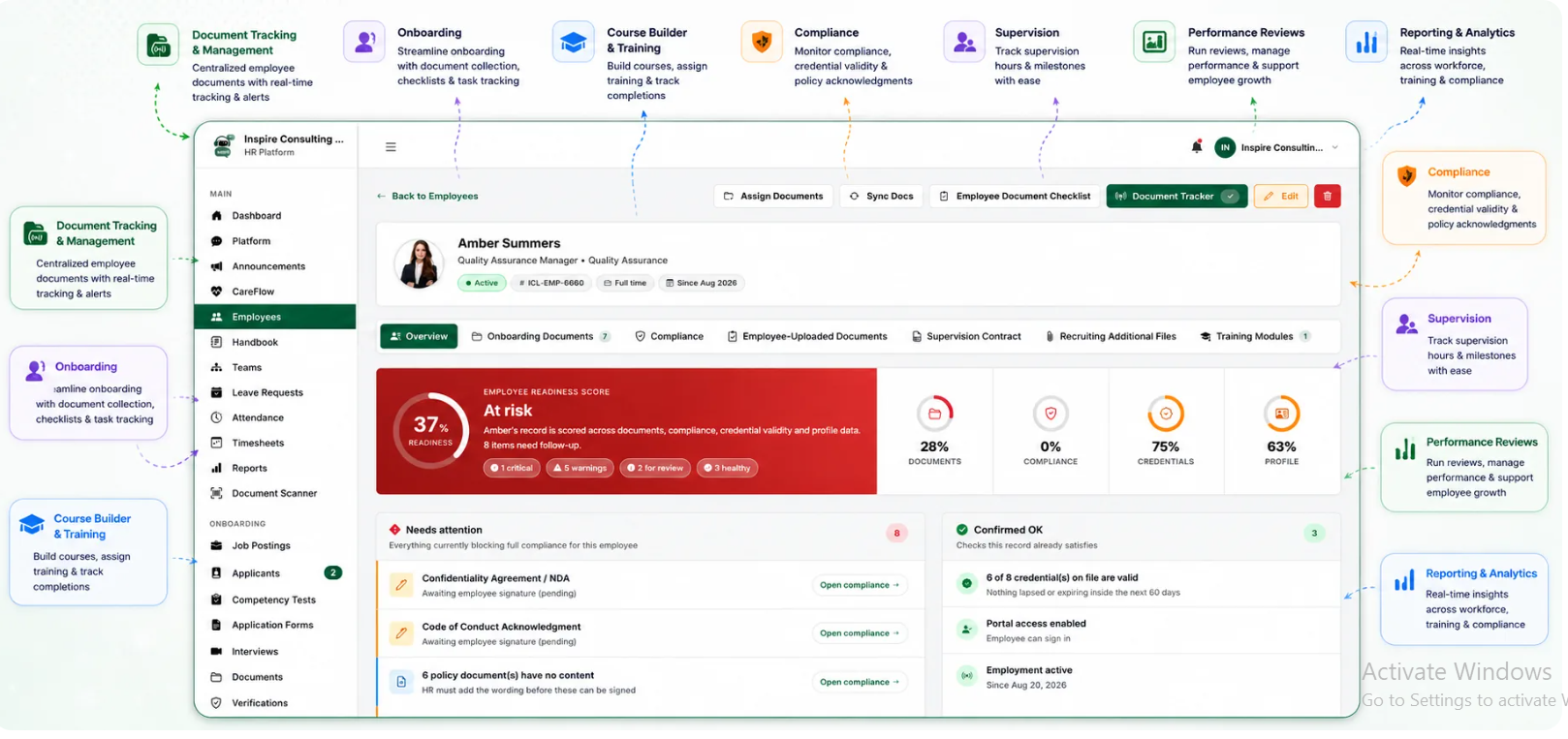
BUAMS HR helps behavioral health providers keep employee records, milestone data, and workforce workflows organized in one place. That kind of structure makes recognition tracking more manageable because HR and supervisors do not have to piece together anniversaries, completed requirements, role changes, and manager relationships from disconnected systems. A stronger operational foundation makes timely recognition easier.
For organizations trying to support retention without adding more administrative friction, BUAMS HR can help centralize the employee context behind meaningful recognition. When teams have clearer visibility into milestones, documentation status, and workforce changes, they are better positioned to acknowledge progress, reinforce reliability, and follow up consistently across sites.
That matters for behavioral health providers because culture support works best when it is embedded in daily operations. Recognition becomes more sustainable when it is tied to real workforce data instead of depending entirely on memory.
Final Thoughts
Employee recognition tracking software helps behavioral health providers bring structure to something that is often left to chance. By making milestones, acknowledgments, and participation trends more visible, organizations can reinforce the behaviors they want more of and create a more consistent employee experience.
For teams focused on retention, supervisor effectiveness, and workforce stability, a stronger recognition process is not fluff. It is part of building a healthier operating environment for the people who deliver care every day.