Employee Records Software for Behavioral Health Providers: How to Keep Role Changes, Renewals, and HR Files Aligned
Behavioral health organizations rarely struggle because they lack HR information. More often, the problem is that the information lives in too many places. A supervisor updates an employee’s title, HR saves a new job description in a shared drive, compliance tracks a license renewal in a spreadsheet, and payroll reflects the change somewhere else. Over time, those disconnected updates create risk. Employee records software gives providers a practical way to keep staff files accurate as people change roles, locations, credentials, and responsibilities.
For mental health agencies, outpatient programs, and multi-site provider groups, accurate employee records are more than an administrative preference. They support onboarding quality, audit readiness, workforce planning, and confidence that the right documentation is attached to the right person at the right time.
Key Takeaways
Why employee records become difficult to manage in behavioral health
Behavioral health staffing is dynamic. Clinicians add credentials, direct care employees shift across programs, supervisors change, and support staff take on new responsibilities as organizations grow. Each change affects the employee file. If record updates are handled manually, teams can miss required forms, outdated training evidence, revised acknowledgments, or proof that the employee is cleared for the work they are now performing.
The challenge grows when agencies serve multiple programs or jurisdictions. A Maryland and DC provider may need to reflect different documentation expectations, different supervisory relationships, or different license details depending on the employee’s role. Without a structured system, HR teams spend too much time chasing down the latest version of a file instead of confidently managing it.
What effective employee records software should help you track
A useful system should do more than store PDFs. It should help HR teams understand whether a file is complete, current, and aligned with the employee’s actual job status.
When these records are tied together, teams can see whether a role change also triggered a missing training, a new supervisor approval, or an outdated compliance document. That context matters in behavioral health because staffing documentation is closely linked to service quality and regulatory expectations.
Common breakdowns to avoid during role and status changes
Many file problems appear when an employee’s status changes. Promotions, transfers, leaves of absence, credential renewals, and location moves often create a burst of activity across departments. If there is no shared system, updates happen unevenly.
One common issue is partial updates. HR may upload a new offer or title change form, but nobody confirms whether the employee’s training plan, supervision assignment, or required acknowledgments also changed. Another issue is duplicate storage. Teams keep local copies in email, shared drives, and separate compliance folders, which makes it harder to know which version is final.
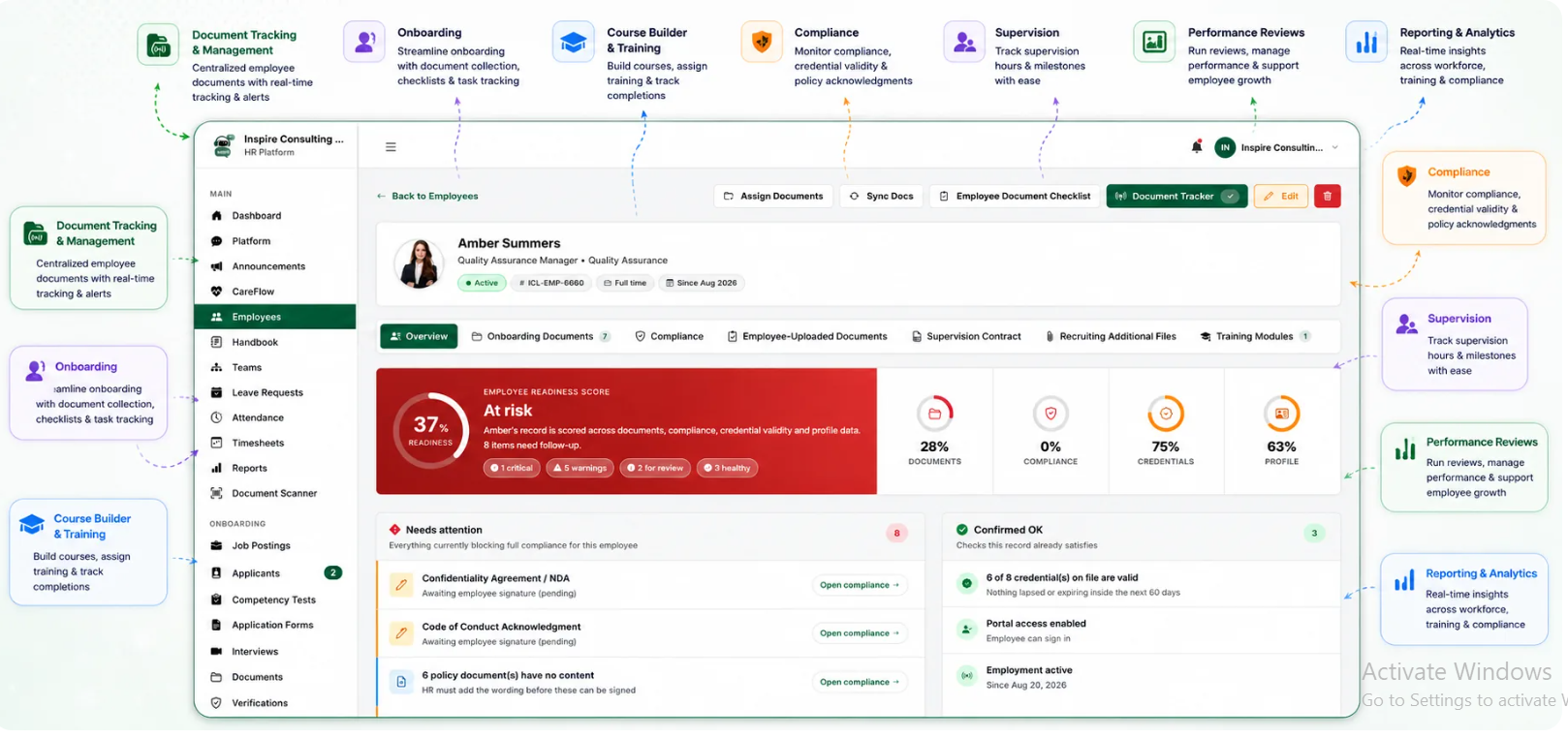
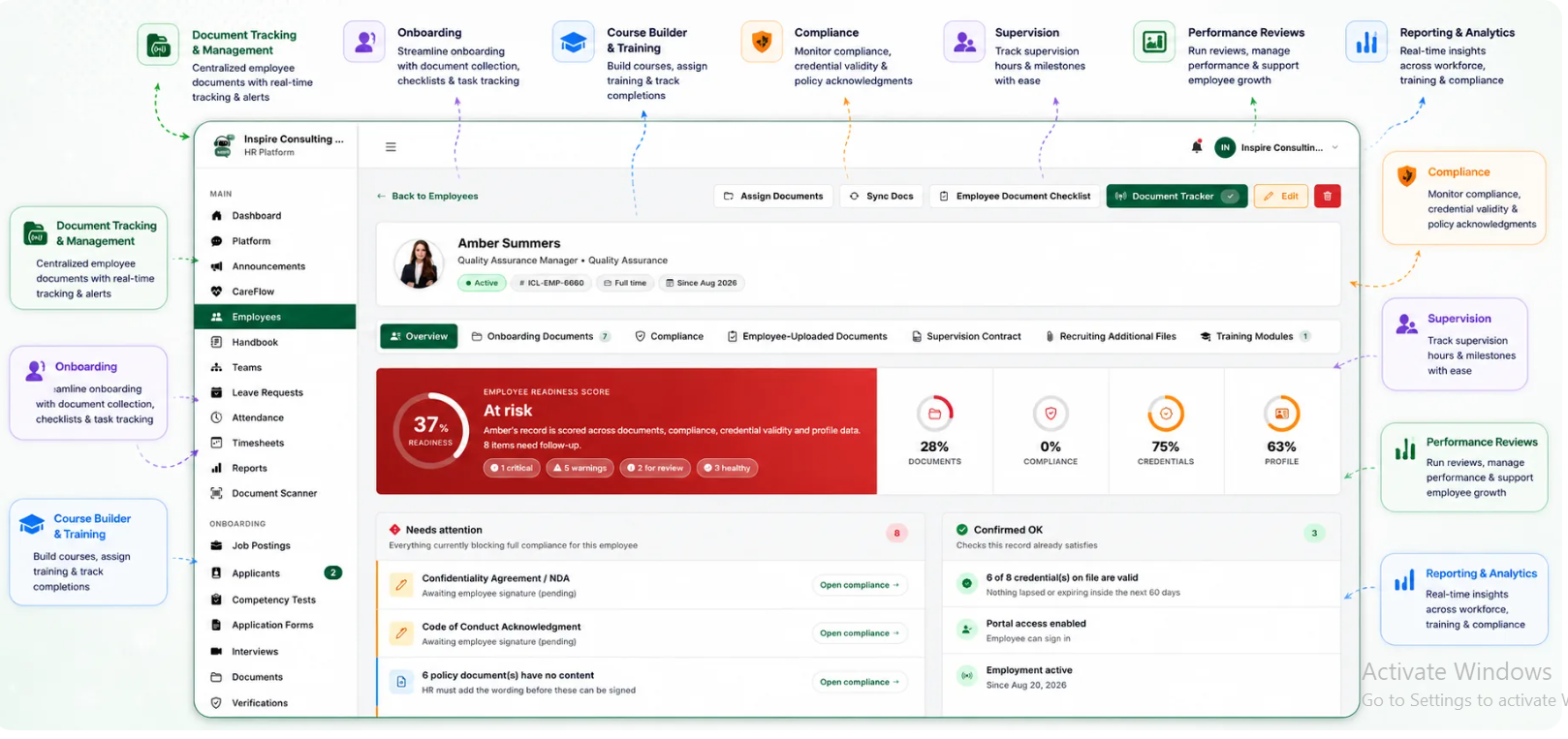
Employee records software reduces those gaps by creating one source of truth and making follow-up items easier to spot. Instead of searching across tools, HR can review a record in context and confirm that a personnel change has been fully documented.
How better records support compliance and daily operations
Well-managed employee records help more than audits. They improve everyday execution. Managers can prepare for internal reviews faster. HR can answer document requests without scrambling. Compliance teams can identify expiring items earlier. Leadership gets a clearer picture of workforce readiness across programs and sites.
That matters for growing behavioral health providers because administrative friction tends to increase before systems improve. Agencies that standardize records early are better positioned to scale hiring, maintain consistency, and reduce last-minute cleanup before surveys or accreditation reviews.
How BUAMS HR helps behavioral health teams stay organized
BUAMS HR is designed for mental and behavioral health workforce operations, so employee file management does not have to sit apart from the rest of the HR process. Teams can organize employee records in a structured system, connect files to onboarding and compliance workflows, and maintain clearer visibility into what is complete versus what still needs attention.
For providers managing frequent staffing changes, that means less reliance on scattered spreadsheets and shared folders. A centralized HR workflow supports cleaner handoffs, more consistent documentation practices, and easier preparation when leadership or regulators need answers quickly.
Final thoughts
Employee records software is most valuable when it helps HR teams manage change, not just archive documents. Behavioral health providers need employee files that reflect real-world staffing changes as they happen, with enough structure to support compliance and enough flexibility to support growth. When records stay aligned with roles, renewals, and organizational workflows, HR teams spend less time correcting gaps and more time supporting the workforce.