Behavioral health providers rarely have time for a slow hiring process. When a clinician, case manager, direct support professional, or administrative lead leaves, open roles can quickly affect client access, supervisor workload, and compliance coverage. Referral programs can help agencies move faster, but informal referral tracking often creates its own problems. Candidate names get lost in email threads, managers are unclear about next steps, and HR teams struggle to document who referred whom, what stage the applicant is in, and whether required hiring steps are actually complete.
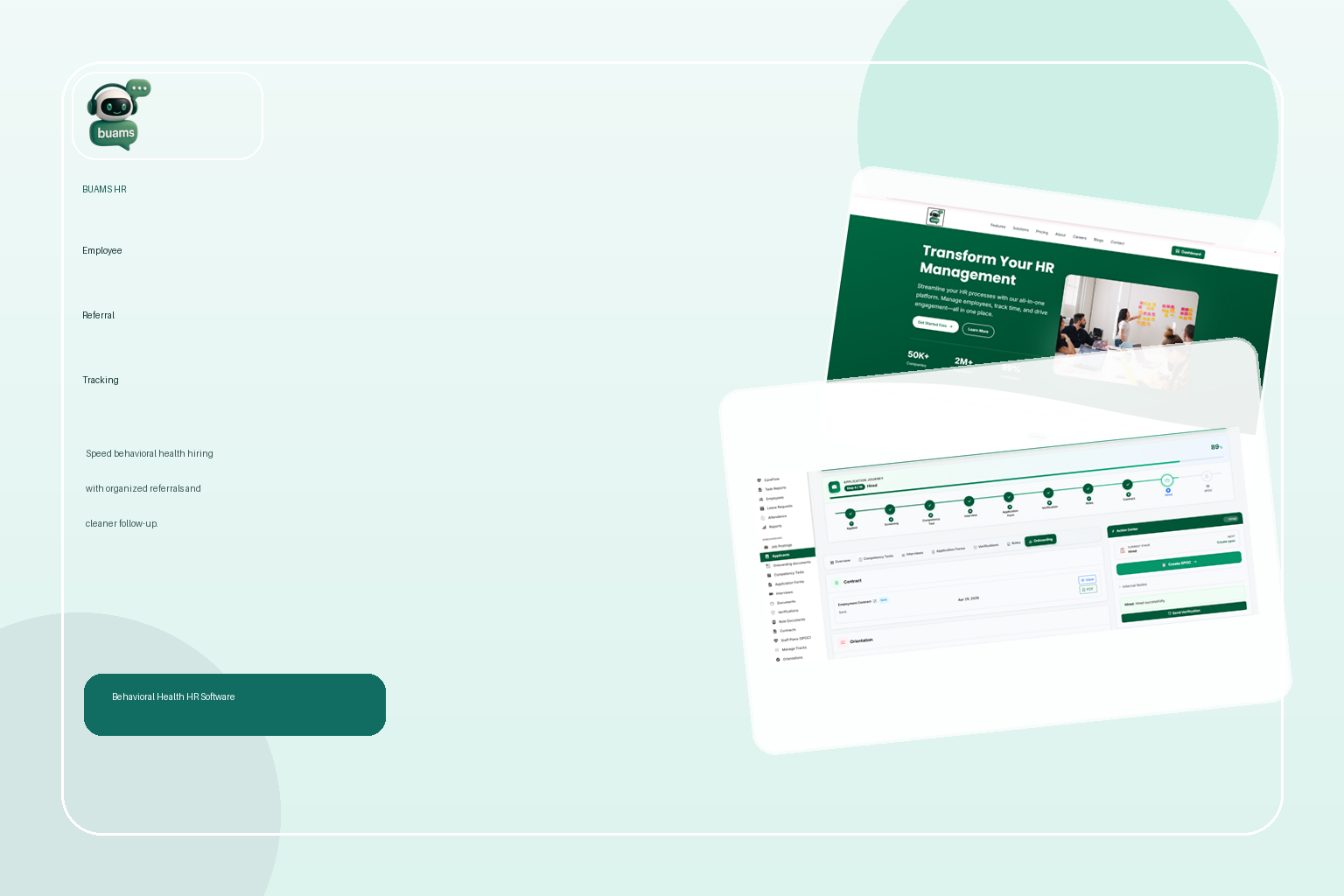
Employee referral tracking software gives behavioral health organizations a cleaner way to manage internal referrals from first submission through hiring decision. Instead of relying on disconnected spreadsheets and inbox follow-up, providers can create a repeatable process that improves visibility, shortens delays, and keeps hiring records organized.
Key Takeaways
What Is Employee Referral Tracking Software?
Employee referral tracking software is a system for collecting, organizing, and monitoring candidate referrals submitted by current staff. In a behavioral health environment, that means HR can track which employee made the referral, which role the candidate is being considered for, where the candidate sits in the hiring process, and whether important requirements such as background checks, documents, and role readiness tasks are on schedule.
The software should do more than log names. A useful referral workflow creates clear ownership, timestamps actions, and helps HR teams see whether referral candidates are moving efficiently or getting stuck between recruiting, review, and onboarding. For growing providers, that visibility matters because hiring delays can directly affect staffing ratios, program expansion, and continuity of care.
Why Referral Tracking Matters in Behavioral Health
Behavioral health hiring is often relationship-driven. Employees may know qualified clinicians, peer support staff, residential team members, or front-office professionals who understand the demands of the work. Referrals can improve applicant quality and speed, but only if the process is managed consistently.
Without a structured system, agencies often face avoidable friction. HR may receive duplicate referrals for the same candidate. Supervisors may not know whether a referred applicant has been contacted. Staff may ask about referral bonus status while HR is still trying to confirm the candidate's stage. Leadership may assume referrals are helping fill roles quickly, but there may be no reliable reporting to prove it.
These gaps become more serious when hiring workflows are already compliance-sensitive. If a referred candidate moves quickly but onboarding records, clearances, or role-specific documentation lag behind, the agency may trade one problem for another. That is why behavioral health providers need a process that supports both speed and control.
What to Look for in Employee Referral Tracking Software
The right platform should help HR teams standardize referral intake and reduce back-and-forth. At a minimum, behavioral health providers should look for a system that supports consistent data capture, status visibility, and accountability across hiring steps.
It is also helpful when referral tracking connects to adjacent HR workflows. If a referred candidate is hired, the handoff into onboarding should be smooth. HR should not need to recreate data, re-enter role details, or manually rebuild the compliance checklist from scratch.
Common Referral Workflow Problems to Solve
Many behavioral health organizations already have a referral program on paper, but the real workflow is fragmented. Staff submit names through whatever channel is easiest. Recruiters maintain one spreadsheet, managers keep another, and HR pieces together progress updates from calls and email. That makes it hard to tell whether referrals are actually accelerating hiring.
One common issue is delayed first contact. Referred candidates are often assumed to be warm leads, but that advantage disappears if nobody owns the next step. Another issue is unclear qualification screening. A referred applicant may seem promising, but the agency still needs to confirm fit for the role, schedule availability, required credentials, or program-specific experience. Without structured tracking, these checkpoints can happen inconsistently.
Agencies also run into payout and policy confusion. If referral bonuses are offered, HR needs a reliable way to document eligibility, hiring dates, retention milestones, and approval steps. A better system creates transparency around both candidate progress and internal program rules.
How BUAMS HR Helps Behavioral Health Teams Manage Referrals Better
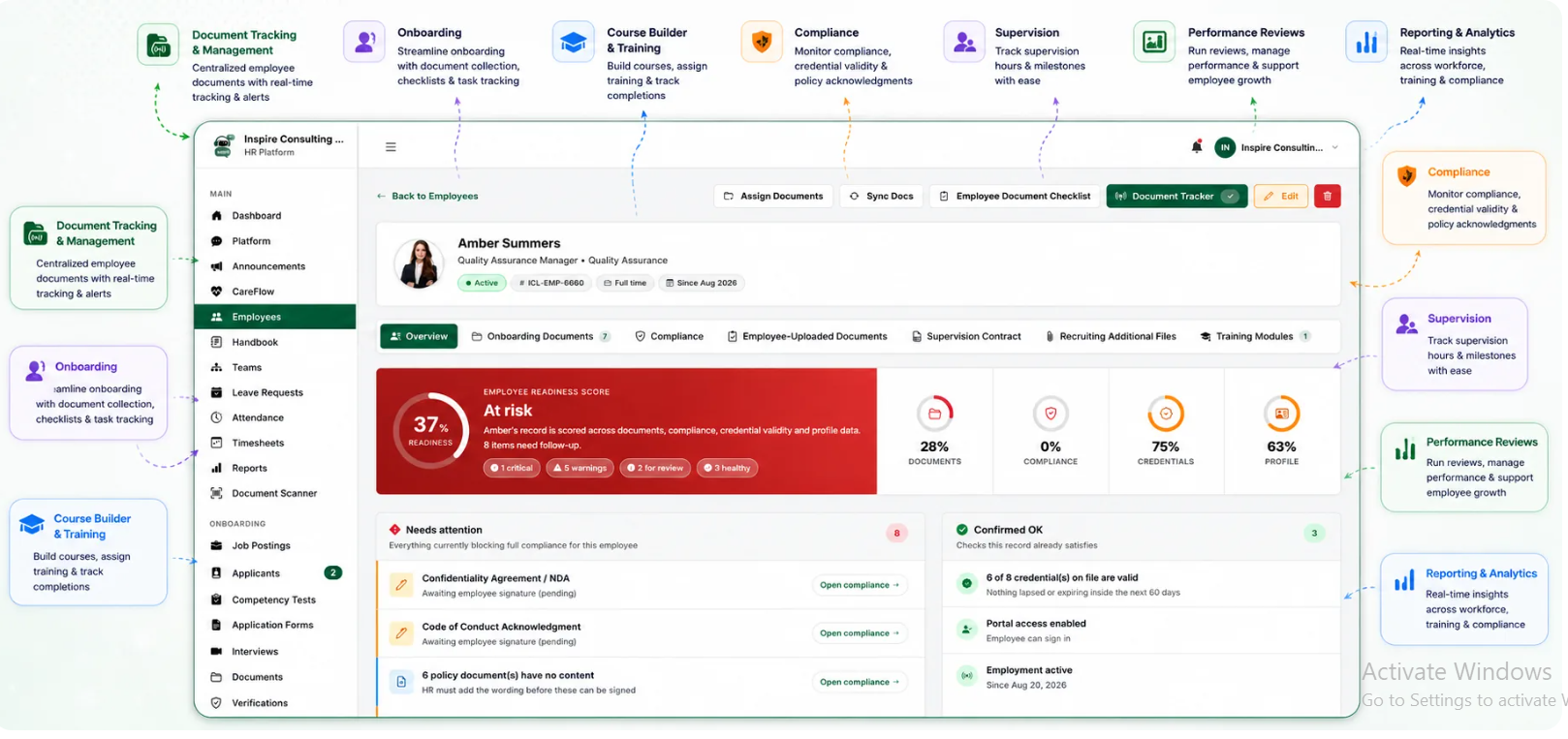
BUAMS HR gives behavioral health providers a more organized foundation for workforce processes that touch hiring, onboarding, compliance, and employee records. While referral tracking is only one part of the broader workflow, it becomes far more effective when it connects to the rest of the HR operation instead of living in a disconnected spreadsheet.
With BUAMS HR, teams can keep role information, employee records, hiring-related documentation, and compliance steps in one environment. That makes it easier to move from a strong referral to a controlled hiring process without losing visibility. HR leaders can standardize how information is captured, reduce handoff delays between supervisors and administrators, and keep a better audit trail for important employee file activity.
For behavioral health organizations that need to hire quickly without creating documentation gaps, that connected workflow matters. Referred candidates may help fill roles faster, but sustainable growth depends on whether the agency can also keep onboarding tasks, file completeness, and readiness requirements aligned.
Best Practices for a Strong Referral Process
Software works best when the underlying process is clear. Behavioral health providers should define how referrals are submitted, who reviews them, how quickly candidates should be contacted, and what information must be documented before a hiring decision moves forward.
These practices help agencies treat referrals as a measurable hiring channel rather than an informal side process. Over time, that can improve staffing agility while giving leadership better insight into where hiring momentum is being gained or lost.
Final Thoughts
Employee referral tracking software can be a practical advantage for behavioral health providers that need faster hiring and better process control at the same time. The goal is not just to collect more referrals. It is to turn staff connections into a reliable workflow that supports recruiting speed, documentation quality, and smoother onboarding.
For agencies balancing growth, retention pressure, and compliance expectations, a structured referral process can reduce unnecessary delays without adding more administrative noise. When referral tracking is connected to a broader HR system like BUAMS HR, teams are better positioned to move qualified candidates forward and keep workforce operations organized as they scale.