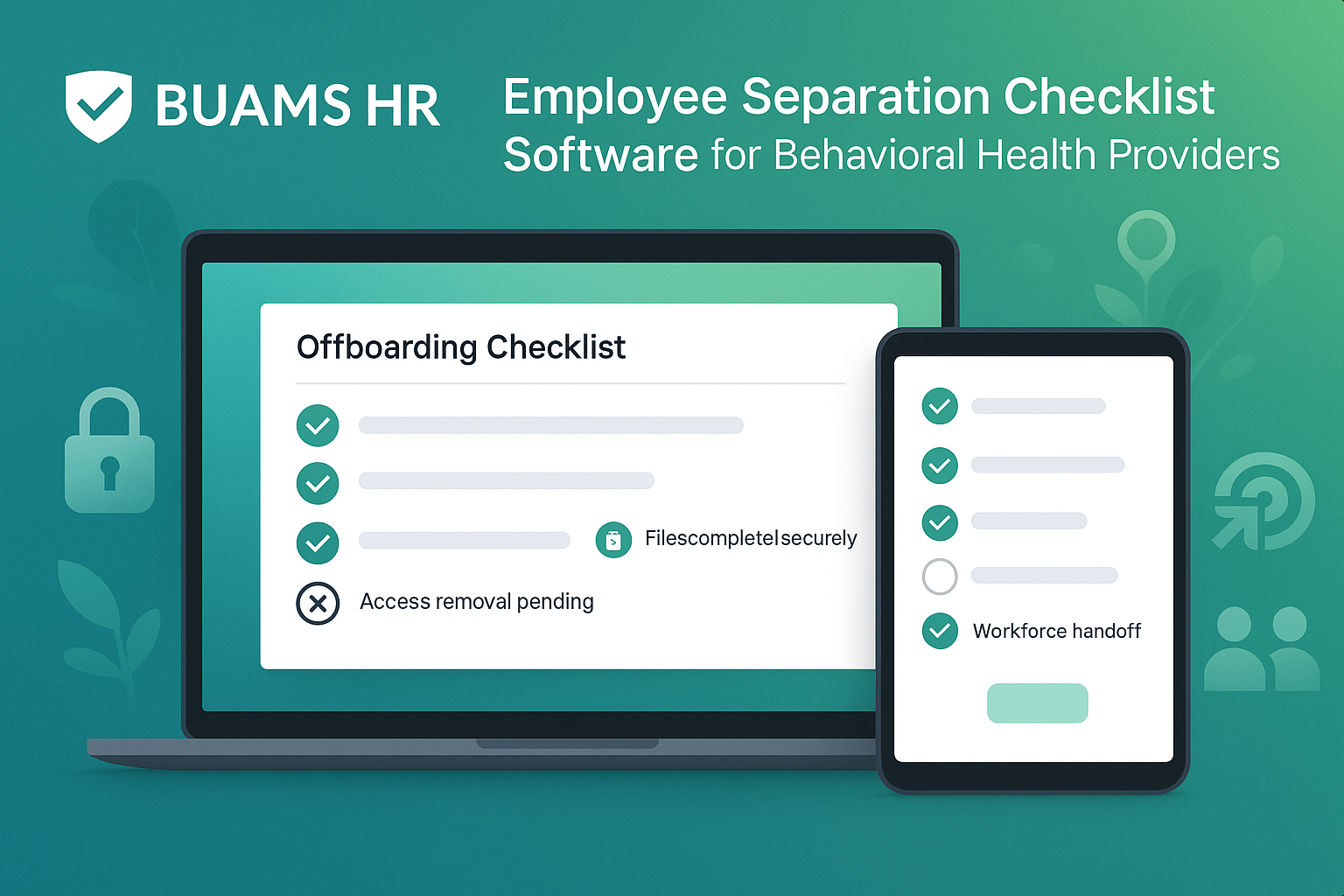
Behavioral health organizations work hard to bring the right people on board, but offboarding deserves the same level of discipline. When a resignation, termination, role elimination, or internal separation is handled inconsistently, small misses can turn into real operational and compliance problems. Access may stay active too long, files may remain incomplete, and required documentation may be scattered across email, shared drives, and paper forms.
Employee separation checklist software gives HR teams a more reliable way to manage exits. Instead of relying on memory or one-off spreadsheets, organizations can standardize each step, assign owners, track deadlines, and document completion in one place. For behavioral health providers, that structure matters because workforce changes can affect protected information access, credential status, supervision assignments, payroll accuracy, and audit readiness.
Key Takeaways
What Is Employee Separation Checklist Software?
Employee separation checklist software is a tool that helps organizations manage the tasks, approvals, and documentation tied to a staff departure. It typically includes configurable workflows, due dates, status tracking, and a record of who completed each step. Instead of treating offboarding as a loose collection of reminders, the software turns it into a repeatable process.
In behavioral health settings, a separation checklist often spans more than HR alone. A complete process may involve supervisors, credentialing staff, IT, payroll, compliance, and site leadership. The software makes that coordination easier by putting each task into a shared, visible workflow.
Why Offboarding Matters So Much in Behavioral Health
Behavioral health providers operate in environments where people, documentation, and access controls all connect. A departing employee may have access to HR records, internal systems, scheduling tools, training history, supervision notes, and protected operational information. If offboarding is delayed or handled inconsistently, the organization can end up with unnecessary exposure.
There is also a practical workforce impact. When responsibilities shift after a separation, leaders need to know whether licensure coverage, supervision assignments, mandatory training, and role documentation still line up. A good offboarding process helps teams close one chapter cleanly so the next staffing decision starts from accurate information.
Common Offboarding Gaps That Create Risk
Many organizations already have some kind of exit checklist, but the problem is often fragmentation. One manager uses a spreadsheet, another sends emails, and HR keeps a separate paper file. That makes it harder to prove what happened and when.
What to Look for in Employee Separation Checklist Software
Not every tool is built for the realities of healthcare and behavioral health operations. The best systems support consistency without making HR teams create extra manual work.
Role-Based Offboarding Workflows
Different staff roles may require different offboarding steps. Licensed clinicians, direct care workers, supervisors, and administrative staff rarely follow the exact same path. Good software allows organizations to apply role-based checklists so each separation reflects the employee's responsibilities and access level.
Task Assignment and Due Dates
Every separation step should have a clear owner and target date. This helps prevent delays in collecting property, documenting the exit, updating records, or removing access. Shared visibility also makes follow-up easier when several departments are involved.
Centralized Documentation
The software should make it easy to store separation-related records alongside the broader employee file. That includes forms, acknowledgments, notes, and completion evidence. A centralized record reduces scrambling when questions come up later.
Status Tracking and Accountability
HR leaders need to see whether offboarding is complete, still in progress, or blocked. Audit trails, task status, and completion history help organizations demonstrate that the process was followed instead of improvised.
Connection to Compliance and Workforce Data
Offboarding affects more than a checklist. It can affect staffing coverage, open requisitions, credential assignments, supervision plans, and compliance readiness. A strong platform helps HR teams manage the exit while keeping the rest of the workforce picture current.
Best Practices for Standardizing Separation Workflows
Software works best when it supports a clearly defined process. Behavioral health providers can strengthen offboarding by agreeing on a small set of operational rules and then building those rules into the system.
How BUAMS HR Helps Behavioral Health Providers Manage Offboarding
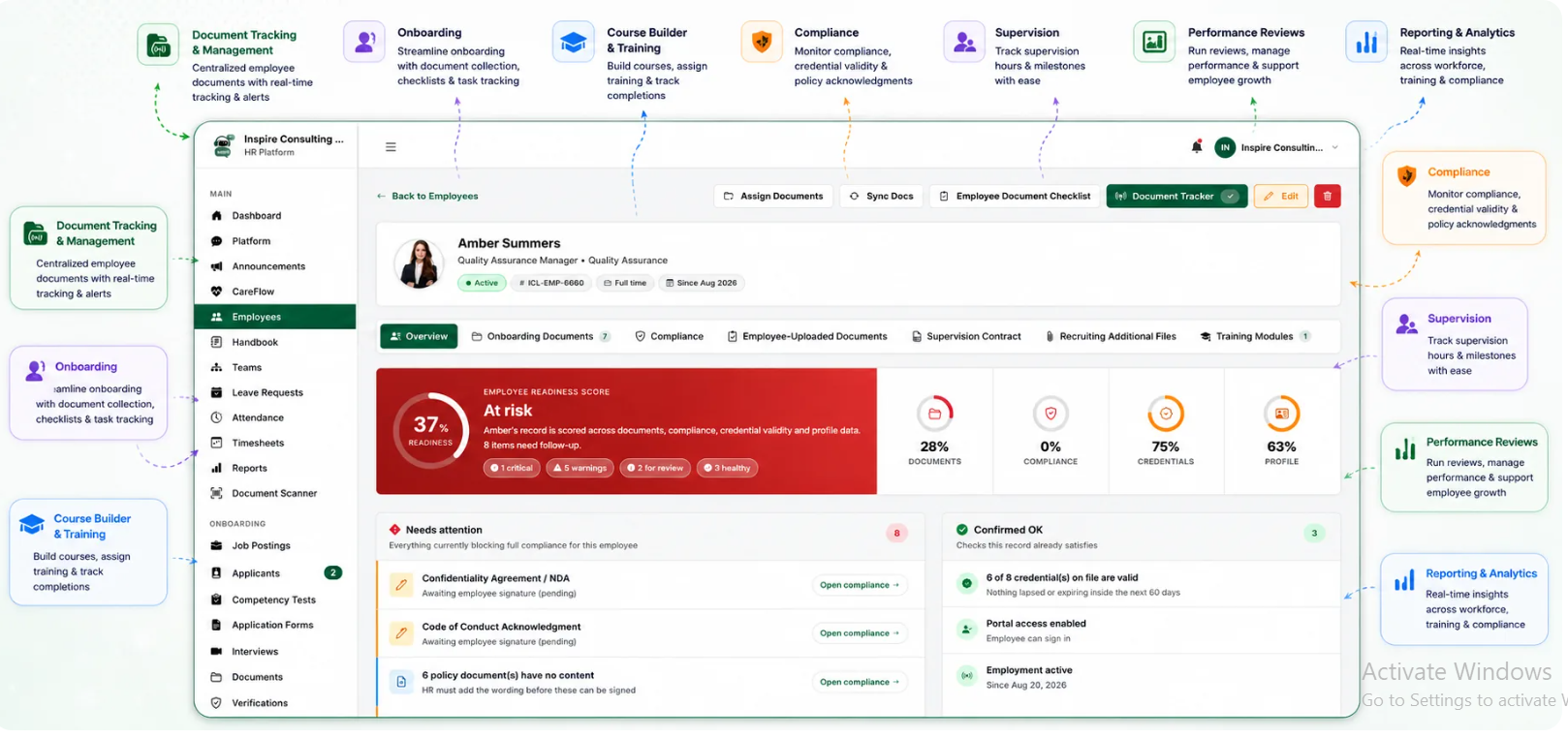
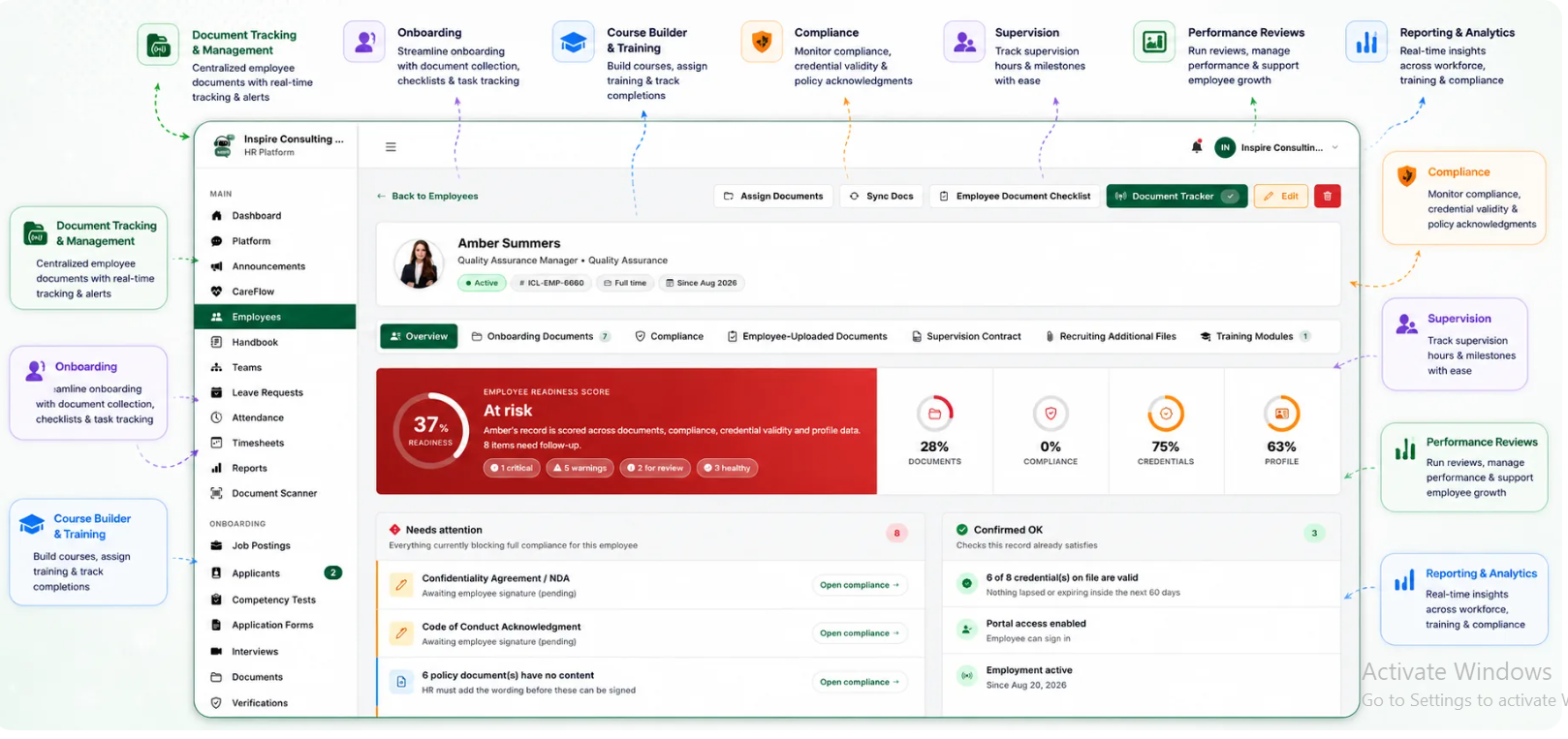
BUAMS HR helps behavioral health organizations move beyond ad hoc exit processes by keeping employee information, workflow visibility, and documentation in one system. HR teams can maintain cleaner personnel records, track required tasks, and support better coordination when employees leave or change roles.
Because BUAMS HR is built for behavioral health workforce operations, it also supports the broader context around each separation. Teams can maintain visibility into records, compliance-related documentation, and organizational readiness instead of treating offboarding as a disconnected administrative event.
That matters for growing providers that need repeatable processes across programs and locations. A consistent workflow reduces avoidable risk, saves time during reviews, and gives leadership more confidence that critical steps are not being missed.
Final Thoughts
Employee departures are part of running a healthy organization, but unmanaged offboarding creates unnecessary risk. Employee separation checklist software gives behavioral health providers a practical way to standardize exits, document completion, and keep HR operations more controlled. When the process is visible and repeatable, teams can protect compliance, reduce loose ends, and stay focused on supporting care delivery.
For organizations that want a more organized way to manage workforce changes, BUAMS HR offers a stronger operational foundation for offboarding, employee records, and day-to-day HR coordination.