Employee vaccination declination tracking software helps behavioral health providers manage an area of workforce compliance that is easy to overlook until an audit, exposure review, or site inspection puts pressure on HR. Many organizations collect declination forms for flu shots, other vaccine-related policies, or role-specific health requirements, but the process often stays fragmented across email threads, scanned PDFs, spreadsheets, and local folders. That makes it harder to confirm who declined, whether follow-up was completed, and whether the organization can quickly produce the right documentation when asked.
Key Takeaways
What is employee vaccination declination tracking software?
Employee vaccination declination tracking software is a system for recording when an employee declines a vaccine-related requirement, storing the supporting documentation, and monitoring any next steps tied to that decision. In behavioral health settings, that may include annual flu vaccine declination forms, policy acknowledgments, occupational health follow-up, site-specific clearance rules, or documentation needed for internal compliance reviews.
The point is not simply to log yes or no. A useful workflow helps HR teams document what was required, when the employee responded, whether the declination form was completed correctly, who reviewed it, and whether any related deadlines or work restrictions still need attention. When that information lives in one place, the organization can respond more confidently to regulators, accreditors, and operational questions.
Why it matters for behavioral health providers
Behavioral health organizations often operate across multiple locations, programs, and care environments with different workforce risks and documentation needs. Some roles may involve direct client contact, community-based services, crisis response, or coordination with hospitals and partner sites. In those environments, incomplete declination records can create unnecessary confusion when leaders need to confirm who met policy requirements and what exceptions or follow-up steps were approved.
A structured system reduces those blind spots. It also supports consistency, which matters when policies must be applied fairly across clinical, administrative, and support roles.
What to look for in employee vaccination declination tracking software
The best solution should support documentation quality, follow-up accountability, and quick access to records when questions arise.
Centralized declination forms and supporting documents
Every declination record should be easy to locate inside the employee file. That includes the signed form, any required acknowledgments, related medical or occupational health notes when appropriate, and evidence that the record was reviewed. Centralization cuts down on time wasted searching across shared drives and inboxes.
Role-based tracking and deadline visibility
Not every employee follows the same workflow. Different roles, sites, or programs may have different timing expectations or policy steps. The right software helps organizations assign requirements based on job context, monitor due dates, and quickly see which employees remain incomplete or pending review.
Clear review and exception workflows
Some declinations only require documentation, while others may trigger extra review, counseling, or approval. A useful platform makes those decisions visible. HR and supervisors should be able to tell whether a declination is complete, awaiting follow-up, or tied to another action that could affect placement, scheduling, or readiness.
Audit-ready reporting
When an auditor, accreditor, or internal leader asks for proof, the organization should not have to rebuild the story from scratch. Good reporting makes it easier to show completion status, outstanding records, site-by-site patterns, and the documentation history behind each employee's status.
Connection to the broader compliance record
Vaccination declinations are only one piece of workforce compliance. Their value increases when teams can see them alongside onboarding tasks, training history, document expirations, and employee file completeness. That bigger picture helps organizations identify whether a workforce risk is isolated or part of a wider documentation problem.
How BUAMS HR helps
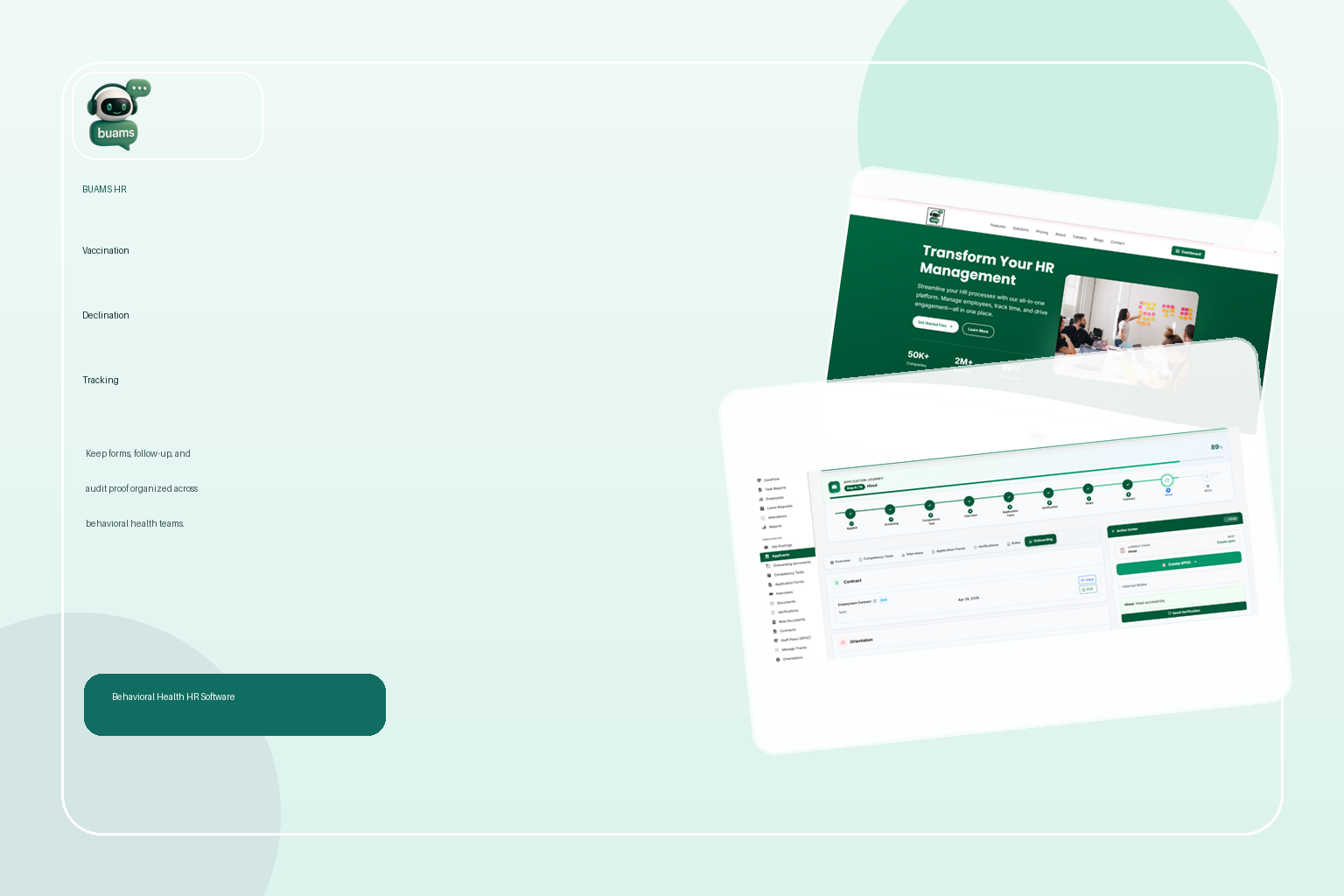
BUAMS HR helps behavioral health providers keep employee documentation and compliance workflows more organized so HR teams can manage sensitive records with less manual chasing. Instead of handling declination paperwork as a separate side process, organizations can keep related documents, statuses, and follow-up steps connected to the employee lifecycle in one place.
That structure is especially useful for growing providers that need cleaner oversight without adding more administrative noise to already busy HR teams.
Final Thoughts
Employee vaccination declination tracking software gives behavioral health providers a more dependable way to manage a sensitive but important compliance workflow. When declination records, follow-up steps, and employee documentation stay organized, organizations can respond faster to audits, apply policies more consistently, and reduce uncertainty about workforce readiness. BUAMS HR supports that goal by helping providers keep employee files, compliance documentation, and HR follow-up work easier to manage in one system.