
Future-Ready Workforce Management
In today’s fast-changing world, organizations cannot rely on outdated systems or manual HR processes. Workforce expectations are evolving, compliance requirements are increasing, and leadership teams need better visibility into performance and engagement. That’s why future-ready workforce management is no longer optional — it is essential for sustainable growth.
At Bumashr, we believe workforce management should be simple, human-centered, and built for long-term success. Whether you operate in behavioral health, healthcare, education, or another regulated sector, preparing your team for the future starts with the right technology and strategy.
What Is Future-Ready Workforce Management?
Future-ready workforce management means building systems, processes, and leadership strategies that can adapt to change. It focuses on:
- Workforce resilience
- Compliance readiness
- Real-time insights
- Employee well-being
- Scalable HR systems
- Long-term workforce sustainability
Instead of reacting to problems, organizations become proactive. Leaders gain visibility into staffing trends, hiring pipelines, turnover risks, and operational gaps — before they impact performance.
Why Organizations Need a Future-Ready Approach
Work environments are more complex than ever. Regulated industries face:
- Strict reporting requirements
- Licensing and credential tracking
- Documentation compliance
- Staffing shortages
- Burnout and retention challenges
Without future-ready workforce management, administrative stress increases and leadership
lacks clarity.
A modern HR system helps organizations:
- Reduce manual paperwork
- Automate compliance workflows
- Track credentials and certifications
- Improve communication
- Support multi-disciplinary care teams
This creates stability across the organization.
The Role of Technology in Workforce Management
Technology is the foundation of future-ready workforce management. However, not all HR technology is built for regulated industries.
At Bumashr, the focus is on human-centered HR technology that supports both compliance and people. The goal is not just automation — it is empowerment.
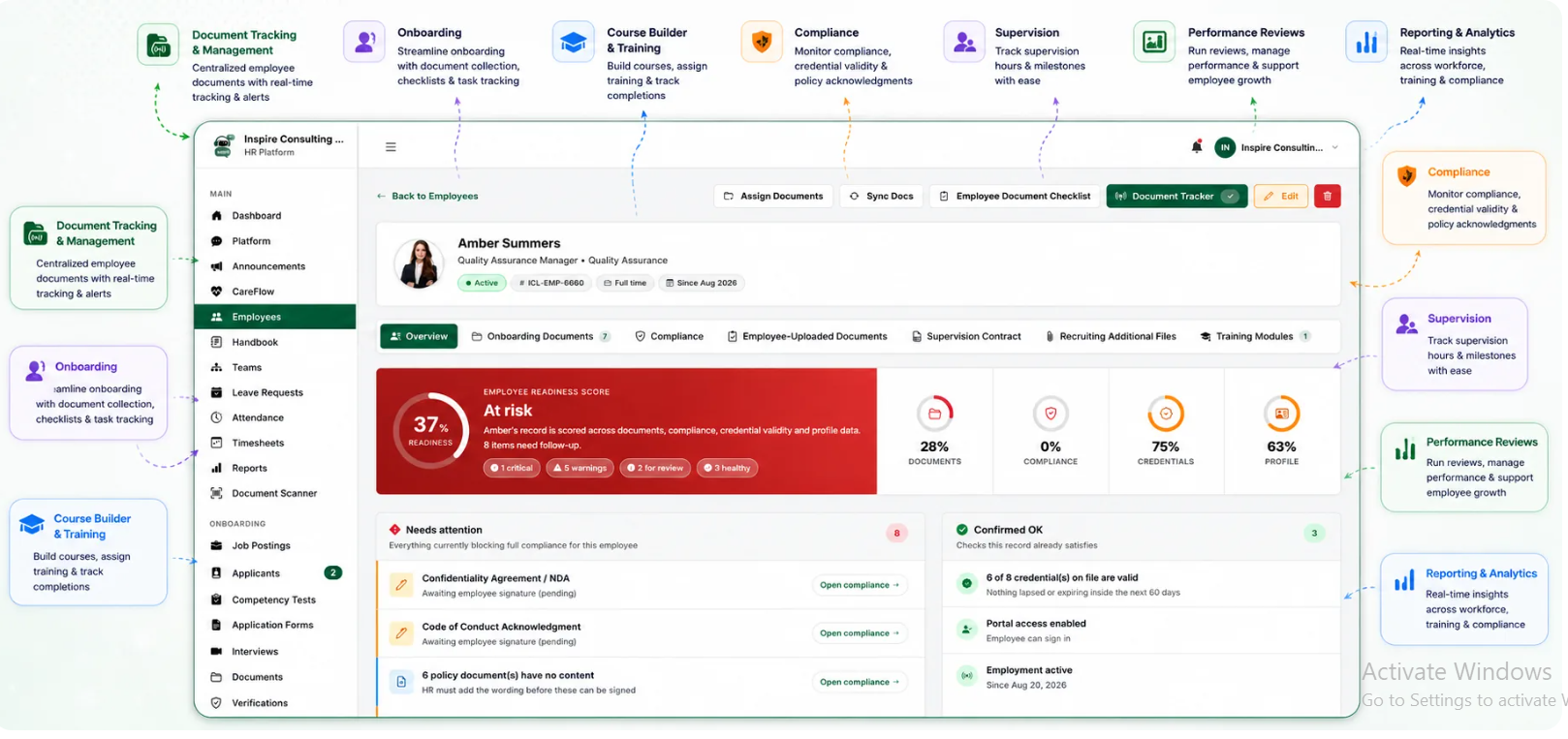
Modern workforce platforms provide:
- Digital onboarding
- Automated document management
- Credential tracking alerts
- Performance monitoring
- Workforce analytics dashboards
- Role-based access control
These tools allow leadership teams to make informed decisions with confidence.
Supporting Workforce Resilience
A future-ready organization invests in workforce resilience. This means helping employees stay engaged, supported, and prepared for change.
Future-ready workforce management strengthens resilience by:
- Reducing administrative overload
- Improving communication clarity
- Streamlining scheduling and staffing
- Providing leadership with real-time data
- Creating transparency across teams
When systems are clear and organized, staff feel less overwhelmed and more focused on delivering quality service.
Compliance and Operational Continuity
For regulated industries, compliance is critical. Missing documentation or expired credentials can create serious risks.
Future-ready workforce management ensures:
- Automated compliance tracking
- Audit-ready documentation storage
- Real-time alerts for expiring licenses
- Secure access to employee records
- Clear accountability across departments
Operational continuity becomes easier when compliance is built into the system rather than managed manually.
Empowering Executive Leadership with Data
Leadership teams need more than reports — they need actionable insights.
Future-ready workforce management provides:
- Turnover trend analysis
- Staffing gap forecasting
- Performance benchmarks
- Department-level analytics
- Hiring pipeline visibility
With strategic workforce intelligence, executives can:
- Plan expansion confidently
- Allocate resources effectively
- Improve retention strategies
- Strengthen long-term planning
Better data leads to smarter decisions.
Preparing Teams for Future Care Models
Healthcare and behavioral health organizations are evolving rapidly. Telehealth expansion, hybrid staffing models, and interdisciplinary care teams require flexible workforce systems.
Future-ready workforce management supports:
- Remote and hybrid workforce structures
- Multi-location operations
- Cross-team collaboration
- Credential and compliance tracking across sites
- Secure document sharing
Organizations can scale without increasing administrative chaos.
Reducing Administrative Stress
Administrative stress is one of the biggest barriers to productivity. Manual HR processes consume time and increase errors.
By implementing future-ready workforce management, organizations can:
- Automate repetitive tasks
- Centralize workforce data
- Reduce email-based workflows
- Improve approval processes
- Simplify reporting
This frees HR teams to focus on strategy instead of paperwork.
Long-Term Workforce Sustainability
Sustainability is about more than hiring. It’s about building systems that grow with your organization.
Future-ready workforce management helps create:
- Structured onboarding pathways
- Continuous performance tracking
- Clear documentation systems
- Transparent communication channels
- Scalable HR infrastructure
As your organization grows, your workforce system grows with it.
Why Bumashr Supports Future-Ready Workforce Management
At Bumashr, the focus is simple: build HR systems that work for people, not against them.
Bumashr supports organizations by providing:
- Human-centered HR technology
- Compliance-focused infrastructure
- Workforce analytics dashboards
- Automated documentation tools
- Scalable solutions for regulated workforces
The goal is to reduce complexity, strengthen resilience, and prepare teams for tomorrow’s challenges.
Final Thoughts
Future-ready workforce management is not about chasing trends. It is about building strong foundations that support people, compliance, and growth.
Organizations that invest in adaptive workforce systems today will be better prepared for change tomorrow. They will experience:
- Lower administrative burden
- Higher employee engagement
- Improved compliance outcomes
- Stronger leadership visibility
- Sustainable organizational growth
If your organization is ready to move beyond manual processes and build a workforce system designed for long-term success, Bumashr is here to help.