Behavioral health providers that deliver services in homes, schools, shelters, and community settings carry a different kind of workforce risk than office-based teams. Employees may work alone, enter unfamiliar environments, travel between visits, and manage safety decisions away from immediate supervisor support. That makes field readiness more than a scheduling issue. It becomes an HR, compliance, and operational discipline that needs clear documentation.
Home visit safety checklist software gives organizations a structured way to confirm that employees are prepared before community-based work begins. Instead of relying on scattered paper forms, verbal reminders, and inbox follow-up, teams can standardize safety acknowledgments, training checkpoints, supervisor review, and required documentation in one repeatable workflow. For behavioral health providers, that helps reduce preventable gaps while supporting a safer and more accountable field operations model.
Key Takeaways
What Is Home Visit Safety Checklist Software?
Home visit safety checklist software is a workflow system used to document whether employees have completed the safety steps required for community-based assignments. In behavioral health, those steps can include orientation to field protocols, review of escalation procedures, emergency contact confirmation, supervisor sign-off, proof of training, and acknowledgement of organization policies for home and community visits.
The goal is not to create another generic checklist. It is to connect safety readiness to the actual employee record so teams can confirm who completed what, when it was completed, and whether any required item still needs follow-up before independent work begins. That matters for mobile clinicians, case managers, peer support staff, care coordinators, outreach workers, and other employees who spend time off site.
Strong home visit safety checklist software also helps organizations manage change. If a staff member transfers programs, returns from leave, changes role, or begins serving a higher-risk population, the organization may need to repeat or refresh parts of the checklist. A structured system makes those resets more visible than a paper packet or spreadsheet ever can.
Why It Matters for Behavioral Health Providers
Community-based care depends on staff being prepared for situations that are hard to predict and easy to under-document. Employees may be asked to manage late schedule changes, neighborhood safety concerns, client family dynamics, travel expectations, or escalation decisions without immediate in-person backup. If field safety preparation is handled informally, leaders can assume staff are ready when key steps were never fully completed.
That creates several kinds of risk. New hires may start visits before all required safety training is reviewed. Supervisors may believe acknowledgments are finished even though supporting documentation is missing. Compliance teams may struggle to prove what the organization required at the time of an incident or internal review. Even when staff are operationally capable, the absence of clean documentation can expose the provider to avoidable questions.
Home visit safety checklist software gives behavioral health organizations a better way to turn readiness into a documented process. It helps HR and operations teams verify that field expectations were assigned, reviewed, completed, and retained with the right employee records.
Where Manual Safety Checklists Break Down
Many providers begin with a reasonable process, but the breakdown happens when volume grows or staffing moves quickly across teams and sites. Paper forms and disconnected spreadsheets rarely fail all at once. They fail by becoming incomplete, inconsistent, or hard to verify at the exact moment someone needs answers.
These gaps slow down staffing decisions and weaken confidence in the process. In behavioral health, that is especially risky because field services often involve vulnerable populations, sensitive documentation, and fast-moving scheduling needs.
What to Look for in Home Visit Safety Checklist Software
The best home visit safety checklist software should connect safety readiness to the employee lifecycle rather than treat it as a standalone form. Teams should be able to assign role-based checklist items, capture completion dates, store related acknowledgments, and track whether supervisor review is still pending.
It is also helpful when the software supports different workflows by program, role, or service setting. A mobile crisis team may require different readiness steps than outpatient case management or school-based services. The system should make those distinctions easy to manage without forcing HR to rebuild the process manually each time.
Reporting matters too. Behavioral health leaders should be able to review who is fully cleared for field work, which checklist items are overdue, and whether certain sites or supervisors have recurring completion gaps. That visibility helps organizations catch readiness problems before they affect staffing coverage, employee confidence, or risk exposure.
Finally, documentation should be easy to retrieve. If an incident review, policy audit, or leadership question arises, the organization should not have to rebuild the history from emails and file shares. A strong workflow preserves a cleaner record of what was required and what was completed.
How BUAMS HR Helps
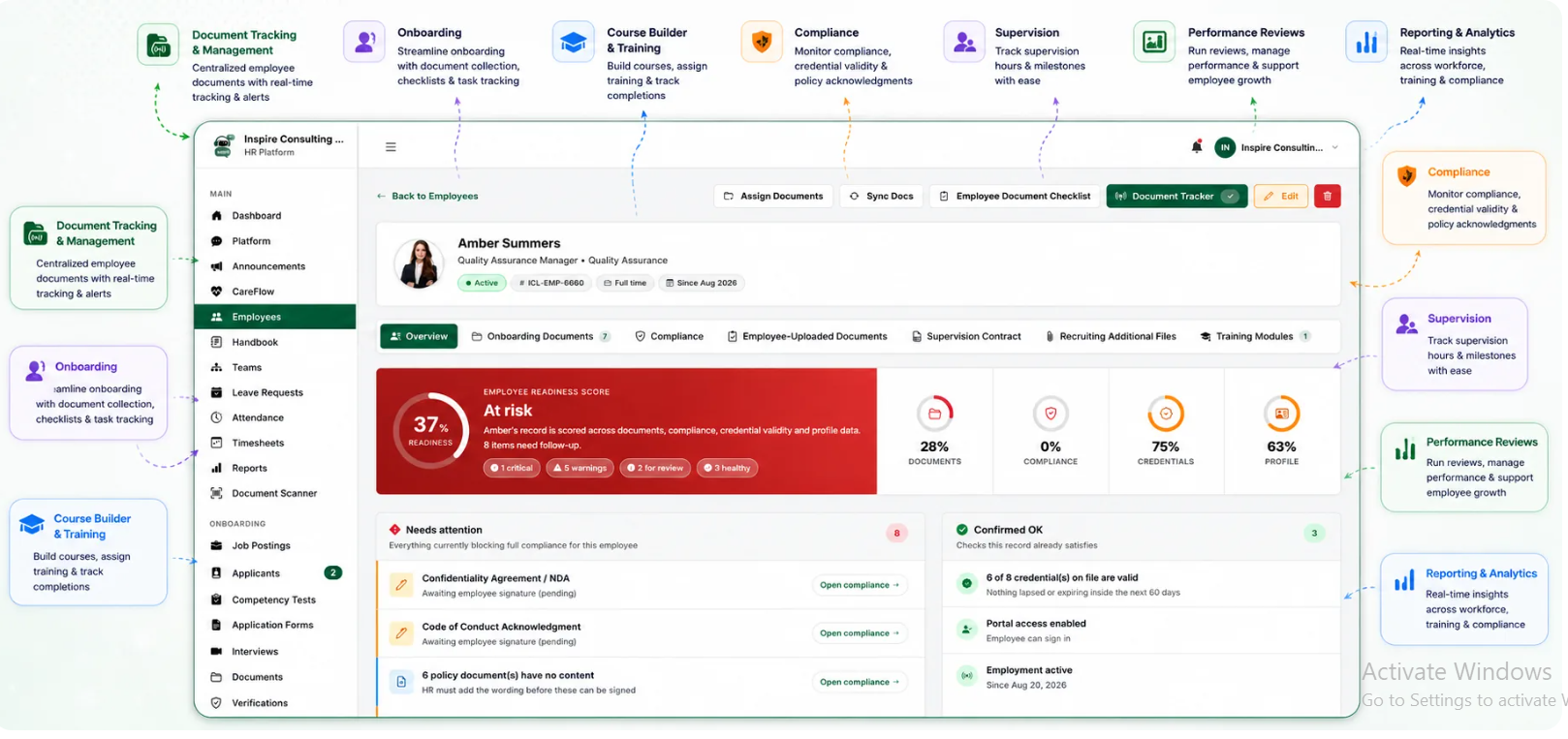
BUAMS HR helps behavioral health providers organize the employee data and documentation that make home visit safety workflows easier to manage. By centralizing onboarding records, employee files, policy acknowledgments, role details, and compliance documents, BUAMS HR gives HR and operations teams a stronger source of truth when field readiness needs to be reviewed.
That foundation is especially useful when organizations need to confirm that a new hire has completed required steps before independent visits begin or when a role change should trigger a new checklist. Instead of relying on disconnected records, teams can work from more consistent employee information and clearer documentation history.
For growing behavioral health providers, that means less time chasing paperwork and more confidence that community-based staff readiness is being tracked in a disciplined way. BUAMS HR supports a more reliable workflow around field preparation, documentation retention, and supervisor follow-up.
Final Thoughts
Community-based behavioral health services require more than good intentions and verbal reminders. They require a documented system that shows employees were prepared for the realities of field work before assignments begin.
Home visit safety checklist software helps providers standardize that process across hiring, onboarding, program transfers, and ongoing review. When readiness steps are visible, documented, and tied to the employee record, organizations can protect staff, reduce avoidable gaps, and respond more confidently when questions arise. BUAMS HR supports that work by helping behavioral health teams keep the underlying employee records and compliance documents current, organized, and easier to trust.