Behavioral health HR teams deal with far more than hiring and onboarding. They also manage employee relations issues, leave-related documentation, accommodation records, policy follow-up, corrective action notes, and other sensitive workforce matters that need structure and discretion. When those issues are tracked through scattered email chains, desktop folders, or manager-owned spreadsheets, the organization can lose visibility into timelines, actions taken, and whether the right documentation was completed.
HR case management software gives behavioral health providers a more controlled way to organize employee issues from intake through resolution. Instead of treating each matter like a one-off event, teams can standardize documentation, assign ownership, protect access, and keep a clear record of what happened, when it happened, and what follow-up was completed. For organizations balancing compliance, supervision, and workforce stability, that structure reduces risk and improves day-to-day HR operations.
Key Takeaways
What Is HR Case Management Software?
HR case management software is a structured system for handling employee-related matters that require review, documentation, and follow-up. A case might involve a workplace concern, a request for accommodation, a leave question, a policy acknowledgment issue, a disciplinary event, or another matter that should be tracked with more care than a simple email exchange.
Instead of leaving each manager or HR staff member to create their own process, the software creates a repeatable workflow. Teams can open a case, document the issue, assign responsibility, attach supporting records, track deadlines, and record the outcome. That makes the process easier to manage and easier to review later if leadership, compliance staff, or supervisors need to confirm what was done.
Why It Matters for Behavioral Health Providers
Behavioral health organizations often operate across multiple programs, locations, and staffing models. HR may be supporting residential services, outpatient teams, mobile staff, administrative departments, and supervisors at the same time. Employee matters can move quickly, and they frequently involve sensitive details, multiple decision-makers, and deadlines that should not be missed.
Without a reliable case management workflow, important details can become fragmented. A supervisor may keep notes in one place, HR may save documents somewhere else, and leadership may only see part of the history when a decision needs approval. That creates avoidable risk. It can also lead to inconsistent handling of similar issues across programs, which makes the organization harder to manage and defend.
For behavioral health providers, disciplined documentation is especially important because workforce decisions can affect clinical coverage, employee readiness, supervisor workloads, and overall compliance posture. A system that keeps employee issues organized helps the organization respond more consistently and with better accountability.
Common Problems With Manual HR Case Tracking
Many organizations start with inbox folders, spreadsheets, and local documents because they are easy to create. Over time, those methods become harder to manage.
These issues create friction for HR and expose the organization to unnecessary confusion. Even when teams are working hard, the process can still look informal if the documentation trail is incomplete or difficult to reconstruct.
What to Look For in HR Case Management Software
The best HR case management software for behavioral health providers should help teams stay organized without making the process feel heavier than necessary.
Controlled access by role
Not every employee issue should be visible to every manager. A strong system should support role-based access so HR can protect sensitive information while still involving the right people in the workflow.
Consistent case templates
Different issue types often require different fields, steps, and records. Templates for accommodations, policy concerns, corrective actions, or leave-related issues help standardize intake and reduce missed documentation.
Task tracking and due dates
Cases often include next steps such as collecting forms, scheduling follow-up meetings, confirming approvals, or documenting resolution details. Clear ownership and due dates help teams move those items forward.
Document attachment and history
HR should be able to keep supporting files, notes, and decisions connected to the case record. A visible timeline makes it easier to understand what actions were taken and in what order.
Connection to the employee record
When appropriate, case outcomes should connect back to the broader employee file so the organization does not lose continuity between an issue, the supporting documentation, and the final resolution.
Best Practices for Managing HR Cases More Effectively
Behavioral health providers should define which employee matters require a formal case and which can remain simple transactions. That prevents teams from overcomplicating low-risk tasks while making sure higher-risk issues receive the documentation discipline they deserve.
It also helps to establish clear expectations for intake, escalation, review, and closure. If HR opens a case but no one knows who must complete the next step, the system will not solve the real problem. Strong workflows assign responsibility early and make overdue items visible.
Organizations should also be thoughtful about retention and access. Some records may belong in the permanent employee file, while others should remain more restricted. A controlled platform makes those boundaries easier to manage than ad hoc folders and forwarded email threads.
Finally, consistency matters. Similar issues should be documented with similar standards across programs and locations. That improves internal fairness, simplifies leadership review, and gives HR a stronger operational foundation as the organization grows.
How BUAMS HR Helps
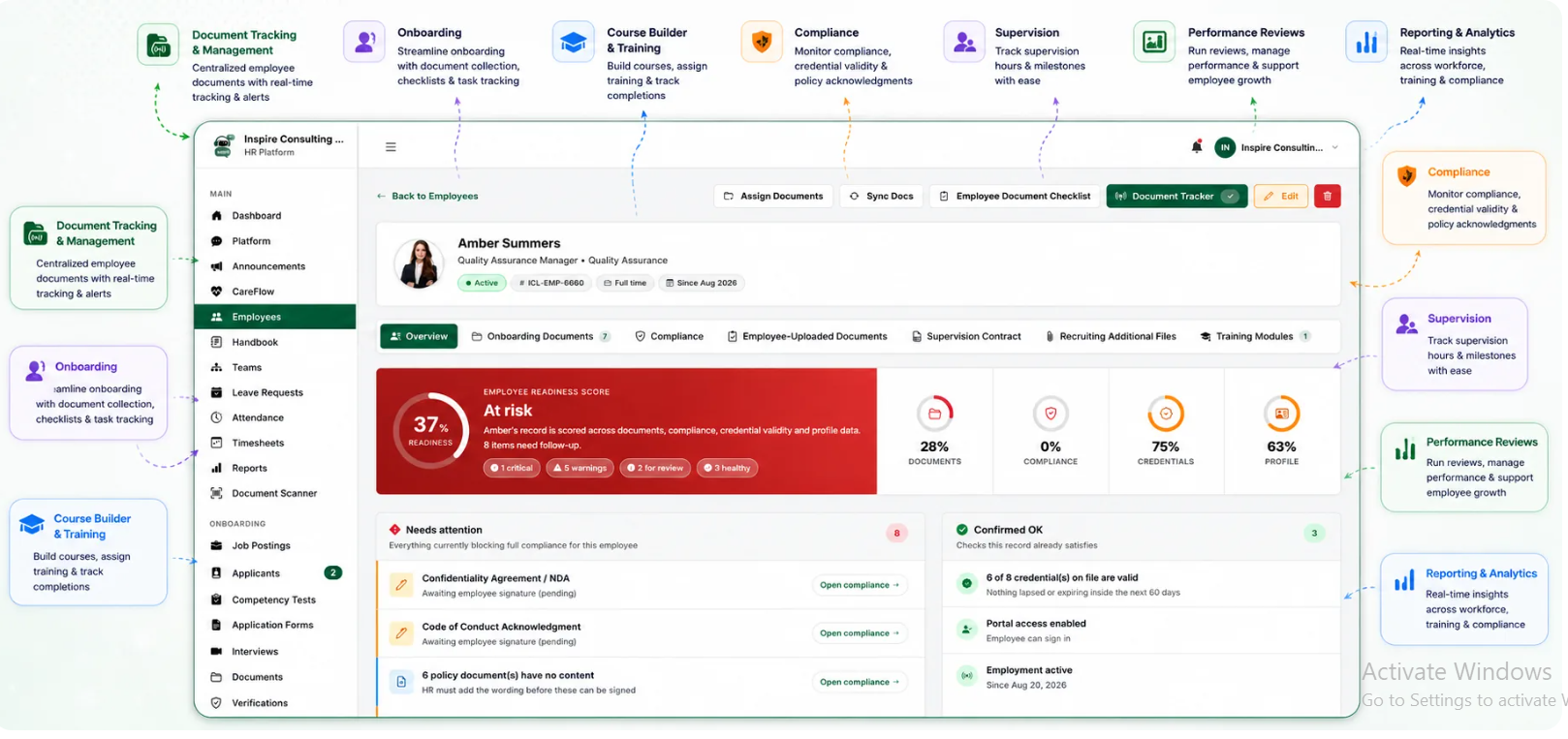
BUAMS HR helps behavioral health providers centralize employee records, HR documentation, and compliance-related workflows in one organized system. For teams managing sensitive workforce issues, that centralization reduces the risk that key details stay trapped in inboxes, side notes, or disconnected files.
With BUAMS HR, organizations can support more disciplined documentation practices across employee files, required records, follow-up tasks, and internal workforce processes. That matters when HR needs a clearer view of what has been documented, what still needs action, and how a case connects to the broader employee record.
For growing providers, BUAMS HR also supports consistency across sites and teams. Instead of relying on each manager to handle documentation differently, the organization can build a more standardized operating model for workforce records, approvals, and compliance readiness.
Final Thoughts
HR case management software helps behavioral health providers bring structure to employee matters that are too important to manage informally. With the right workflow, teams can protect sensitive information, improve follow-through, and maintain a cleaner record of how workforce issues were handled.
For organizations that want stronger documentation control without adding more administrative chaos, BUAMS HR offers a practical way to keep employee records, compliance workflows, and HR operations aligned.