Behavioral health organizations that operate across multiple offices, programs, or service lines often outgrow disconnected HR processes long before leadership realizes how much risk and delay those processes create. A spreadsheet for license expirations, a shared drive for employee files, and email-based onboarding may work for one site, but they become harder to manage when teams are hiring in multiple locations and trying to keep every employee record complete and current. A strong human resources platform helps multi-site providers standardize the work that supports care delivery.
What a human resources platform should solve for multi-site providers
In a multi-site environment, the main challenge is not just storing HR information. It is making sure the same expectations, timelines, and documentation standards are followed everywhere. Different locations may hire for different roles, manage separate supervisors, or support different payer and accreditation requirements, but the organization still needs one reliable way to track employee readiness.
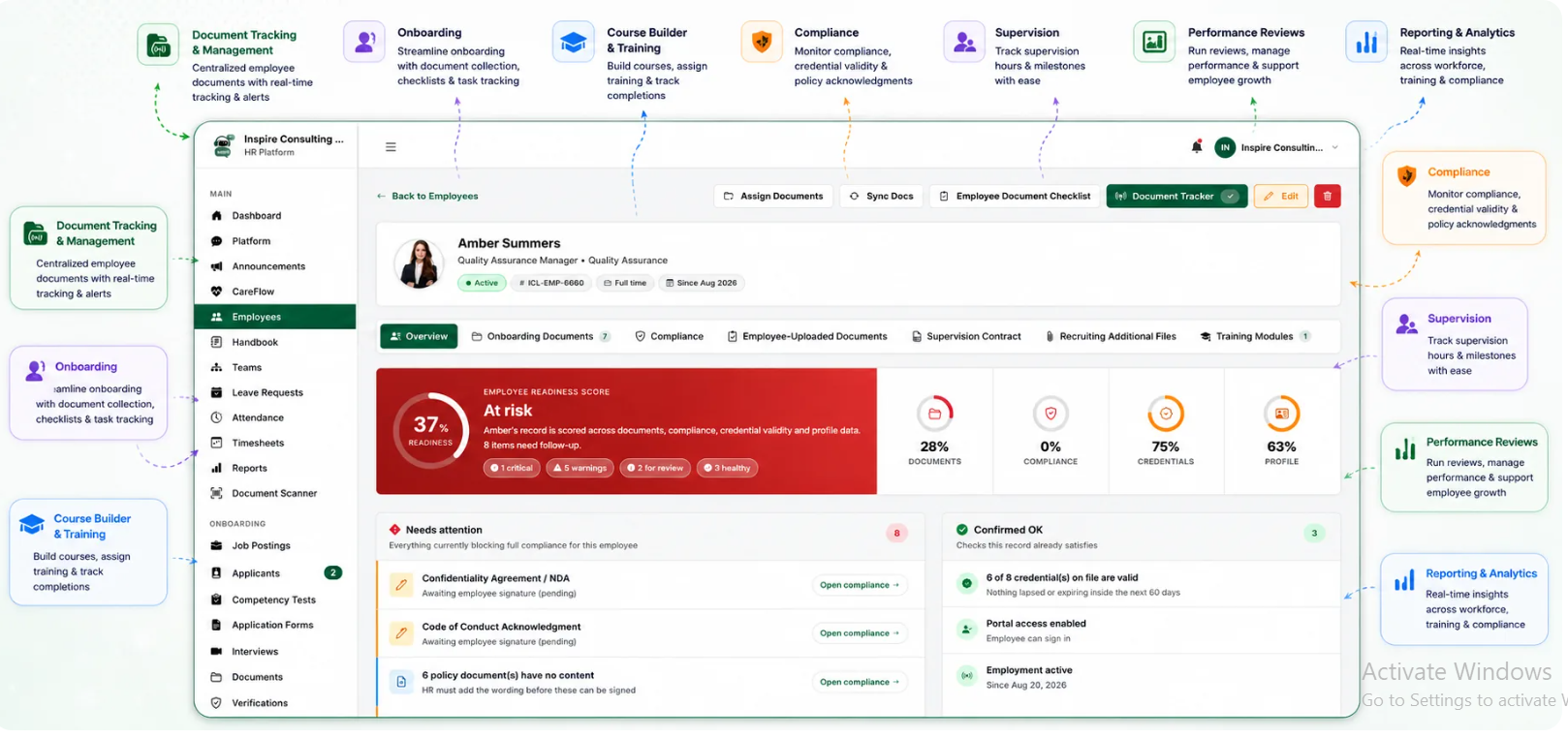
A practical human resources platform should help HR teams manage new hire tasks, required documents, licensure and certification deadlines, policy acknowledgments, and personnel records in one place. Instead of asking each site to invent its own process, leadership can create repeatable workflows that bring consistency across the organization.
Why disconnected HR processes break down as organizations grow
Growth creates complexity quickly in behavioral health. A provider may add a new outpatient location, expand community-based services, or hire more direct care and clinical staff in response to demand. When HR processes remain manual, small issues turn into recurring operational problems.
These gaps do not just affect HR efficiency. They can delay start dates, create audit stress, and make it harder for program leaders to trust that every location is following the same standards.
What to look for in a multi-site HR system
Centralized employee records
Each employee should have one digital record that can house key documents, acknowledgments, job details, and compliance items. This reduces the confusion that comes from storing information in different systems or local folders.
Role-based onboarding workflows
Behavioral health providers often hire for different job types with different requirements. A platform should allow HR teams to assign onboarding steps by role, program, or location so that every employee completes the right tasks before they begin working.
Credential and document visibility
Organizations need a quick way to see whether licenses, certifications, trainings, and required documents are current. That visibility matters even more when multiple locations are hiring and supervising staff at the same time.
Location-aware oversight
Multi-site providers need local flexibility without losing organization-wide control. The best systems support site-specific workflows while still giving central HR and leadership a consistent structure for reporting and follow-up.
Audit readiness throughout the year
Instead of preparing for audits by scrambling through folders and email chains, teams should be able to review employee records in a structured format at any time. That kind of readiness reduces stress and helps organizations stay more confident between reviews.
How standardization supports retention and operations
Standard HR processes are not only about compliance. They also shape the employee experience. When onboarding is organized, required paperwork is clear, and supervisors know what has been completed, staff start with fewer frustrations. That matters in behavioral health, where teams are already balancing demanding caseloads and high expectations.
For leadership, standardization also improves decision-making. It becomes easier to see which sites are keeping up with required documentation, where bottlenecks are appearing, and what support may be needed before issues spread. In growing organizations, that level of visibility can make the difference between controlled expansion and constant reactive cleanup.
How BUAMS HR helps multi-site behavioral health providers
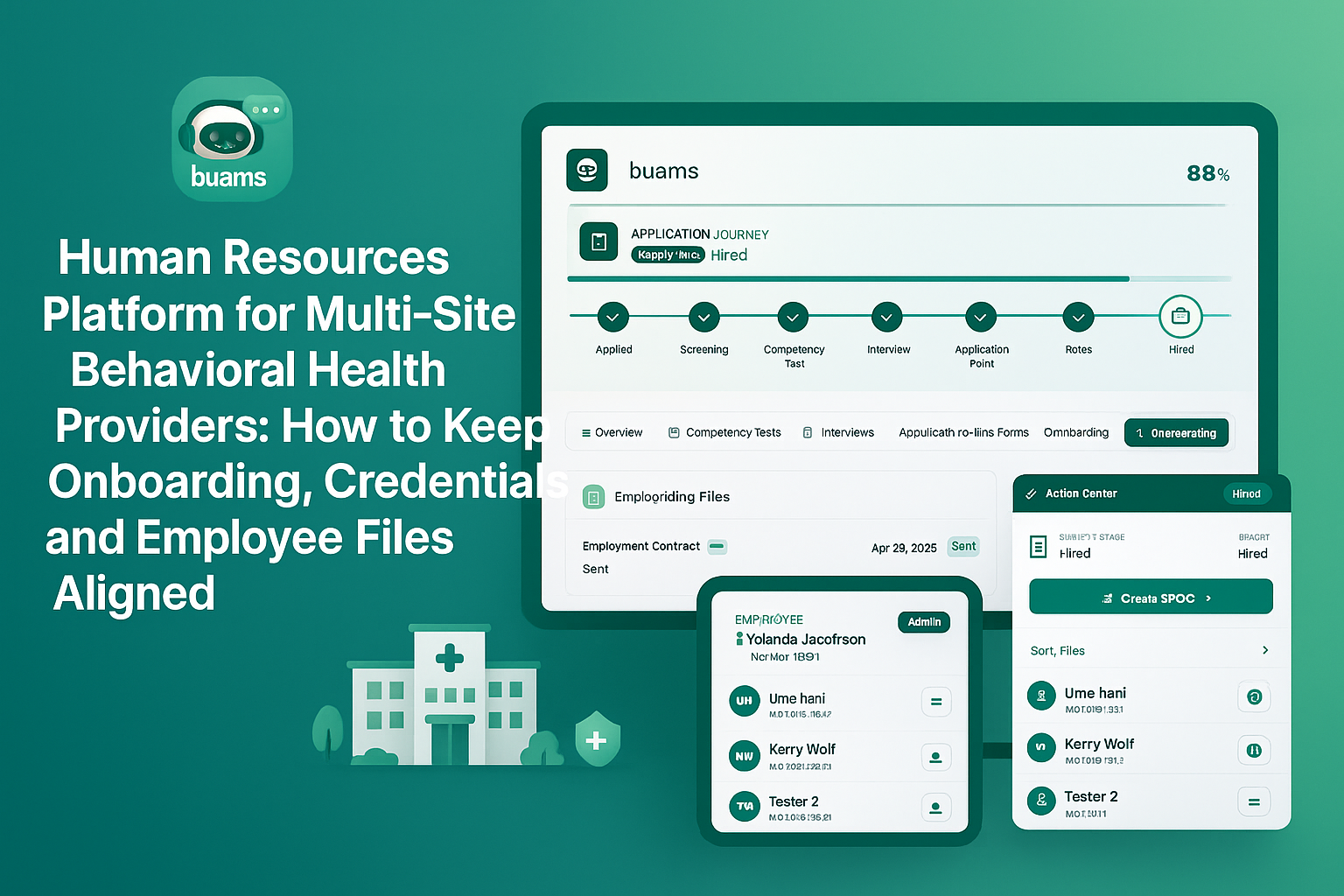
BUAMS HR gives behavioral health organizations a more structured way to manage workforce operations across locations. Teams can centralize employee files, organize onboarding steps, and monitor compliance requirements without depending on disconnected spreadsheets and shared folders. That helps HR staff, supervisors, and leadership work from the same source of truth.
For providers operating in Maryland, DC, or other regulated behavioral health environments, that structure can support stronger internal consistency and better day-to-day readiness. Instead of rebuilding the process at each site, organizations can use one platform to keep employee information aligned as they grow.
Final thoughts
A human resources platform becomes more valuable as a behavioral health organization becomes more distributed. Multi-site providers need more than digital storage. They need a reliable system for keeping onboarding, credentials, and employee files aligned across every location. When HR processes are centralized and repeatable, organizations can reduce administrative friction, strengthen compliance, and support growth with more confidence.