Behavioral health organizations often feel hiring pressure from two directions at once: they need staff in place quickly, and they need onboarding records that can stand up to review. That is why I-9 compliance software has become a practical priority for HR teams that cannot afford avoidable delays, missing documentation, or inconsistent follow-up across locations.
Key Takeaways
What Is I-9 Compliance Software?
I-9 compliance software helps HR teams manage the steps required to verify employment eligibility, collect supporting documentation, track deadlines, and retain records in an organized way. For behavioral health providers, that work usually overlaps with offer letters, background checks, credential collection, policy acknowledgments, training assignments, and start-date coordination.
Without a structured system, HR staff may rely on email threads, spreadsheets, paper packets, or shared drives. That creates avoidable risk when a document is incomplete, a reverification date is missed, or a supervisor assumes HR already handled a step that is still open.
Why It Matters for Behavioral Health Providers
In behavioral health, onboarding delays do not stay inside HR. A missing verification task can postpone orientation, create gaps in team coverage, and frustrate clinical leaders who are trying to bring new staff into programs quickly. Multi-site providers feel this even more because different locations may follow different habits unless the workflow is standardized.
Strong I-9 processes also support broader compliance readiness. When employee files are organized, status changes are visible, and required documents are stored consistently, the HR team is in a much better position to respond to internal reviews, external audits, or leadership questions without digging through disconnected systems.
Common Gaps That Slow Hiring Down
Most I-9 issues are not caused by bad intent. They usually come from fragmented processes that make it too easy for small tasks to get lost during a busy hiring week.
What to Look for in I-9 Compliance Software
The best approach is not just digitizing a form. Behavioral health providers need a workflow that fits real hiring operations and keeps related HR tasks aligned.
Centralized employee file management
HR should be able to keep verification records, supporting documents, and related onboarding materials together in one organized employee record. That reduces handoffs and makes final review faster.
Status visibility across the onboarding process
Teams need a clear view of what is complete, what is missing, and what still needs follow-up before a staff member is fully ready. Visibility matters as much as storage.
Deadline and exception tracking
A strong process makes time-sensitive tasks visible before they become urgent. That includes pending verification steps, missing uploads, and future reverification dates that should not depend on a personal calendar reminder.
Consistent workflows across sites and roles
Behavioral health organizations often hire for clinical, administrative, and direct care roles at the same time. Software should help HR apply a standard process while still adjusting task lists by role or program when needed.
How BUAMS HR Helps
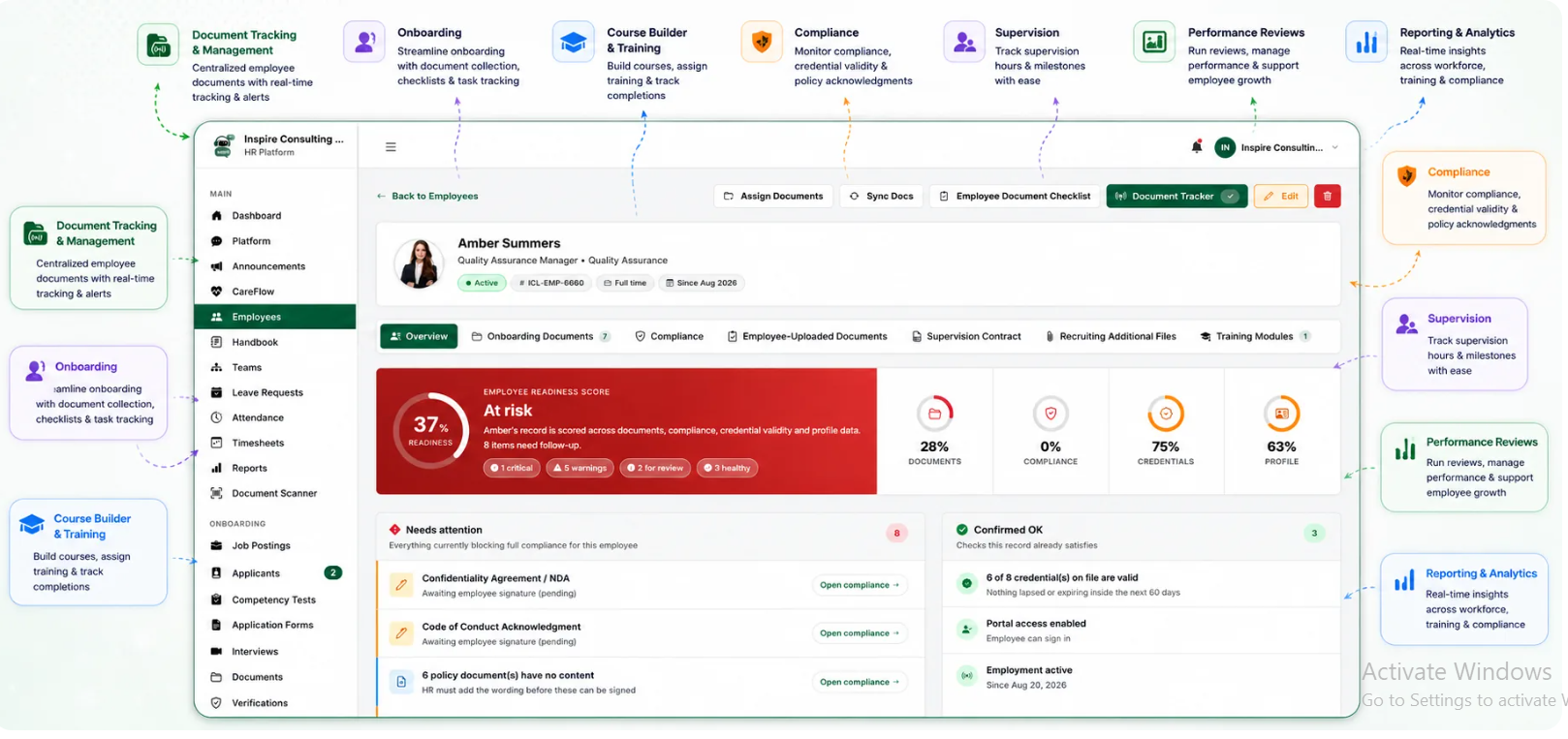
BUAMS HR gives behavioral health organizations a cleaner way to connect hiring, onboarding, and employee file management. Instead of treating I-9 tasks like a standalone administrative chore, teams can manage them as part of a broader readiness workflow tied to the employee record.
With BUAMS HR, organizations can keep onboarding documents in one place, track completion status more clearly, and reduce the risk that a missing file or delayed follow-up will push back a start date. That is especially useful for providers managing multiple programs, multiple supervisors, or frequent hiring across hard-to-fill roles.
Best Practices for a Stronger I-9 Process
Final Thoughts
I-9 compliance software should help behavioral health HR teams do two things at once: protect the organization and keep hiring moving. When the process is organized, visible, and connected to the full employee record, providers can reduce avoidable delays without sacrificing compliance discipline. For teams that want a more practical way to manage onboarding and employee documentation, BUAMS HR offers a stronger operational foundation.