Behavioral health providers can move quickly from offer acceptance to staffing pressure, especially when programs are short on clinicians, direct care staff, or support roles. But many hiring delays do not come from recruiting alone. They happen after the offer, when occupational health requirements such as TB screening, physicals, immunization review, fit testing, drug screening, or medical clearance are tracked through email threads and disconnected checklists. Pre-employment health screening software helps HR teams bring those steps into one visible workflow so new hires do not get stuck between hiring, employee health, and operational readiness.
Key Takeaways
What Is Pre-Employment Health Screening Software?
Pre-employment health screening software is a workflow and documentation system that helps organizations manage the health-related steps required before a new hire is cleared to begin work. Instead of tracking each requirement through separate vendor portals, spreadsheets, inboxes, and paper attachments, the software creates a single process that shows what applies to the employee, what has been completed, and what still needs review.
In behavioral health settings, those requirements can vary widely. A residential worker may need different screening and documentation than a telehealth therapist, mobile crisis team member, peer support specialist, or administrative employee. Some roles require proof of vaccinations or testing, some require respirator fit testing, and some need review of restrictions before the employee can be scheduled safely. Good software makes those rules visible instead of leaving them to memory and last-minute follow-up.
Why It Matters for Behavioral Health Providers
Behavioral health organizations often hire across multiple programs, sites, and job types at the same time. That creates real complexity for HR. New hires may be waiting on occupational health appointments, managers may be asking whether someone is cleared to start, and compliance teams may need proof that required steps were completed before staff had direct contact with clients. When those answers are scattered, hiring speed and compliance both suffer.
Manual processes also create avoidable confusion around ownership. HR may believe a clinic, vendor, or program manager is handling the next step. The manager may assume HR already received the results. Meanwhile the employee is scheduled, paperwork is incomplete, and the organization risks either delaying a start date unexpectedly or allowing someone to begin without a fully documented file.
Pre-employment health screening software helps behavioral health providers create a more reliable handoff between recruiting, onboarding, occupational health review, and workforce readiness. That matters not only for compliance, but also for candidate experience. A preventable delay after a signed offer can make a new hire feel disorganized before they even join the team.
Where Manual Screening Workflows Break Down
Most organizations do not intend to run a messy pre-employment process. The problems usually appear as hiring volume grows or role requirements become more specialized.
These gaps slow down hiring even when everyone is working hard. The issue is not effort. It is process visibility. Without a structured system, small missing steps create large downstream delays.
What to Look For in Pre-Employment Health Screening Software
The best system should help behavioral health providers manage screening readiness as part of the broader hiring workflow, not as an isolated spreadsheet.
Role-based requirement logic
Different job categories should trigger different screening checklists. Software should let HR assign requirements based on job title, program, service setting, or risk profile so teams do not over-process low-risk roles or miss critical steps for higher-risk positions.
Status visibility before the start date
HR and managers need a clear view of whether a new hire is cleared, still pending, or blocked. A simple red-yellow-green workflow can prevent last-minute surprises and help teams intervene early when appointments or documents are overdue.
Secure document collection and storage
Pre-employment health records should not live in scattered inboxes. The system should make it easier to attach supporting files to the employee record, preserve completion history, and separate sensitive documentation appropriately within the broader HR file structure.
Task ownership and reminders
Good software should show who is responsible for each step, whether that is HR, the hiring manager, employee health, or the employee. Automated reminders are useful, but clarity of ownership is even more important because it prevents tasks from quietly stalling between teams.
Connection to onboarding readiness
Health clearance status should inform whether orientation, scheduling, badge setup, or first-day assignments can move forward. That connection helps organizations avoid the common problem of operational steps advancing faster than compliance readiness.
How BUAMS HR Helps
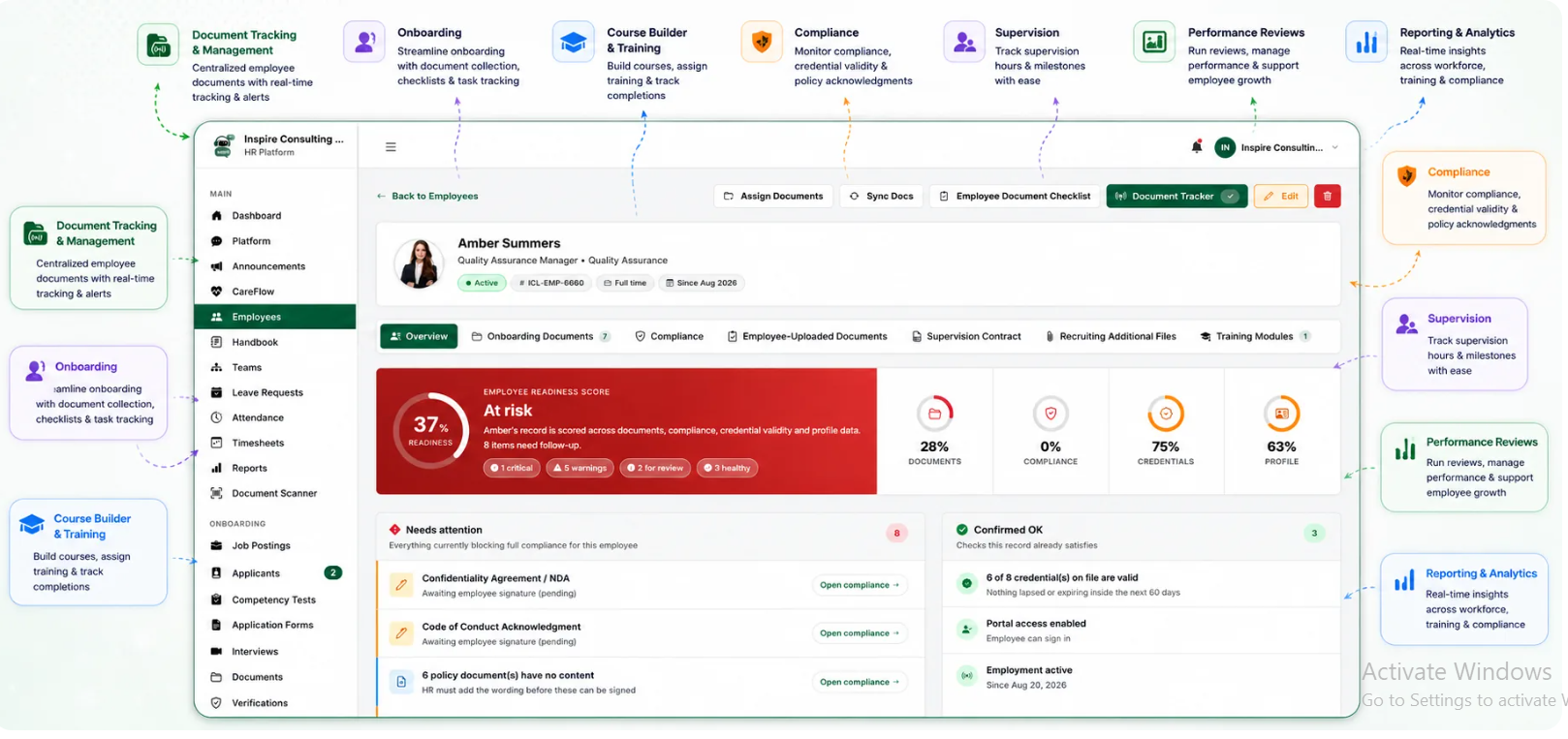
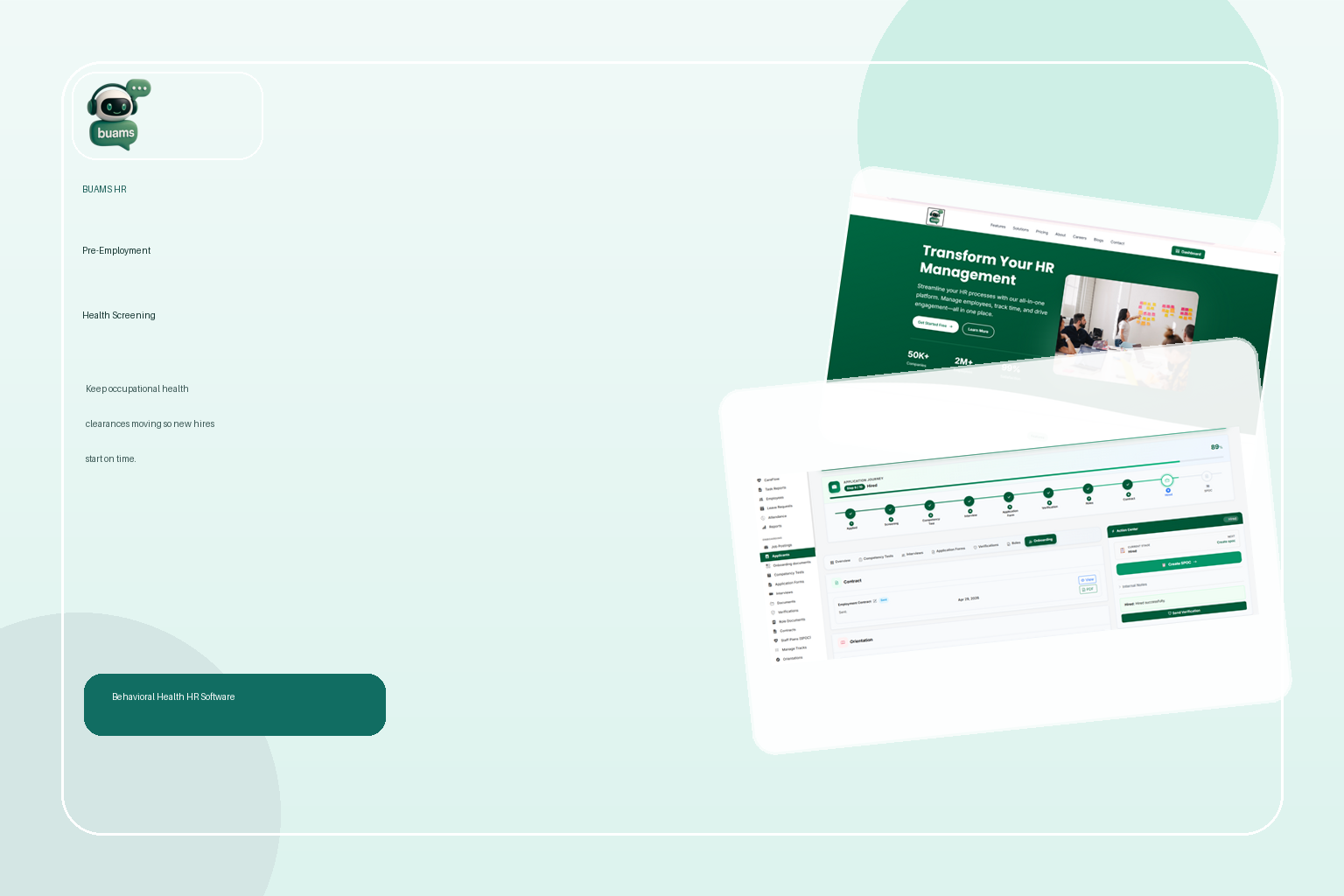
BUAMS HR helps behavioral health providers keep pre-hire workflows, employee files, and compliance-sensitive onboarding tasks organized in one system. Instead of tracking medical clearance steps separately from the rest of the hiring process, teams can maintain a clearer record of what is required, what has been completed, and what still needs follow-up before a start date is confirmed.
For multi-site behavioral health organizations, that visibility matters. HR leaders can support managers with better status updates, reduce document chasing, and keep records more consistent across clinics, residential programs, community services, and administrative teams. When hiring volume increases, a centralized workflow becomes even more valuable because it reduces reliance on one person remembering every next step.
BUAMS HR also supports a more audit-ready process by tying workforce readiness activities to the employee record. That makes it easier to answer questions about whether required onboarding steps were finished, when documentation was received, and how the organization handled exceptions or delays.
Final Thoughts
Pre-employment health screening software gives behavioral health providers a practical way to protect start dates, improve documentation, and reduce confusion across HR and operations. When every required step is visible, organizations can move new hires forward with more confidence and fewer last-minute surprises.
For providers trying to grow without creating preventable compliance gaps, health screening should be treated as part of workforce readiness, not an afterthought. A strong system helps teams launch employees faster, document better, and keep onboarding aligned with the realities of behavioral health operations.