Behavioral health providers often rely on interns, trainees, and practicum students to support future workforce growth, strengthen program capacity, and build relationships with local universities. But intern onboarding is rarely simple. HR teams may need to collect affiliation documents, confirm start and end dates, assign supervisors, track background or health requirements, and make sure each placement is aligned with the right site and role expectations. When those steps are handled through scattered email threads and manual checklists, delays and documentation gaps become common.
Intern onboarding software gives behavioral health organizations a more structured way to launch placements. Instead of treating each intern arrival as a one-off process, providers can create a repeatable workflow for paperwork, approvals, readiness checks, and file completeness. That matters because intern programs may feel temporary, but the compliance and operational expectations around them are still real.
Key Takeaways
What Is Intern Onboarding Software?
Intern onboarding software is a system used to manage the steps required before an intern, practicum student, or trainee begins work at a behavioral health organization. The process may include collecting agreements, confirming school details, documenting placement terms, assigning a supervisor, gathering required forms, and verifying that the intern can begin in the correct program or location.
The best systems do more than store files. They create a consistent process that shows what has been completed, what is still missing, and who owns the next step. For behavioral health providers, that visibility is especially useful because intern onboarding often involves coordination across HR, operations, supervisors, compliance staff, and external academic partners.
Why Intern Onboarding Matters in Behavioral Health
Interns may not follow the same hiring path as full-time employees, but they still need structure. Many behavioral health placements involve client-facing environments, confidential information, role boundaries, supervision expectations, and site-specific readiness requirements. If an intern arrives before the placement is properly prepared, the organization can create unnecessary risk for supervisors, HR teams, and program leadership.
Manual onboarding creates familiar problems. A university sends required paperwork, but nobody is sure where the signed copy was saved. A site expects the intern on Monday, but the supervisor assignment was never documented. HR collects some records, while program leaders assume compliance checked the rest. Even when the placement is low risk, this kind of confusion wastes time and makes the organization look disorganized to both the intern and the academic partner.
A better onboarding process helps providers create a more professional and reliable experience. It also makes it easier to scale internship programs across multiple programs or locations without reinventing the workflow every semester.
Common Intern Onboarding Gaps to Fix
Behavioral health organizations often discover that intern onboarding lives in too many places at once. The school may send documents to one contact, the supervisor may keep orientation notes separately, and HR may have no central view of whether the placement is actually ready.
These issues can be easy to overlook because intern placements may be seasonal or short term. In practice, though, repeated onboarding gaps create extra work every cycle and can strain relationships with partner schools and site supervisors.
What to Look for in Intern Onboarding Software
The right intern onboarding software should help behavioral health providers manage placements with the same discipline they apply to other workforce workflows. The goal is not to overcomplicate the process. It is to make sure each placement starts with complete information, clear ownership, and accessible records.
Standardized placement records
HR should be able to capture the intern's school, program, site, supervisor, placement dates, and required documents in one organized record. Standard fields make it easier to review readiness and reduce one-off exceptions.
Task tracking for pre-start requirements
A useful system should show which onboarding steps are complete and which are still outstanding. That may include signed agreements, acknowledgments, orientation tasks, health or background documentation, and access-related setup.
Supervisor coordination
Behavioral health placements depend heavily on supervision quality. Software should support clear assignment of supervisors and make it easier to document who is responsible for the intern's first-day readiness and ongoing oversight.
Centralized document storage
Intern-related files should not be scattered across inboxes, desktops, and shared folders. Keeping documents in a central system helps HR respond faster when a school, leader, or auditor needs proof that requirements were completed.
Visibility across sites and cohorts
Organizations with multiple locations or recurring intern cohorts benefit from reporting that shows active placements, upcoming start dates, incomplete tasks, and program-level trends. That visibility turns onboarding into a managed process instead of a recurring scramble.
Best Practices for a Strong Intern Placement Process
First, define one core workflow for every placement. Different schools may have slightly different requirements, but the organization should still use one standard structure for intake, document collection, supervisor assignment, and readiness review.
Second, separate academic paperwork from internal readiness tasks without losing visibility between them. A school agreement may be complete while site access, orientation planning, or supervision setup is still unresolved. HR should be able to see both sides of the process clearly.
Third, confirm role boundaries early. Interns need a documented understanding of what they can do, who they report to, and what approvals or supervision conditions apply. That prevents confusion once the placement begins.
Fourth, create a closeout habit as well as a start-up habit. End dates, final documentation, and file retention should be managed consistently so intern records do not become incomplete once the placement ends.
How BUAMS HR Helps Behavioral Health Providers
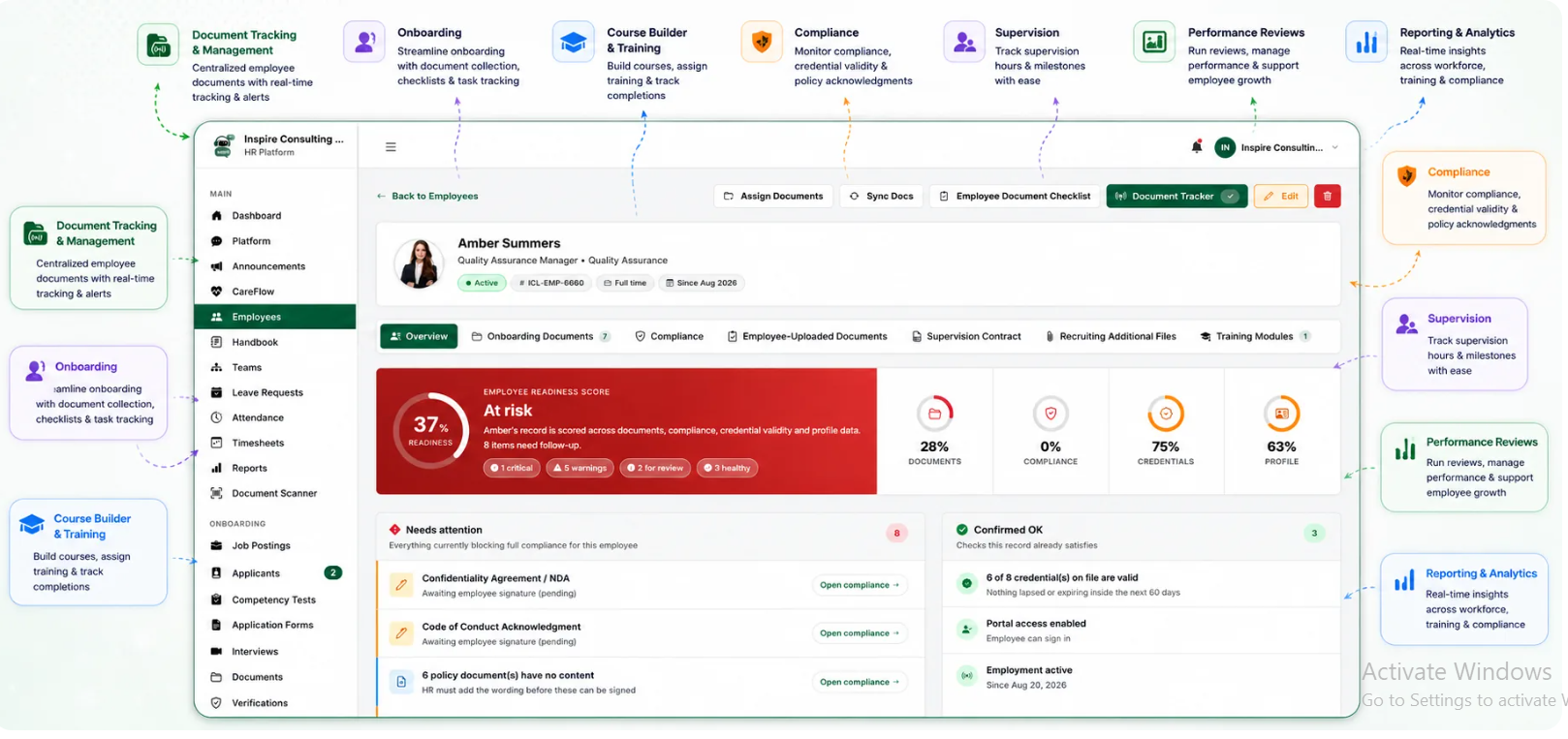
BUAMS HR helps behavioral health organizations centralize workforce documentation, onboarding tasks, and file visibility in one system. That makes it easier to support intern placements with more consistency, especially when HR teams are juggling employees, trainees, and temporary roles at the same time.
With BUAMS HR, providers can organize placement-related records, reduce dependence on manual file chasing, and create a clearer path from initial onboarding steps to documented readiness. Teams gain better visibility into who is starting, what paperwork is complete, and where follow-up is still needed.
For organizations that want to build stronger academic partnerships without adding more administrative noise, that structure matters. A cleaner intern onboarding workflow helps agencies launch placements confidently while protecting documentation quality and operational readiness.
Final Thoughts
Intern onboarding software can give behavioral health providers a more reliable way to manage placements, paperwork, and supervision readiness. The benefit is not just administrative neatness. It is a stronger process for making sure interns arrive prepared, supervisors have what they need, and records stay organized from start to finish.
When intern onboarding is connected to a broader HR system like BUAMS HR, organizations can support training pipelines with better consistency and less last-minute scrambling. That creates a better experience for HR teams, site leaders, academic partners, and the future workforce entering behavioral health care.