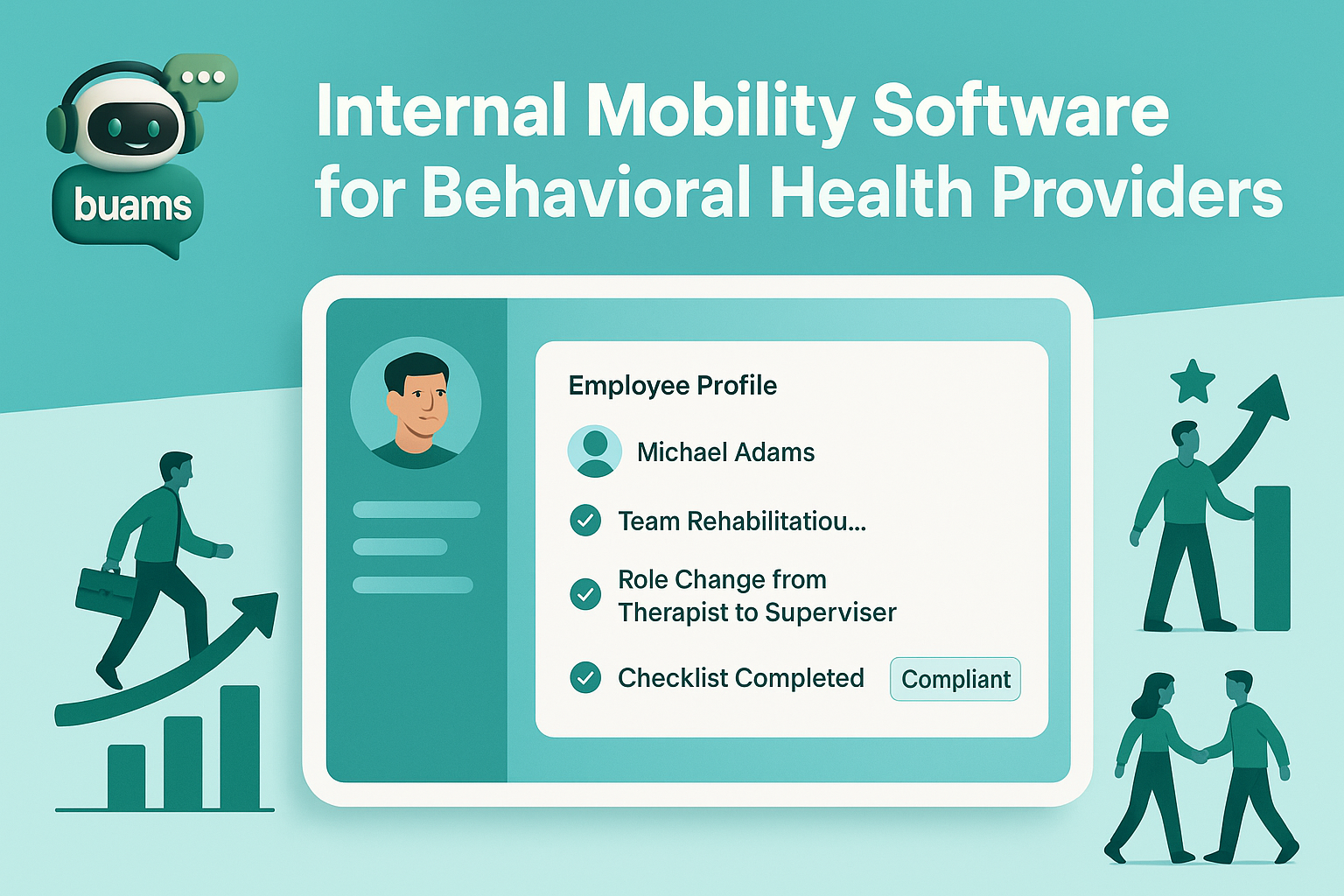
Behavioral health providers rarely stand still. Teams expand into new programs, supervisors take on broader oversight, direct care staff move into lead roles, and administrative employees shift between locations. Every one of those changes affects HR. Job descriptions may need revision, licenses and supervision requirements may need review, system access may need updates, and employee files need to reflect the new role without losing the history behind the old one.
That is why internal mobility software matters. For behavioral health organizations, it is not just about tracking promotions. It is about managing role changes in a way that keeps people productive, protects compliance, and gives HR a clear record of what changed, when it changed, and what still needs follow-up.
Key Takeaways
What is internal mobility software?
Internal mobility software helps organizations manage employee movement inside the company. That can include promotions, lateral transfers, location changes, department changes, temporary assignments, and changes in supervisor or reporting structure. In behavioral health, these moves often carry extra operational weight because the new role may come with different credential requirements, onboarding steps, training assignments, or documentation expectations.
Instead of handling those changes through scattered emails and spreadsheets, internal mobility software creates a repeatable path for HR and managers. The goal is to make each transition clear, documented, and easy to audit later.
Why internal mobility is harder in behavioral health
Role changes in behavioral health are rarely just title changes. A clinician moving into supervision may need added documentation, updated oversight responsibilities, and different training assignments. A staff member transferring to another program may need new site-specific policies, schedule expectations, or access permissions. An employee stepping into a role with credentialed duties may require closer license verification and deadline monitoring.
When HR does not have a structured workflow for these transitions, a few common problems appear quickly:
Those gaps create administrative drag, but they can also create compliance exposure. Behavioral health organizations need a way to manage internal moves with the same discipline they apply to hiring and onboarding.
What to look for in internal mobility software
Role-based change workflows
The system should support a defined process when an employee changes roles. That includes effective date tracking, updated position details, assigned follow-up tasks, and visibility into what has or has not been completed. HR should not need to rebuild the checklist from scratch for every transfer or promotion.
Document and file continuity
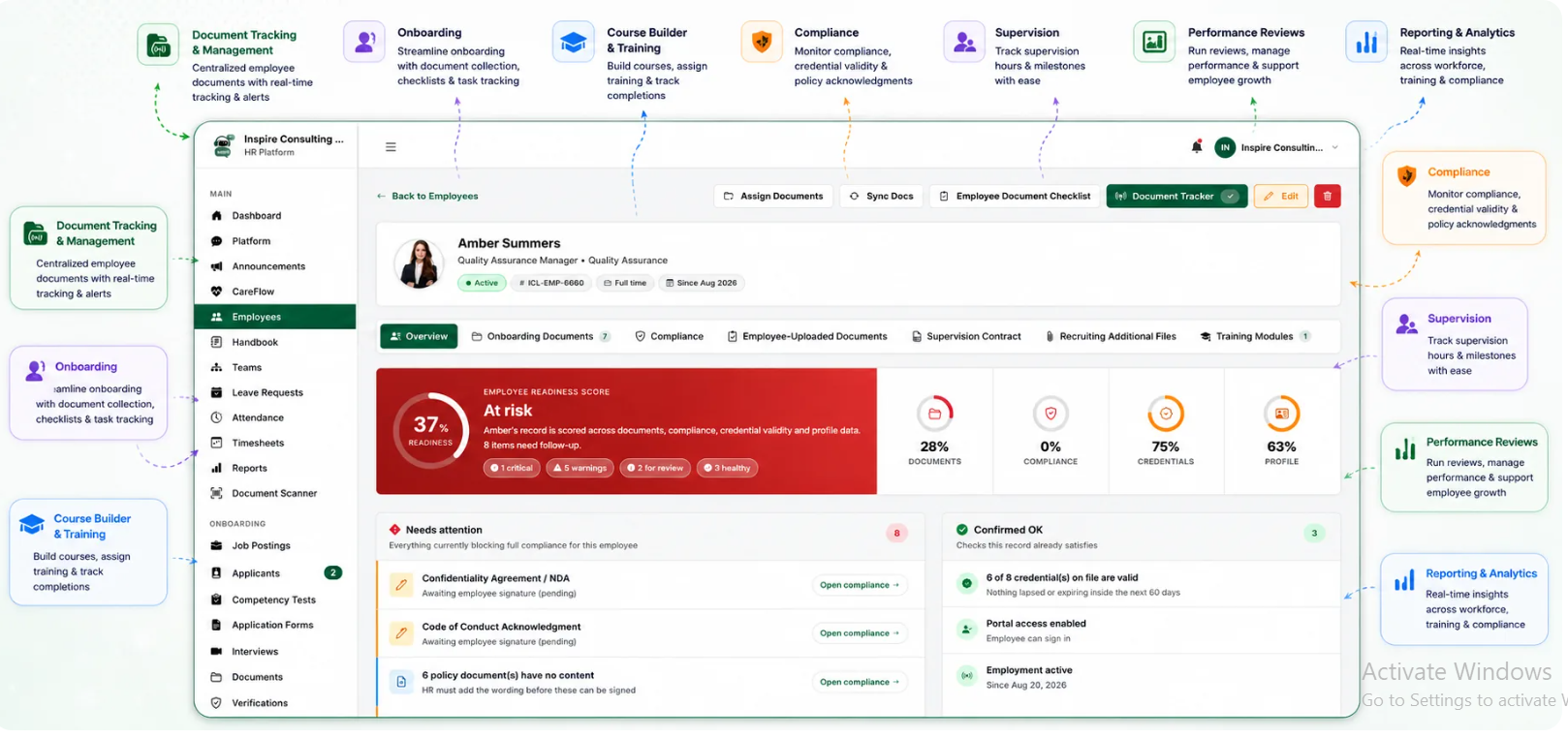
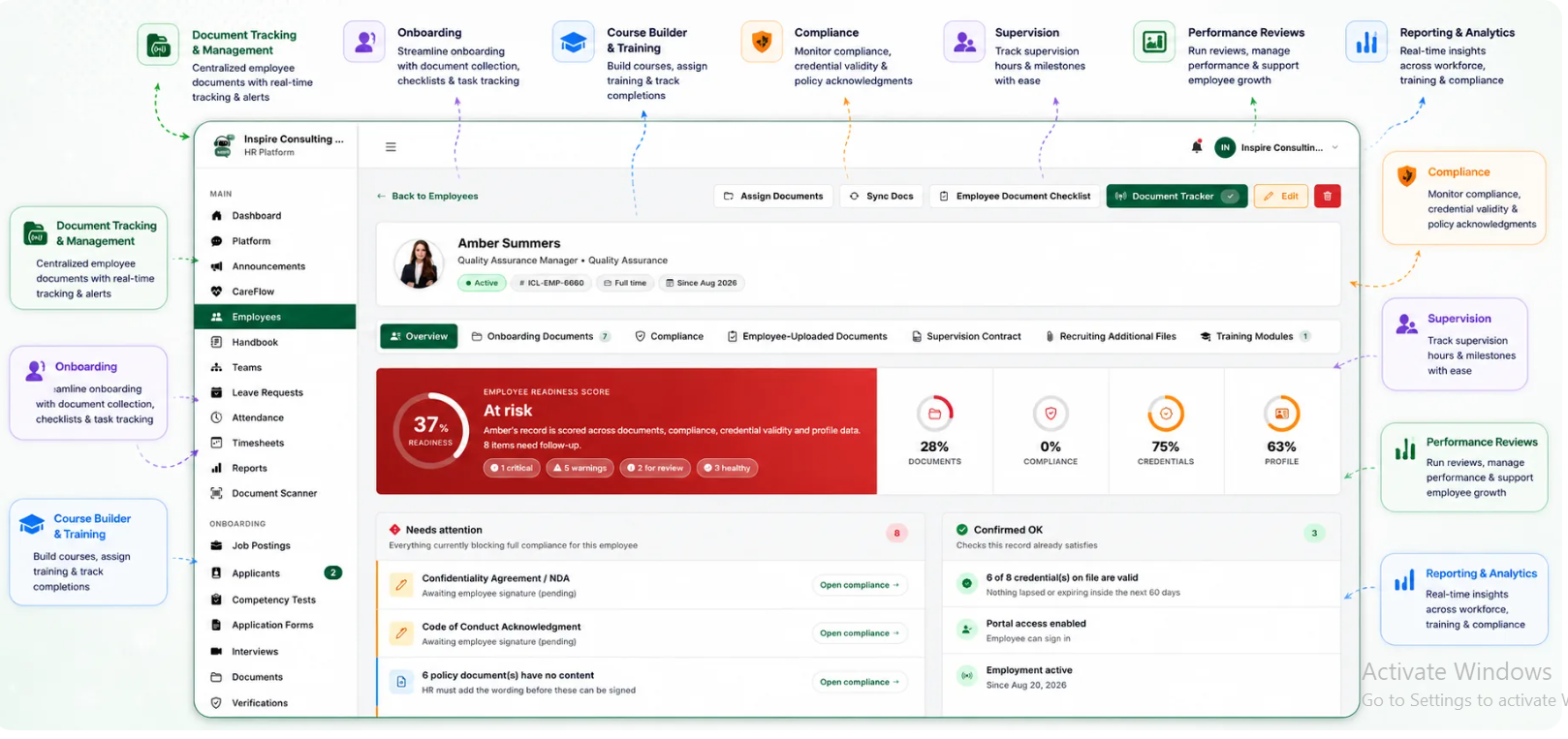
Internal mobility should add to the employee record, not fragment it. Look for software that keeps historical documents, stores updated job descriptions and acknowledgments, and makes it easy to show the progression from one role to the next inside a single employee file.
Compliance-aware requirement updates
Role changes should trigger review of credentials, training, policy sign-offs, and supervision expectations. Good internal mobility software helps HR identify what needs to be refreshed for the new assignment instead of assuming the prior setup still applies.
Cross-team visibility
Managers, HR, and compliance leaders need shared visibility during internal moves. If each group is operating from a different spreadsheet or email trail, transitions slow down and tasks fall through the cracks. The right platform gives everyone a common source of truth.
Reporting for audits and leadership review
Organizations should be able to answer simple questions quickly: Who changed roles this quarter? Which transitions are still missing required documents? Are internal promotions moving faster in one program than another? Internal mobility software should make those answers accessible without a manual file review.
Best practices for managing promotions, transfers, and role changes
Standardize the handoff point
Define exactly when a manager request becomes an HR workflow. That trigger might be an approved promotion, signed transfer request, or new position assignment. A clear handoff point prevents confusion around ownership.
Use role-specific checklists
Different moves require different follow-up. A supervisor promotion should not use the same checklist as a location transfer. Build repeatable templates around common internal change scenarios so tasks stay relevant and complete.
Preserve history while updating current status
Do not overwrite old information without context. Keep prior role details, prior approvals, and dated status changes available in the employee record. Historical continuity matters for audits, workforce planning, and future personnel decisions.
Review compliance dependencies before the effective date
Do not wait until after the employee starts the new role to discover a missing training, expired license, or unsigned policy acknowledgment. The most effective organizations review the compliance impact before the change takes effect.
Track open items after the move
Some tasks may stay open for days or weeks after the official role change. Build a process for post-move follow-up so outstanding documents or approvals do not disappear once the employee is already functioning in the new position.
How BUAMS HR helps behavioral health providers manage internal mobility
BUAMS HR gives behavioral health organizations a cleaner way to manage employee movement across roles, locations, and programs. Instead of treating promotions and transfers as one-off administrative events, teams can manage them through a centralized HR system that keeps files, task status, and compliance follow-up connected.
For growing behavioral health providers, that structure helps internal advancement feel organized instead of risky. It also supports a better employee experience because staff are not left waiting on paperwork, access changes, or unclear expectations during a transition.
Final thoughts
Promotions and transfers should strengthen a behavioral health workforce, not create avoidable confusion. Internal mobility software gives HR teams a practical way to manage role changes with better consistency, stronger documentation, and less last-minute scrambling. When the process is structured, organizations can support growth opportunities for staff while still protecting compliance and operational stability.
For providers that want a more reliable way to manage employee movement, BUAMS HR can help bring promotions, transfers, employee files, and compliance follow-up into one connected workflow.