Interview scheduling sounds simple until a behavioral health organization is trying to coordinate recruiters, clinical supervisors, program leaders, and candidates across multiple calendars. In many teams, the real delay is not sourcing applicants. It is the slow back-and-forth that happens after a promising candidate is ready to meet. Email chains stretch across days, interview panels change, and openings stay unfilled while coordinators chase availability. Interview scheduling software helps HR teams turn that stage into a faster, more controlled workflow.
For behavioral health providers, that matters because open roles affect service delivery quickly. When interviews are delayed, candidates lose momentum, managers lose visibility, and high-priority positions can sit open longer than expected. A stronger scheduling process helps organizations reduce administrative friction while still keeping the right people involved in hiring decisions.
What interview scheduling software should solve for behavioral health HR teams
Good interview scheduling software should do more than place a meeting on a calendar. It should reduce coordination work, protect candidate experience, and help hiring teams move from screening to decision without unnecessary waiting.
Why interview coordination becomes a bottleneck in behavioral health hiring
Behavioral health hiring often involves more stakeholders than a standard office role. A therapist opening may need input from a clinical director. A residential role may require fast interviews around shift coverage. A supervisor role may involve multiple rounds with operational and compliance leaders. Even when everyone agrees a role is urgent, scheduling can break down when calendars live in different systems and ownership is unclear.
Candidate expectations also matter. Strong applicants may be exploring multiple opportunities at once. If one provider takes four days to confirm an interview while another confirms within hours, the slower organization risks losing the candidate before the first conversation even happens. That loss is not always visible in a recruiting dashboard, but it shows up in longer vacancies and repeated sourcing work.
This is why interview scheduling software is valuable. It helps behavioral health HR teams reduce avoidable lag between recruiting steps, create clearer ownership, and keep candidates engaged while the organization evaluates fit.
Best practices for reducing hiring delays with interview scheduling software
The best results come from using scheduling workflows that are simple, consistent, and tied to the realities of each role. Instead of treating every opening the same way, strong teams standardize the process while still allowing for role-based differences.
Define scheduling rules by role type
Not every candidate should move through the same interview path. Some jobs need one quick operational screen. Others need panel interviews, credential review, or program leadership input. Building those rules in advance prevents confusion once a candidate is ready.
Reduce manual back-and-forth wherever possible
Many hiring delays come from small coordination gaps. A recruiter proposes times, waits for feedback, learns one interviewer is unavailable, and starts over. Interview scheduling software should reduce those loops by showing workable options earlier and keeping everyone aligned.
Track delays as an operational signal
Scheduling slowdowns are not just an inconvenience. They often reveal deeper issues such as unclear ownership, overloaded managers, or inconsistent approval expectations. HR teams should treat interview delay data as something worth reviewing, not just something to work around.
How interview scheduling software improves candidate experience and team follow-through
Candidate experience is shaped by responsiveness. Even before an offer is made, applicants notice whether the organization communicates clearly, follows through on next steps, and respects their time. Interview scheduling software helps create that consistency by giving candidates faster confirmation and giving internal teams a clearer process to follow.
It also improves internal accountability. When scheduling steps are visible, managers can see when their response is needed, recruiters can follow up earlier, and leadership can identify where urgent roles are stalling. That visibility matters in behavioral health, where vacancies can affect caseload balance, supervision capacity, and service continuity.
How BUAMS HR helps behavioral health organizations streamline hiring coordination
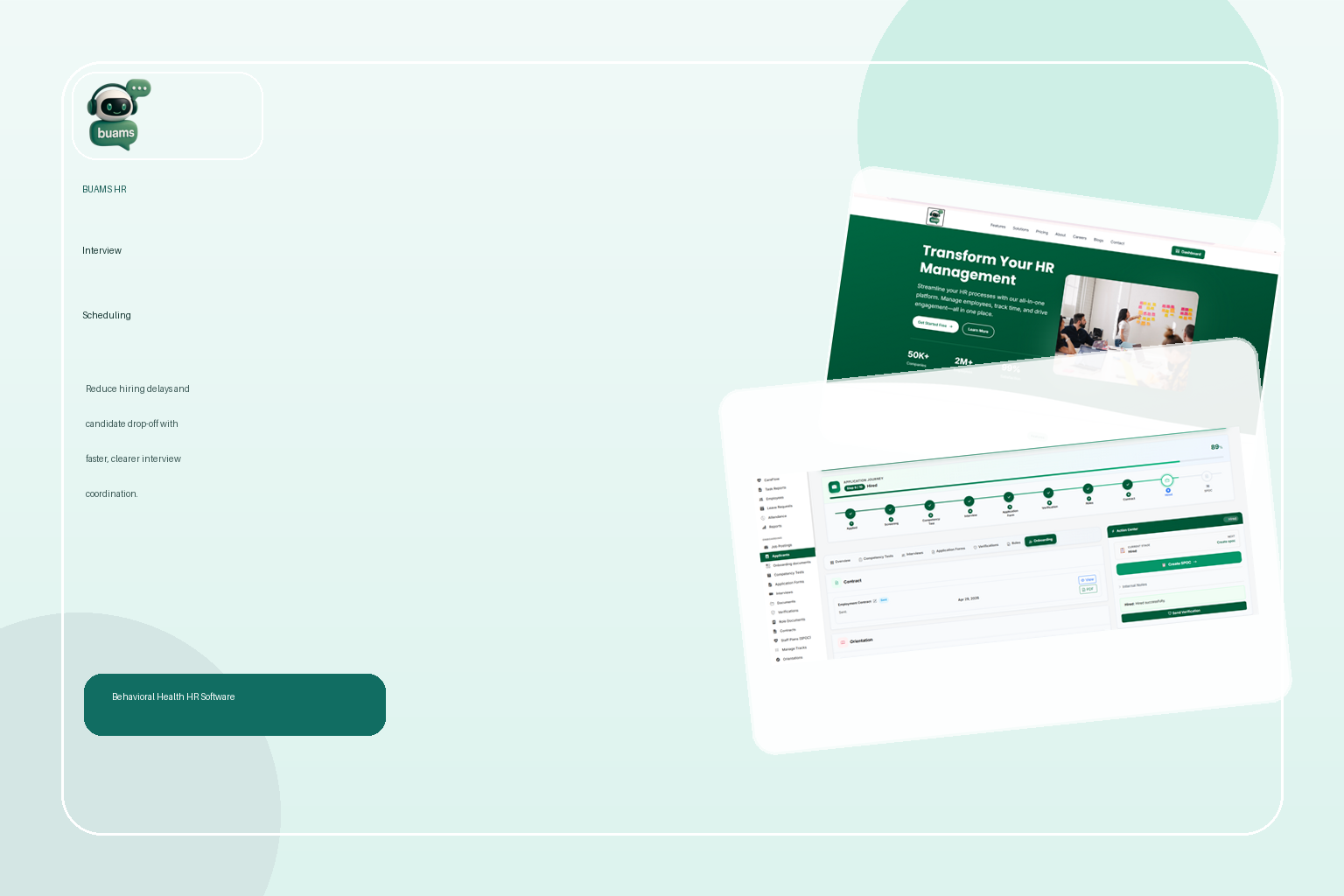
BUAMS HR helps behavioral health providers organize workforce processes in a more connected way, including the handoffs that happen between recruiting, onboarding, documentation, and compliance. A structured system makes it easier to reduce delays, keep candidate movement visible, and support more consistent hiring operations across programs and locations.
For growing providers, that structure can make a meaningful difference. When interview coordination becomes faster and more consistent, organizations can move qualified candidates forward sooner and reduce the administrative drag that often slows hiring.
Final thoughts
Interview scheduling software gives behavioral health HR teams a practical way to reduce one of the most common hiring bottlenecks. By standardizing interview stages, improving availability coordination, and making delays easier to spot, organizations can shorten response times without sacrificing oversight. For providers trying to fill roles faster and keep candidates engaged, a better interview scheduling process is a valuable operational upgrade.