Behavioral health providers often feel hiring pressure long before a candidate enters the pipeline. A program director needs coverage for a new contract, a clinic is expanding hours, a supervisor wants to replace a departing clinician, or leadership is trying to add support roles without losing budget control. When those requests move through email chains, spreadsheets, and verbal approvals, HR can end up recruiting for roles that are incomplete, misaligned, or missing the right operational sign-off.
Job requisition approval software gives organizations a more structured way to open positions. Instead of treating each hiring request like an informal handoff, providers can define who requested the role, why it is needed, which location or program it supports, what budget or leadership review is required, and whether the role is actually ready to move into recruiting. For behavioral health organizations managing multiple service lines, that discipline can reduce delays, prevent confusion, and help HR start the hiring process with cleaner information.
Key Takeaways
What Is Job Requisition Approval Software?
Job requisition approval software is used to manage the intake and review of hiring requests before a position is posted or recruiting work begins. A requisition usually captures core details such as the job title, program, location, reporting structure, reason for hire, employment status, compensation parameters, and the approvals required to move forward. The software helps organizations collect that information in a consistent format so the next step is based on real operational context rather than assumptions.
For behavioral health providers, this matters because hiring decisions often affect care delivery, compliance, staffing coverage, and revenue timelines at the same time. An open role may support community-based services, outpatient scheduling, crisis response, residential coverage, or compliance oversight. If HR begins recruiting before the requisition is fully reviewed, teams may discover too late that the role description was incomplete, the budget was not confirmed, the reporting line changed, or the requested start plan was unrealistic.
Why Hiring Request Control Matters in Behavioral Health
Behavioral health organizations do not hire in a vacuum. Workforce decisions are shaped by census changes, payer demands, clinical supervision needs, program expansion, coverage gaps, grant funding, and regulatory expectations. A requisition is often the first formal point where those pressures should be translated into a clear staffing decision. Without a defined approval path, different leaders may assume someone else validated the role before HR starts moving.
That lack of control creates several avoidable problems. A hiring manager may request a replacement role without confirming whether the position should be redesigned. Finance may expect to review headcount impact, but HR may not realize that approval is still pending. Program leaders may want to hire quickly, yet the required credentials, work location, or supervision structure may not be documented well enough to source the right candidates. As a result, recruiting starts with gaps and the delay shows up later in the workflow.
When requisition approval is handled well, HR gets a cleaner launch point. The organization can confirm that the role is necessary, defined, supported, and ready. That improves coordination and makes time-to-fill conversations more realistic because the hiring process begins with stronger inputs.
Where Manual Requisition Processes Break Down
Many providers technically have an approval process, but it lives in scattered conversations. A request might begin in a text message, move to email, pick up a spreadsheet attachment, and finally reach HR with partial information. By that stage, the team may be treating the role as urgent even though key questions are still unresolved.
These issues are especially costly in behavioral health, where hard-to-fill roles already require speed and coordination. If the requisition stage is disorganized, recruiting inherits that confusion and the organization loses time before sourcing even begins.
What to Look For in Job Requisition Approval Software
The best job requisition approval software for behavioral health providers should make hiring intake more consistent while still supporting the realities of program growth, replacement hiring, and multi-site operations.
Structured request fields
A strong system should require the details HR and leadership actually need to review a role. That includes position type, reason for hire, location, supervisor, credential expectations, schedule assumptions, and whether the role is new or a replacement.
Clear approval routing
Organizations benefit from a workflow that defines who must review a requisition before it is opened. Depending on the provider, that may include program leadership, finance, operations, executive leadership, or compliance stakeholders.
Status visibility for pending requests
Requesters and HR teams should be able to see whether a requisition is awaiting approval, returned for clarification, approved, or still missing required information. That visibility reduces back-and-forth and helps leaders spot where requests are getting stuck.
Connection to role and workforce records
Approval is more useful when the request can be aligned with the organization’s broader HR data. Position details, employee records, location structure, and workforce planning information should not have to be recreated in separate systems every time a new role is requested.
Documentation that supports accountability
Behavioral health providers often need to explain how staffing decisions were made, especially during growth periods or operational reviews. A documented approval trail gives leaders more confidence that hiring decisions followed a consistent process.
Best Practices for Managing Requisition Approvals
First, separate urgency from readiness. A role can be urgent and still require better definition before HR starts recruiting. Organizations should create a workflow that helps leaders move quickly without skipping the information needed to hire well.
Second, standardize the data collected at intake. If some requests include credential requirements, reporting lines, and hiring rationale while others arrive as one-sentence emails, HR will always spend extra time cleaning up the request before work can begin. Consistent intake fields improve downstream execution.
Third, define approval ownership clearly. Providers should know who can authorize replacement positions, who must approve new headcount, and when finance or executive review is required. That clarity prevents requisitions from stalling because everyone assumes someone else is responsible.
Fourth, use requisition review as a quality checkpoint for the role itself. Before the position is approved, the organization should confirm that the title, reporting structure, location, and qualifications still reflect current operating needs. This is especially important when older job descriptions are reused during rapid hiring periods.
Fifth, review bottlenecks regularly. If requests consistently sit with one approver or return to HR with the same missing fields, that pattern is useful operational feedback. Requisition workflows should become simpler and stronger over time, not just more bureaucratic.
How BUAMS HR Helps
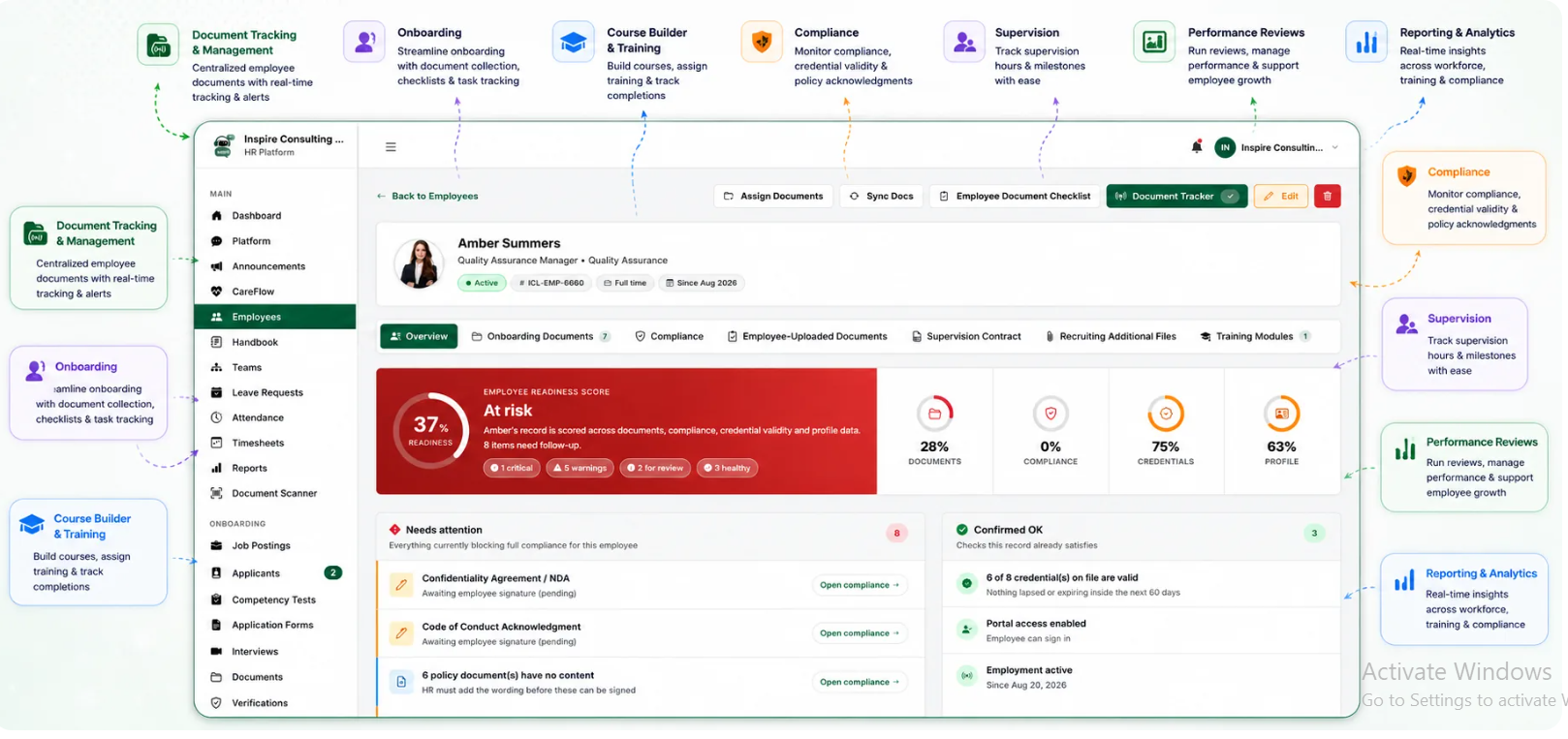
BUAMS HR helps behavioral health providers keep workforce operations more organized from the start of the hiring process. By centralizing role information, employee records, and HR documentation in one system, organizations have a better foundation for handling requisition-related work with consistency.
That makes it easier to support structured intake, cleaner handoffs between program leaders and HR, and stronger visibility into the information behind each hiring decision. Instead of piecing together requests from disconnected emails and local files, teams can work from a more reliable operational system that reduces ambiguity and improves follow-through.
For growing providers, BUAMS HR supports the discipline needed to move from staffing request to approved role with less friction. A more centralized HR environment helps organizations reduce hiring confusion, document approvals more consistently, and launch recruiting with better information already in place.
Final Thoughts
Job requisition approval software helps behavioral health providers create a cleaner front end for hiring. When requisitions are structured, reviewed, and documented consistently, HR can begin recruiting with better alignment on need, ownership, and role definition.
For organizations that want faster hiring without sacrificing control, BUAMS HR provides a stronger operational base. Better workforce visibility and more organized HR records make it easier to manage requisition approvals with confidence and keep growth from turning into avoidable process delays.