Behavioral health organizations cannot afford leave processes that live across inboxes, spreadsheets, and hallway conversations. When a clinician, case manager, or support staff member requests time away, HR teams have to balance policy, documentation, supervision coverage, and compliance expectations at the same time. Leave management software gives providers a more reliable way to track requests, approvals, return dates, and required paperwork without adding more manual follow-up.
For behavioral health providers, the stakes are especially high. Unclear leave status can disrupt scheduling, delay payroll updates, create gaps in employee files, and leave supervisors unsure about return-to-work requirements. A structured workflow helps HR respond faster while keeping records consistent and audit ready.
Key Takeaways
What is leave management software?
Leave management software is a system used to organize employee time-away workflows from initial request through final return to work. Instead of relying on disconnected messages and manual reminders, HR teams can manage each step in a structured process: intake, review, documentation, approvals, coverage coordination, status updates, and final file completion.
In behavioral health settings, this matters because staffing decisions often affect patient access, supervision planning, and program continuity. A leave request may involve more than approving dates. It can also require updated contact information, temporary coverage decisions, policy acknowledgment, role-based restrictions, and confirmation that the employee file reflects the current status accurately.
Why leave management matters in behavioral health
Behavioral health providers often operate across multiple sites, programs, and staff types. Clinical employees, direct care teams, administrative staff, and supervisors may each follow slightly different processes depending on licensure, role expectations, and location. When leave management is informal, HR ends up spending too much time tracking down forms, clarifying who approved what, and confirming whether the employee is actually cleared to return.
That operational drag creates real risk. A missed document can slow a return date. A supervisor may not realize an employee has restrictions. Payroll or scheduling teams may work from outdated assumptions. During an internal review or external audit, the organization may struggle to show a complete timeline of the leave event and the actions taken.
A cleaner process helps providers do three things better: respond consistently to employees, maintain accurate HR records, and reduce disruption for programs that still need safe staffing coverage.
Common breakdowns in manual leave workflows
Many behavioral health HR teams recognize the same pain points when leave activity increases. Requests arrive through email, text, paper forms, or verbal updates. Documents are stored in different places. Follow-up dates sit on personal calendars. Status changes are communicated unevenly across departments. By the time the employee returns, nobody is fully confident that every required step was completed.
These gaps are frustrating in any industry, but behavioral health organizations face added pressure because staffing stability, clinical oversight, and documentation quality all affect service delivery.
What to look for in leave management software
Standardized request intake
A good system should give HR one clear way to capture the request, relevant dates, and supporting information. Standardized intake reduces back-and-forth and makes it easier to apply policy consistently across programs and locations.
Document organization tied to the employee record
Leave-related forms should not live in a separate black hole. The most useful setup links documentation directly to the employee file so HR can quickly confirm what was received, what is pending, and what belongs in the long-term record.
Status visibility for the right stakeholders
Supervisors, HR staff, and operations leaders often need different levels of visibility. The workflow should make it easy to confirm whether a request is pending, approved, active, extended, or complete without forcing people to chase the HR team for updates.
Task reminders for key deadlines
Leave workflows often depend on timed follow-up. That may include collecting paperwork, checking extension dates, confirming benefit or payroll coordination, or preparing for return-to-work review. Automated reminders help the team stay ahead of these deadlines.
Return-to-work readiness tracking
Returning an employee to active status should be a defined process, not an assumption. The right software helps HR confirm that required documentation is in place, restrictions are communicated appropriately, and the employee record reflects the transition back to work.
Best practices for a stronger leave workflow
Software helps most when the organization also defines a repeatable operating model. Behavioral health providers can improve outcomes by mapping the full lifecycle of leave rather than treating each request as a one-off event.
These practices reduce uncertainty for employees while giving leadership a more dependable operating rhythm.
How BUAMS HR helps behavioral health providers
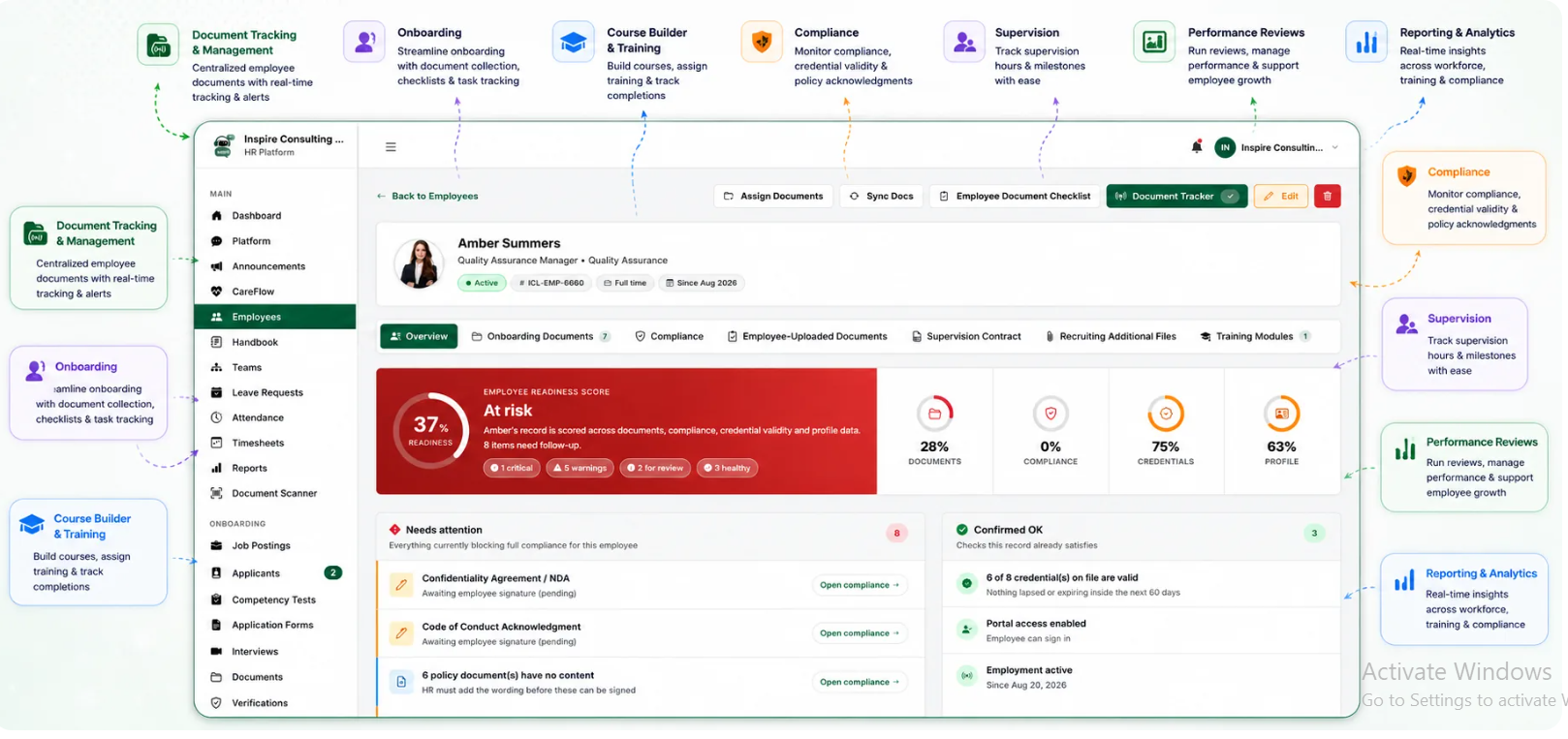
BUAMS HR supports the kind of operational discipline that leave management requires. Behavioral health organizations can keep employee records, HR documentation, and workflow activity in one connected system instead of splitting critical information across separate tools. That makes it easier to see what has been received, what still needs follow-up, and what belongs in the final employee file.
Because BUAMS HR is built for behavioral health HR operations, it also fits the reality of organizations that manage multiple programs, changing staff statuses, and compliance-sensitive documentation. HR teams can support more consistent handoffs, cleaner recordkeeping, and faster response times without building every process from scratch in spreadsheets.
For providers trying to reduce admin burden, the biggest benefit is clarity. When leave-related actions, documents, and employee status updates are easier to track, supervisors get better information, HR spends less time chasing loose ends, and the organization is better prepared to show complete records when questions come up later.
Final thoughts
Leave management software is not just about tracking time away. For behavioral health providers, it is about protecting continuity, documentation quality, and confidence across a sensitive employee process. A more structured workflow helps HR teams respond with consistency while keeping employee files accurate and operational teams informed.
As organizations grow, manual leave processes become harder to sustain. Providers that centralize requests, documents, and return-to-work steps are better positioned to reduce delays, support supervisors, and maintain compliance-ready records. That is exactly where a platform like BUAMS HR can make a practical difference.