
Long-term workforce capacity planning DC organizations can rely on is no longer optional. In Washington DC, where regulatory demands, funding cycles, and workforce shortages shape daily operations, leaders must think years ahead rather than months. Workforce planning today is about sustainability, resilience, and strategic alignment with mission-driven goals.
For behavioral health providers, nonprofits, and regulated organizations in Washington DC, long-term workforce capacity planning DC strategies must go beyond hiring. It requires intelligent forecasting, data visibility, compliance tracking, and employee engagement tools that work together in one connected system. This is where modern HR technology becomes essential.
Why Long-Term Workforce Capacity Planning Matters in Washington DC
Washington DC organizations operate in a unique environment. Federal oversight, grant-based funding, Medicaid regulations, and community-based service demands all influence staffing decisions. Leaders cannot afford reactive hiring.
Long-term workforce capacity planning DC strategies allow organizations to anticipate workforce gaps before they disrupt services. Whether it is preparing for expansion, adjusting to new care models, or managing turnover, proactive planning protects operational stability.
When organizations fail to plan long term, they face burnout, compliance risks, increased recruitment costs, and reduced service quality. Strategic workforce planning creates clarity and confidence for leadership teams.
Understanding Workforce Capacity in Regulated Sectors
Workforce capacity is not simply the number of employees on payroll. It includes skills, certifications, compliance requirements, scheduling coverage, and team resilience.
In behavioral health and regulated industries across Washington DC, workforce capacity must account for licensure requirements, supervision ratios, continuing education, and documentation standards. Long-term workforce capacity planning DC leaders implement ensures that qualified professionals are available when and where they are needed.
Without data-driven visibility, leaders rely on assumptions. With the right HR technology, they gain insight into staffing trends, credential expirations, turnover patterns, and projected hiring needs.
The Role of HR Technology in Capacity Planning
Modern HR platforms transform long-term workforce capacity planning DC organizations depend on by providing real-time workforce intelligence.
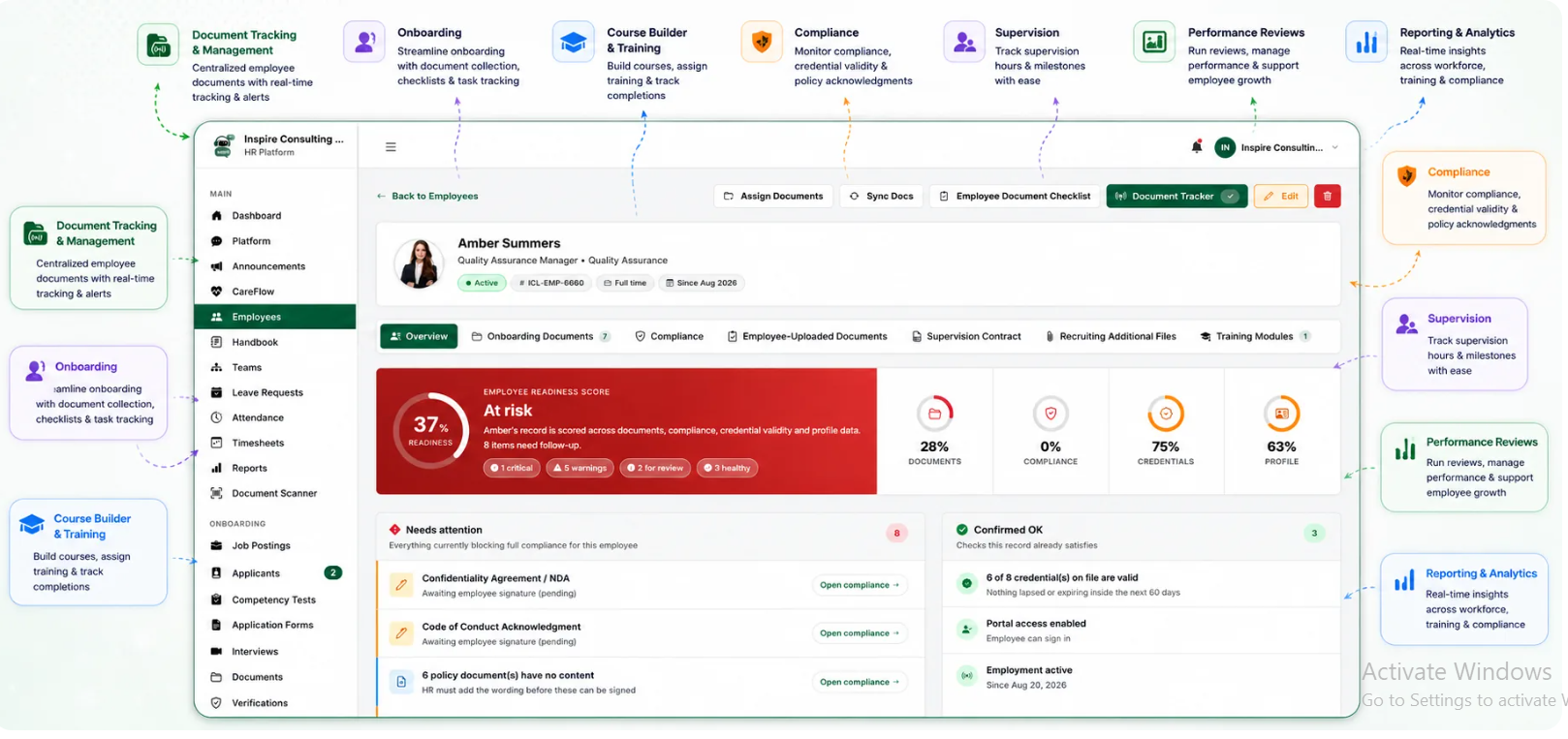
Technology centralizes employee records, performance data, scheduling information, and compliance tracking. Instead of spreadsheets scattered across departments, leaders access unified dashboards that reveal workforce strengths and gaps.
With predictive analytics, organizations can forecast hiring needs based on service expansion plans or historical turnover data. They can also model different scenarios, such as funding changes or program growth, to understand how staffing requirements will shift over time.
This level of visibility allows Washington DC organizations to move from reactive staffing to strategic workforce management.
Aligning Workforce Planning with Organizational Growth
Long-term workforce capacity planning DC strategies must align directly with organizational vision.
If an organization plans to expand services, open new locations, or introduce new care programs, staffing must be planned well in advance. Recruitment pipelines, onboarding processes, and training programs must be prepared before growth begins.
HR technology supports this alignment by linking workforce data to operational goals. Leaders can track whether current staffing levels support projected growth and identify which roles require succession planning.
Strategic workforce alignment prevents service disruption and ensures that growth strengthens the organization rather than overwhelming it.
Reducing Burnout Through Strategic Planning
Burnout is one of the biggest challenges facing Washington DC’s behavioral health workforce. When staffing levels are inadequate, remaining employees carry heavier workloads.
Long-term workforce capacity planning DC organizations implement reduces burnout by ensuring proper staffing ratios and balanced workloads. With clear data, leaders can identify departments under strain and adjust hiring plans proactively.
HR technology also supports engagement tracking and performance insights, helping leadership recognize early warning signs of turnover risk. Addressing these issues early strengthens retention and workforce stability.
A sustainable workforce is not built overnight. It is built through continuous monitoring and strategic adjustment.
Compliance and Risk Management
In Washington DC’s regulated environment, compliance failures can lead to penalties, funding loss, or reputational damage.
Long-term workforce capacity planning DC strategies must include compliance forecasting. Are certifications expiring soon? Are supervision ratios meeting regulatory requirements? Are documentation workloads manageable?
HR systems designed for regulated workforces track these elements automatically. Alerts and dashboards ensure that compliance gaps are identified before they become risks.
This proactive approach protects organizations while supporting uninterrupted service delivery.
Data-Driven Decision Making for Leadership
Executive leaders need accurate data to make long-term decisions. Workforce planning without reliable analytics is guesswork.
With integrated HR technology, leaders gain access to dashboards that show turnover trends, hiring timelines, training completion rates, and workforce demographics. These insights inform budget planning, grant proposals, and expansion strategies.
Long-term workforce capacity planning DC executives prioritize becomes a structured, measurable process rather than a reactive response to staffing shortages.
Accurate workforce intelligence strengthens confidence at the executive level and improves board-level reporting.
Building a Sustainable Recruitment Pipeline
Recruitment is a major component of long-term workforce capacity planning DC organizations depend on. In competitive labor markets, waiting until positions are vacant is too late.
Strategic HR systems allow organizations to build talent pipelines in advance. They can track applicant trends, evaluate time-to-hire metrics, and identify which recruitment channels produce the best candidates.
By analyzing this data over time, organizations improve hiring efficiency and reduce recruitment costs. Sustainable workforce growth begins with consistent, data-backed recruitment planning.
Supporting Succession Planning
Leadership transitions can disrupt operations if succession planning is not part of workforce strategy.
Long-term workforce capacity planning DC organizations practice includes identifying high-potential employees and preparing them for future leadership roles. Performance tracking and professional development records stored within HR systems make succession planning measurable.
When leaders retire or transition, organizations with structured succession plans maintain stability and continuity.
Succession planning ensures that institutional knowledge remains within the organization.
Enhancing Operational Continuity
Operational continuity depends on having the right people in the right roles at the right time.
Long-term workforce capacity planning DC strategies protect continuity by forecasting staffing needs across departments and service lines. Integrated HR technology allows organizations to track workforce readiness in real time.
If unexpected turnover occurs, leaders already have data-backed contingency plans. This level of preparation strengthens resilience in uncertain environments.
Operational stability builds trust with clients, regulators, and funding partners.
Strengthening Workforce Resilience in Washington DC
Resilience is about more than surviving challenges. It is about adapting and growing.
Long-term workforce capacity planning DC organizations implement supports resilience by combining data analytics, compliance monitoring, engagement tracking, and strategic forecasting in one connected system.
As policies shift and community needs evolve, organizations equipped with intelligent workforce planning tools can respond quickly without sacrificing quality or compliance.
In Washington DC’s complex regulatory landscape, resilience is built through preparation.
A Smarter Approach to Long-Term Workforce Capacity Planning DC
Organizations that invest in structured, technology-driven workforce planning gain a long-term competitive advantage. They reduce administrative stress, strengthen compliance, and build sustainable teams capable of meeting future demands.
Long-term workforce capacity planning DC leaders prioritize is not just about filling roles. It is about aligning people strategy with mission, compliance, and community impact.
With the right HR technology infrastructure, Washington DC organizations can move confidently into the future, supported by data, guided by strategy, and prepared for growth.
Workforce sustainability does not happen by chance. It happens through intelligent planning, continuous monitoring, and a commitment to long-term organizational health.