Behavioral health organizations depend on supervisors to do more than manage schedules. They approve changes, confirm documentation, track probation check-ins, support accommodations, and help keep employee records current. Yet in many organizations, supervisors still send these updates through email or text, then wait for HR to re-enter information into multiple systems. That creates delays, weak audit trails, and avoidable frustration on both sides.
Manager self service software gives behavioral health providers a more controlled way to involve supervisors in HR workflows. Instead of giving broad system access or relying on informal follow-up, organizations can let supervisors complete the actions they own inside a structured environment. That improves speed without sacrificing documentation discipline, role boundaries, or compliance readiness.
Key Takeaways
What Is Manager Self Service Software?
Manager self service software is a set of tools that allows supervisors and department leaders to complete approved HR-related tasks directly within a secure system. Rather than depending on HR to manually process every small action, supervisors can review assigned items, submit changes, acknowledge responsibilities, and complete role-appropriate workflows through guided access.
In behavioral health, this matters because many workforce actions begin outside the HR office. Supervisors are often the first to know about schedule changes, leave needs, transfers, probation concerns, missing training, or updated job duties. If that information has to travel through too many disconnected steps before it reaches the official employee record, the organization loses time and visibility. Manager self service software shortens that gap while preserving control.
Why It Matters for Behavioral Health Providers
Behavioral health providers often operate across multiple programs, service lines, and locations. HR may sit centrally, while day-to-day workforce decisions happen in clinics, residential programs, or community-based teams. That structure makes supervisor participation necessary, but it also creates risk when the process is informal.
When supervisors rely on email threads or spreadsheets to communicate HR actions, several problems show up quickly. Requests get buried. Important context lives only in one person’s inbox. Documentation may be delayed or never attached to the employee file. HR teams spend too much time chasing details that managers already know. Over time, those inefficiencies increase administrative load and make it harder to show a clean history of who approved what.
Manager self service software helps fix that by giving supervisors a clear lane for the tasks they own. The organization can move faster on employee changes while still keeping access controlled, evidence organized, and accountability visible.
Where Manual Supervisor-to-HR Workflows Break Down
Most organizations do not set out to create messy workflows. They build them gradually as teams grow. A supervisor emails HR about a transfer. Another sends a spreadsheet for probation review dates. Someone else keeps accommodation notes in a folder that HR cannot easily reconcile with the employee file. Each workaround feels manageable until volume increases.
These breakdowns are especially costly in behavioral health because staffing changes can affect caseload coverage, supervision requirements, and readiness for regulated services. Cleaner supervisor workflows help protect both operational continuity and documentation quality.
What to Look For in Manager Self Service Software
The best manager self service software for behavioral health providers should not simply expose more screens to supervisors. It should give them limited, purposeful access that supports HR accuracy.
Role-based permissions
Supervisors should only see the employees, actions, and data needed for their responsibilities. Strong permission controls help organizations involve managers without overexposing sensitive workforce information.
Structured approvals and submissions
A manager should be able to complete an approval or submit a workforce change in a standardized format. Required fields, guided workflows, and built-in validation reduce back-and-forth and improve data quality.
Audit trail visibility
Every meaningful action should leave a clear record of who completed it and when. That history matters for internal accountability and for demonstrating process discipline during reviews or investigations.
Connection to employee records
Supervisor actions should not end as isolated transactions. They should connect to the employee file, status history, or compliance record so the organization keeps one coherent source of truth.
Task routing and follow-up
Not every manager action should instantly change the system of record. Some items may need HR review, supporting documents, or additional approval. Good software keeps those handoffs visible instead of relying on manual reminders.
Best Use Cases in Behavioral Health HR
Manager self service is especially useful when supervisors are close to the event but HR still needs a controlled process. For example, supervisors can confirm probation checkpoint outcomes, initiate job change requests, complete employee check-ins, acknowledge policy distribution, or submit follow-up details related to leave, accommodations, or role readiness.
It is also valuable for multi-site providers where central HR cannot personally monitor every local workforce change. A structured supervisor workflow helps standardize how information enters the system, even when leaders are spread across programs.
The goal is not to offload HR work onto managers without support. The goal is to give managers the right tools to complete their part of the workflow accurately, so HR can focus on oversight, exception handling, and compliance review instead of basic data chasing.
Implementation Best Practices
Start by identifying which supervisor actions create the most delay or rework today. That may include transfer requests, probation reviews, status changes, document acknowledgments, or other recurring items. Choose a few high-value workflows first rather than trying to digitize every manager interaction at once.
Next, define who can do what. Behavioral health organizations should be careful about permission design, especially where workforce data intersects with accommodations, discipline, or health-related documentation. Managers need enough access to act, but not more than their role requires.
Finally, train managers on process expectations, not just buttons. The software works best when supervisors understand what belongs in the system, what still needs HR involvement, and how timely completion affects employee readiness and compliance.
How BUAMS HR Helps
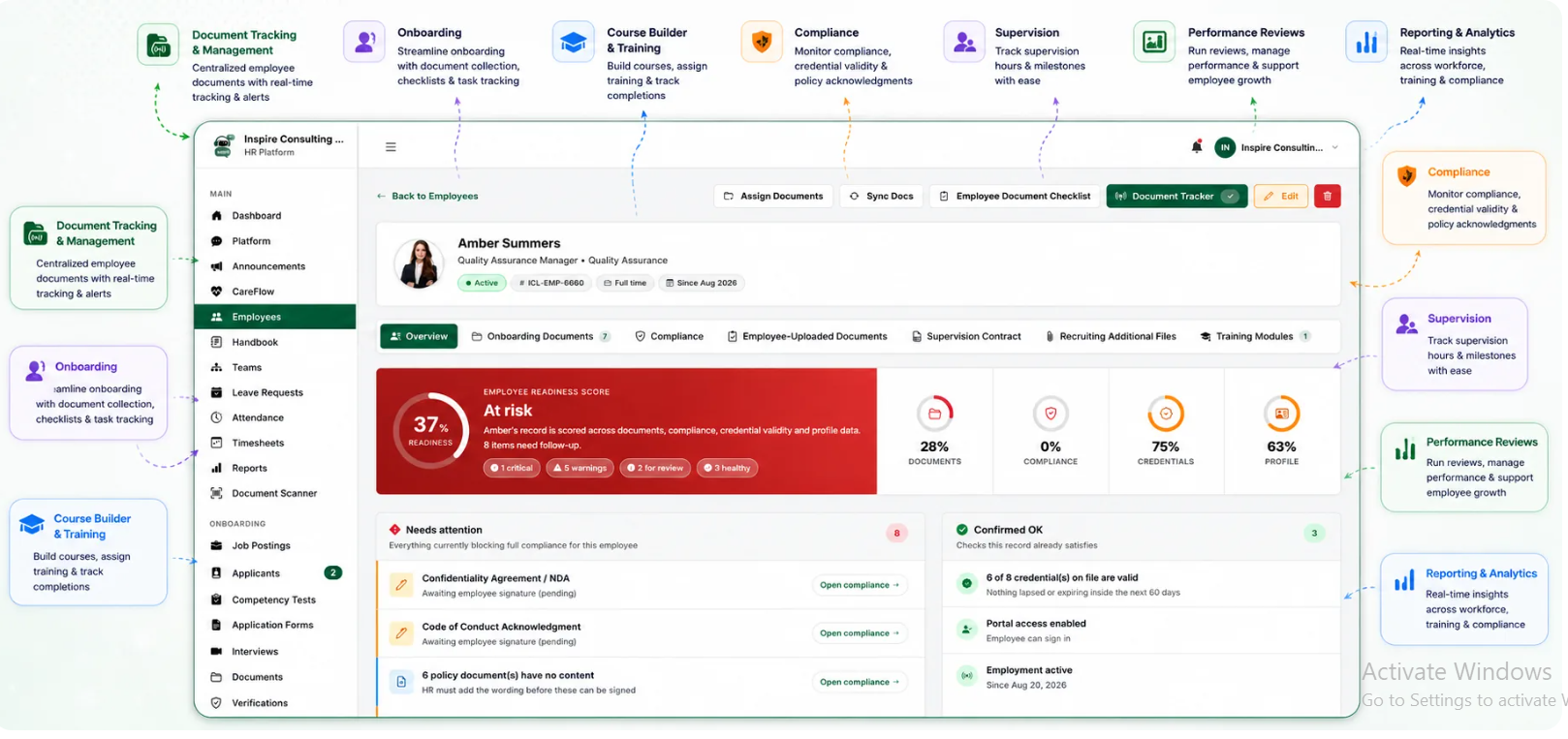
BUAMS HR helps behavioral health providers organize workforce processes in a way that supports both HR teams and supervisors. With structured workflows, organizations can reduce informal handoffs and keep manager-submitted actions connected to employee records, approvals, and compliance-related documentation.
That means supervisors can participate in the right tasks without forcing HR to reconstruct every request from scattered emails. BUAMS HR supports clearer accountability, faster follow-up, and more consistent documentation across programs and locations.
For organizations trying to grow while maintaining disciplined workforce operations, BUAMS HR provides a practical way to connect supervisor activity with the broader HR system instead of treating it as side-channel communication.
Final Thoughts
Manager self service software gives behavioral health providers a better way to involve supervisors in workforce operations without losing control of documentation or compliance. When managers can complete the right tasks inside a structured system, HR spends less time chasing details and more time keeping processes accurate, timely, and review ready.
For providers that want faster supervisor-to-HR coordination with stronger auditability, BUAMS HR offers a more organized path than email-heavy workflows and disconnected tracking tools.