NPI and CAQH tracking software helps behavioral health providers keep clinician enrollment data organized, current, and easier to verify across HR, compliance, and operational workflows. When a mental health organization hires licensed staff, expands services, or adds new payer relationships, basic workforce data is not enough. Teams also need a reliable way to track provider identifiers, enrollment details, supporting documents, and follow-up responsibilities so nothing important gets lost between recruiting, onboarding, credentialing, and ongoing compliance.
Key Takeaways
What is NPI and CAQH tracking software?
NPI and CAQH tracking software is a structured workflow for managing the provider data that supports clinician readiness, enrollment coordination, and documentation control. In practical terms, it gives behavioral health organizations one place to track items such as national provider identifiers, CAQH profile status, attestation activity, related documents, assigned follow-up owners, and unresolved gaps that could slow hiring or delay a program launch.
For many providers, this work still happens through spreadsheets, inbox threads, and scattered folders. That approach makes it harder to confirm whether a clinician profile is complete, whether information has been updated after a role change, or whether supporting evidence is stored in the correct place. A dedicated tracking process creates consistency and makes those answers faster to find.
Why it matters for behavioral health providers
Behavioral health organizations often depend on licensed clinicians whose records must stay accurate across multiple business processes at once. The same staff member may affect onboarding timelines, site assignment decisions, payer enrollment readiness, supervision planning, and audit response. If NPI or CAQH information is outdated, incomplete, or owned by no one, the consequences tend to show up as preventable delays rather than one obvious failure.
That matters because behavioral health providers are usually balancing growth, staffing pressure, and compliance expectations at the same time. A cleaner process for tracking clinician identifiers and enrollment support data reduces friction across those priorities.
What to look for in NPI and CAQH tracking software
A workable process should do more than store a number in a personnel file. It should help teams coordinate tasks, confirm document completeness, and surface exceptions early enough to act before they affect service delivery or hiring plans.
Centralized clinician record management
The system should tie key provider data to the employee record so HR and operational leaders are not forced to search multiple systems for basic answers. That includes identifiers, documents, notes, completion status, and any role-specific follow-up that matters for readiness.
Ownership and workflow visibility
Good tracking software makes responsibility visible. Teams should know who is collecting information, who is reviewing it, and what still needs action. Without clear ownership, enrollment-related tasks can linger until a start date or payer request makes the gap urgent.
Status monitoring for updates and attestations
Provider data is not static. Clinicians change addresses, licenses renew, supervisors change, and profiles may require periodic updates or attestations. The right workflow helps organizations monitor those changes so records stay aligned instead of drifting over time.
Document completeness and audit support
When records support payer enrollment, internal review, or compliance response, documentation has to be both complete and retrievable. A strong system should make it easier to confirm that required files exist, are tied to the right clinician, and can be produced without last-minute digging.
Alignment with onboarding and role changes
NPI and CAQH tracking is most effective when it connects to the broader employee lifecycle. New hires, internal transfers, leadership promotions, and site expansions all create moments when provider data should be reviewed. A disconnected process invites missed updates and duplicate work.
How BUAMS HR helps
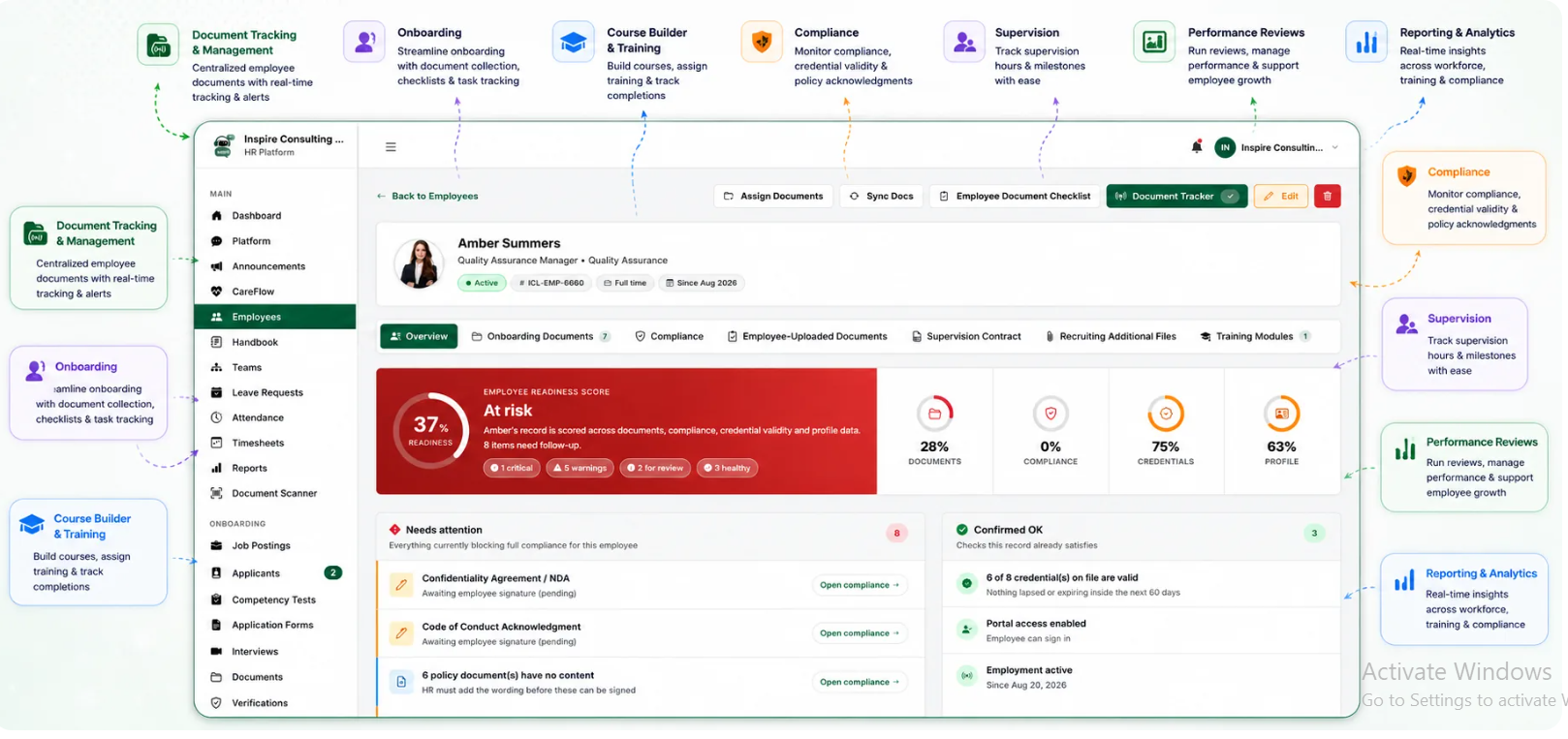
BUAMS HR helps behavioral health providers keep workforce information more organized so compliance-related details are easier to manage in context. Instead of treating clinician readiness as a series of disconnected one-off tasks, teams can maintain employee records, documents, and follow-up items inside a more structured HR workflow.
For organizations that manage licensed staff across programs or locations, that structure can make a real difference. It shortens the time spent chasing information, reduces duplicate data entry, and helps teams act earlier when a clinician record needs attention.
Final Thoughts
NPI and CAQH tracking software gives behavioral health providers a more dependable way to manage clinician enrollment-related data as part of everyday workforce operations. The goal is not just cleaner administration. It is faster readiness, better coordination, and less risk that incomplete provider records will quietly delay hiring or disrupt expansion. BUAMS HR supports that kind of organized, practical workflow by helping teams keep employee data, documents, and compliance follow-up connected in one place.