Behavioral health hiring teams often celebrate too early when a candidate says yes. The offer may be accepted, but the work that determines whether that person can actually start is still in motion. Background screening may still be pending. Licenses may need validation. Policy acknowledgments, role-based onboarding tasks, supervisor assignments, and employee file requirements may still be incomplete. If those next steps are managed through inboxes and side conversations, accepted offers can sit in limbo until start dates slip or managers discover missing requirements too late.
Offer acceptance workflow software gives behavioral health providers a more controlled way to manage that handoff. Instead of treating acceptance as the finish line, it turns acceptance into the trigger for the next set of HR, compliance, and onboarding actions. That helps organizations move from candidate agreement to documented workforce readiness with less confusion, fewer delays, and stronger visibility across teams.
Key Takeaways
What Is Offer Acceptance Workflow Software?
Offer acceptance workflow software is a system that captures when a candidate accepts an offer and automatically routes the next required steps toward completion. In behavioral health, those steps may include preboarding forms, background checks, credential verification, document collection, training assignments, site-specific requirements, and internal approvals tied to the employee’s role.
The core value is not just collecting a yes or storing an offer letter. The value is turning that acceptance into an operational workflow with ownership, status tracking, deadlines, and documented evidence. Without that structure, organizations may know a candidate intends to join, but they still lack a reliable way to prove whether the person is fully cleared to begin work.
Why Accepted Offers Still Break Down Before Start Dates
Behavioral health providers hire into environments where readiness is more complex than a signed acceptance. A new therapist may need license verification, supervision assignment, and program-specific orientation. A residential staff member may need training, health documentation, and shift-readiness confirmation. A support employee may need policy sign-offs, file completion, and system access coordination before day one.
When accepted offers are managed informally, several problems show up quickly. HR may think a manager is handling next steps. The manager may assume compliance already cleared the file. Credential documentation may arrive, but not get linked to the correct person. A start date may stay on the calendar even though one required item is still open. The result is not only administrative frustration. It can create staffing gaps, rushed exceptions, and preventable compliance exposure.
This is why the period between offer acceptance and actual start matters so much. For growing agencies, the operational risk is often hiding in that middle stage. Offer acceptance workflow software gives teams a way to manage it deliberately instead of reactively.
Where Manual Offer Acceptance Follow-Up Usually Fails
These breakdowns are common because acceptance feels like closure when it should actually trigger a more disciplined process. If the organization does not formalize that transition, the accepted offer becomes a blind spot between recruiting and workforce readiness.
What to Look For in Offer Acceptance Workflow Software
Immediate post-acceptance task generation
The system should create structured next steps as soon as the candidate accepts. That can include paperwork collection, employee file setup, screening follow-up, training assignment, and role-specific compliance checks. Behavioral health organizations should not depend on someone remembering to start those tasks manually after a phone call or email reply.
Role-based readiness paths
Different jobs require different pre-start work. A clinician, peer support worker, supervisor, residential team member, and administrative employee will not share identical requirements. The workflow should support role-based task sets so the right items are triggered for the right hire without building a custom checklist from scratch each time.
Shared blocker visibility
Accepted offers move faster when teams can quickly identify what is still missing. The software should show whether the candidate is waiting on documentation, whether internal review is pending, or whether an outside verification still needs follow-up. That visibility helps managers set realistic start expectations instead of guessing.
Documented ownership and deadlines
Each post-acceptance step should have a responsible owner and a timing expectation. If no one clearly owns background review, document collection, or file completion, tasks drift. In behavioral health settings, delays often come from ambiguity rather than from the work itself.
Connection to the employee record
Everything gathered after acceptance should flow into a durable HR record. That includes signed forms, clearances, role documentation, and proof of completed requirements. When accepted-offer activity stays outside the employee file, teams lose the continuity they need for audits, supervisor reviews, and future status changes.
Best Practices for Turning Accepted Offers Into Cleared Starts
Start by defining exactly what acceptance should trigger inside your organization. Some providers only think about payroll setup or a welcome message, but behavioral health hiring usually requires a broader chain of tasks. The better approach is to identify every item that must happen between candidate agreement and safe, compliant start. That list should cover HR documentation, compliance verification, onboarding content, and operational coordination.
It also helps to separate accepted from cleared. A candidate can be fully committed and still not be ready to begin work. That distinction should be obvious in the workflow. Teams should be able to tell the difference between a person who has accepted an offer, a person who is actively completing pre-start steps, and a person who is fully approved for day-one readiness.
These practices improve more than speed. They also strengthen trust between HR, operations, and program leadership because everyone can see how accepted offers are progressing and why a start date is either on track or at risk.
How BUAMS HR Helps
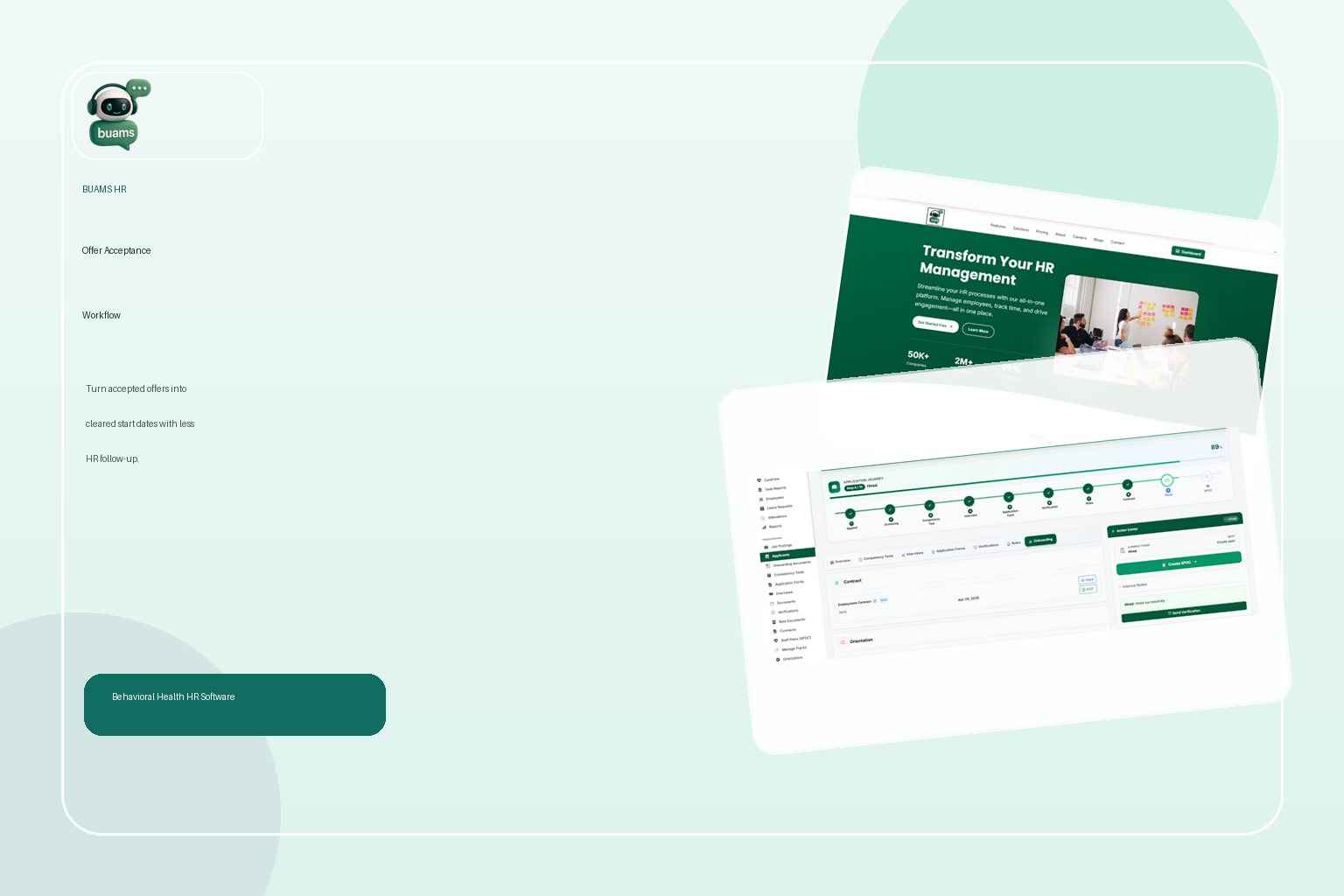
BUAMS HR helps behavioral health providers manage the transition from hiring decision to active employee record with more structure. For teams using offer acceptance workflow software, that matters because accepted offers only move cleanly when documentation, status tracking, and follow-up live in one organized system.
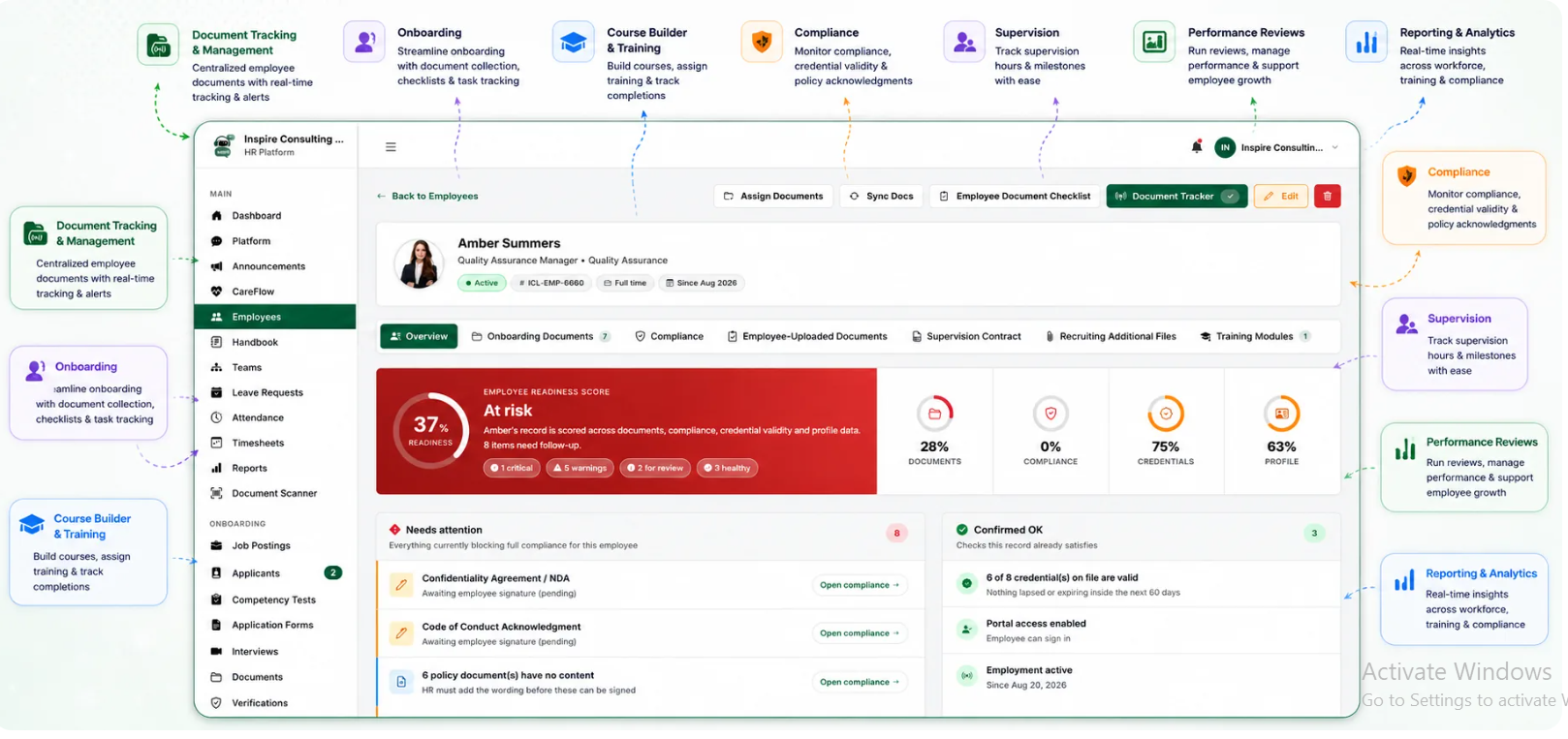
With BUAMS HR, organizations can centralize employee files, track onboarding-related requirements, organize compliance documents, and give internal stakeholders better visibility into what has been completed and what remains outstanding. That reduces the chances that accepted candidates get stuck between recruiting and readiness because a key document, approval, or handoff was lost in email.
BUAMS HR also supports more consistent operational discipline across locations and programs. Instead of every hiring manager inventing a different follow-up method after acceptance, providers can build a repeatable process that connects offer acceptance to pre-start tasks, readiness proof, and cleaner audit trails.
Final Thoughts
Offer acceptance workflow software helps behavioral health providers close one of the most common gaps in hiring operations: the space between candidate commitment and actual workforce readiness. When accepted offers are managed well, start dates become more predictable, employee files are more complete, and teams spend less time reacting to preventable last-minute surprises.
For organizations that need both hiring speed and compliance confidence, the goal is not simply to record that a candidate said yes. The goal is to guide every accepted offer through a visible, documented path to a cleared start. With a structured workflow and a centralized platform like BUAMS HR, providers can make that transition faster and far more reliable.