Personnel File Checklist Software for Behavioral Health Providers: How to Standardize HR File Reviews Across Programs
Behavioral health organizations usually know that employee records matter, but many still review personnel files in an inconsistent way. One location may use a detailed checklist, another may depend on supervisor memory, and a third may only discover gaps when an audit or accreditation review is already close. That inconsistency creates risk because missing signatures, outdated job descriptions, expired documents, and incomplete onboarding records rarely stay isolated for long.
Personnel file checklist software gives HR teams a more dependable way to review employee records against a defined standard. Instead of treating file audits as one-off cleanup projects, providers can create a repeatable process that shows what belongs in each file, what is missing, and what needs follow-up before problems become urgent.
Key Takeaways
What Is Personnel File Checklist Software?
Personnel file checklist software is a system that helps HR teams define required file components and review each employee record against those requirements. Instead of relying on a paper checklist or a spreadsheet that quickly falls out of date, the software creates a structured workflow for verifying file completeness and documenting what still needs action.
In behavioral health settings, that may include offer documents, job descriptions, policy acknowledgments, licenses or certifications when applicable, training proof, supervision-related records, annual review documents, and other items tied to the employee lifecycle. The real value is not just storing documents. It is creating a clear standard for what a complete and current file should contain.
Why Behavioral Health Providers Need a Standard Review Process
Behavioral health organizations often manage multiple staff types, multiple programs, and changing documentation requirements. Clinical roles may need different records than direct care, administrative, or supervisory positions. Maryland and DC providers may also need stronger discipline around documentation because of accreditation expectations, payer oversight, and internal quality review.
Without a standard review process, file quality tends to drift over time. A document may be collected during hiring but never filed correctly. A role change may happen without an updated job description. A signed acknowledgment may exist in email but not in the official employee record. These gaps are common when teams work hard but lack one consistent checklist for review.
That is why checklist software matters. It helps HR move from general intentions like keeping files organized to a concrete operating process that can be repeated across every program and every location.
Common Problems Manual File Reviews Create
Manual reviews often break down in familiar ways, especially in growing organizations.
These issues waste time, but more importantly, they weaken confidence in the record itself. If leaders cannot trust that every file was reviewed against the same standard, they also cannot trust that a quick spot-check reflects the real condition of the workforce record set.
What to Look for in Personnel File Checklist Software
Role-Based File Requirements
The best systems let HR define different checklist expectations by role or staff category. A licensed clinician may need credential and supervision records that an administrative employee does not. A role-based structure helps the checklist stay accurate without forcing teams into generic reviews that miss important differences.
Clear Missing-Item Visibility
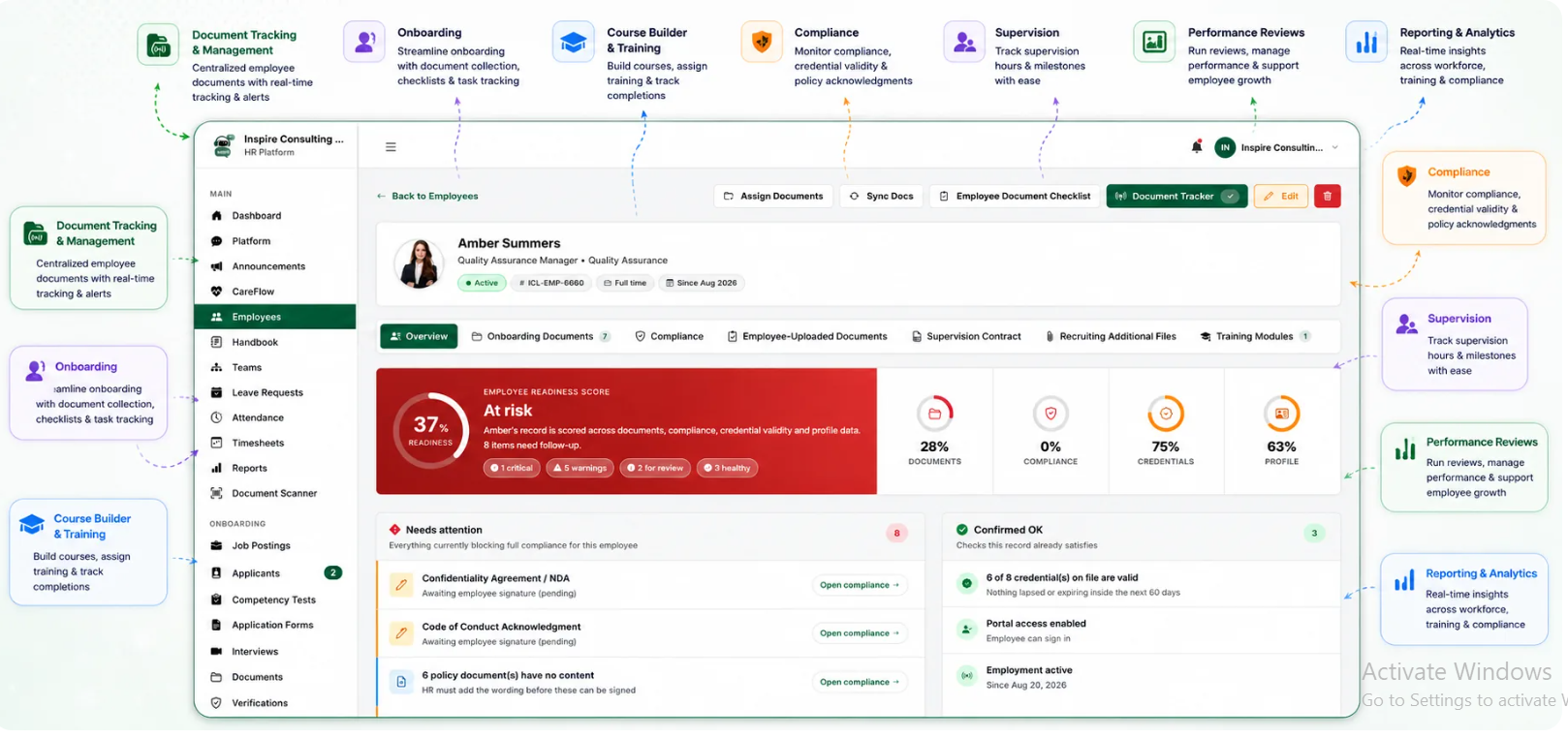
It should be easy to see what is missing, what is outdated, and what has already been verified. A practical review workflow reduces the need to read every file from scratch each time and helps teams focus on exceptions that require action.
Centralized Document Access
Checklists work better when the supporting documents are available in the same system. If reviewers still have to search across email, shared drives, and paper folders, the checklist becomes another layer of admin work instead of a real control process.
Review History and Accountability
Organizations should be able to see when a file was reviewed, what was confirmed, and what follow-up remained open. Even a lightweight review history can improve consistency and make internal oversight much easier.
Support for Ongoing Reviews, Not Just One-Time Cleanup
The strongest process is ongoing. Software should help organizations review new hire files, periodic file maintenance, role changes, and pre-audit preparation with the same logic instead of treating every review like a separate project.
Best Practices for Stronger Personnel File Reviews
Software helps most when the operating model is simple and repeatable. Behavioral health providers can strengthen file review quality by following a few practical habits.
These practices help teams maintain better records between audits. They also reduce the stress that comes from discovering gaps all at once during an external review or leadership request.
How BUAMS HR Helps
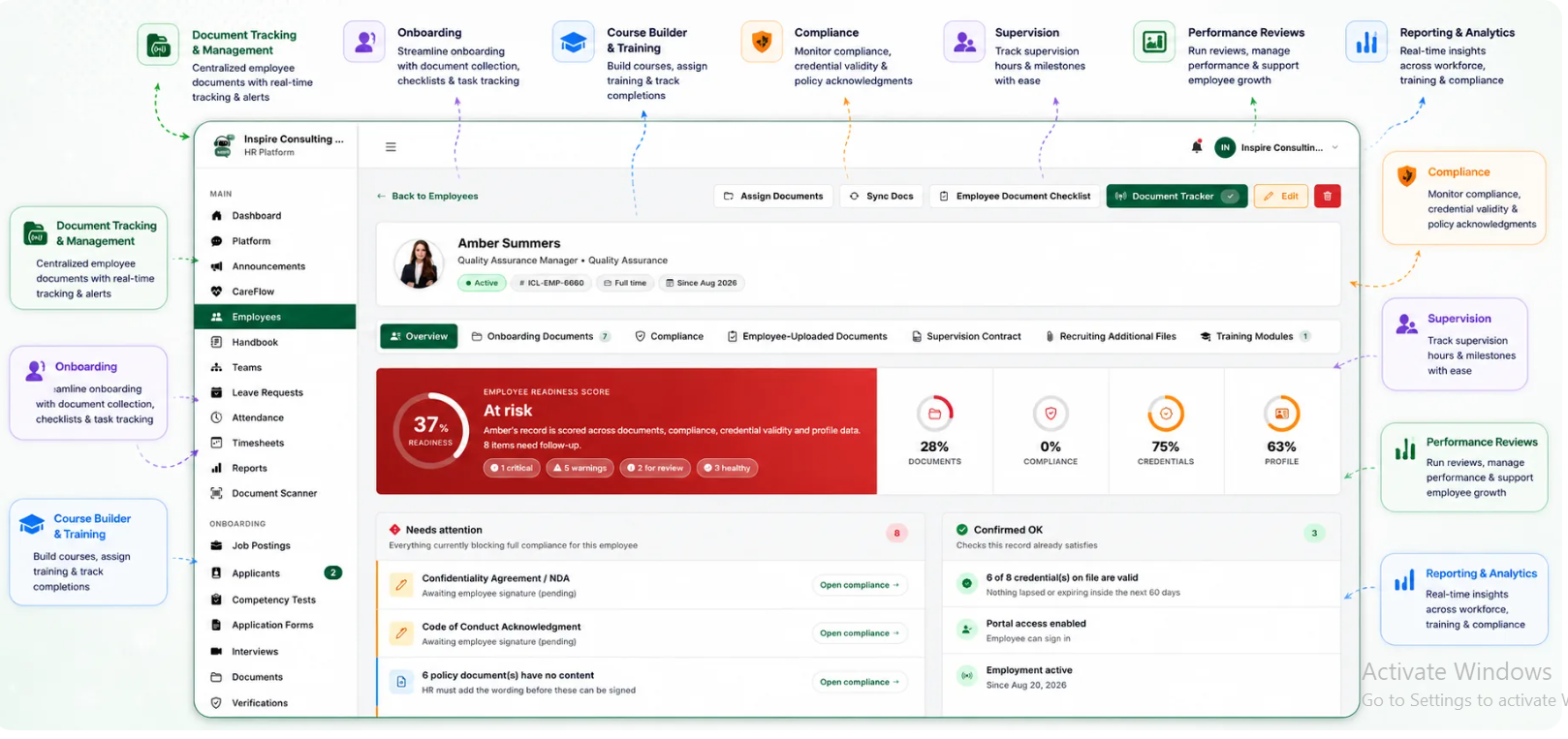
BUAMS HR helps behavioral health providers organize workforce records in a way that supports cleaner, more repeatable file reviews. When onboarding documents, employee files, acknowledgments, and compliance-related records live in a more structured system, HR teams can review records with less searching and fewer disconnected handoffs.
That matters for organizations that want stronger consistency across programs without adding another spreadsheet to maintain. BUAMS HR supports the practical side of personnel file management by helping teams keep records easier to locate, easier to verify, and easier to follow up on when something is incomplete.
For behavioral health providers preparing for growth, accreditation activity, or more formal internal oversight, a checklist-driven file review process can improve confidence that employee records actually match the standards the organization intends to follow.
Final Thoughts
Personnel file checklist software is valuable because it turns file review from an occasional scramble into a repeatable control process. Behavioral health providers need more than document storage. They need a dependable way to verify that records are complete, current, and aligned with real workforce requirements.
When file reviews are standardized across programs, HR teams can find issues earlier, reduce audit stress, and support stronger workforce operations with less guesswork. That kind of consistency is hard to build manually, but much easier to sustain with the right software and a clear review standard.