Behavioral health organizations update policies more often than many teams realize. Handbook revisions, confidentiality rules, supervision expectations, remote work guidance, incident reporting procedures, and compliance policies all need to reach the right employees at the right time. The challenge is not only sending updates. It is proving who received them, who reviewed them, and who still needs follow-up.
Key Takeaways
What Is Policy Acknowledgment Software?
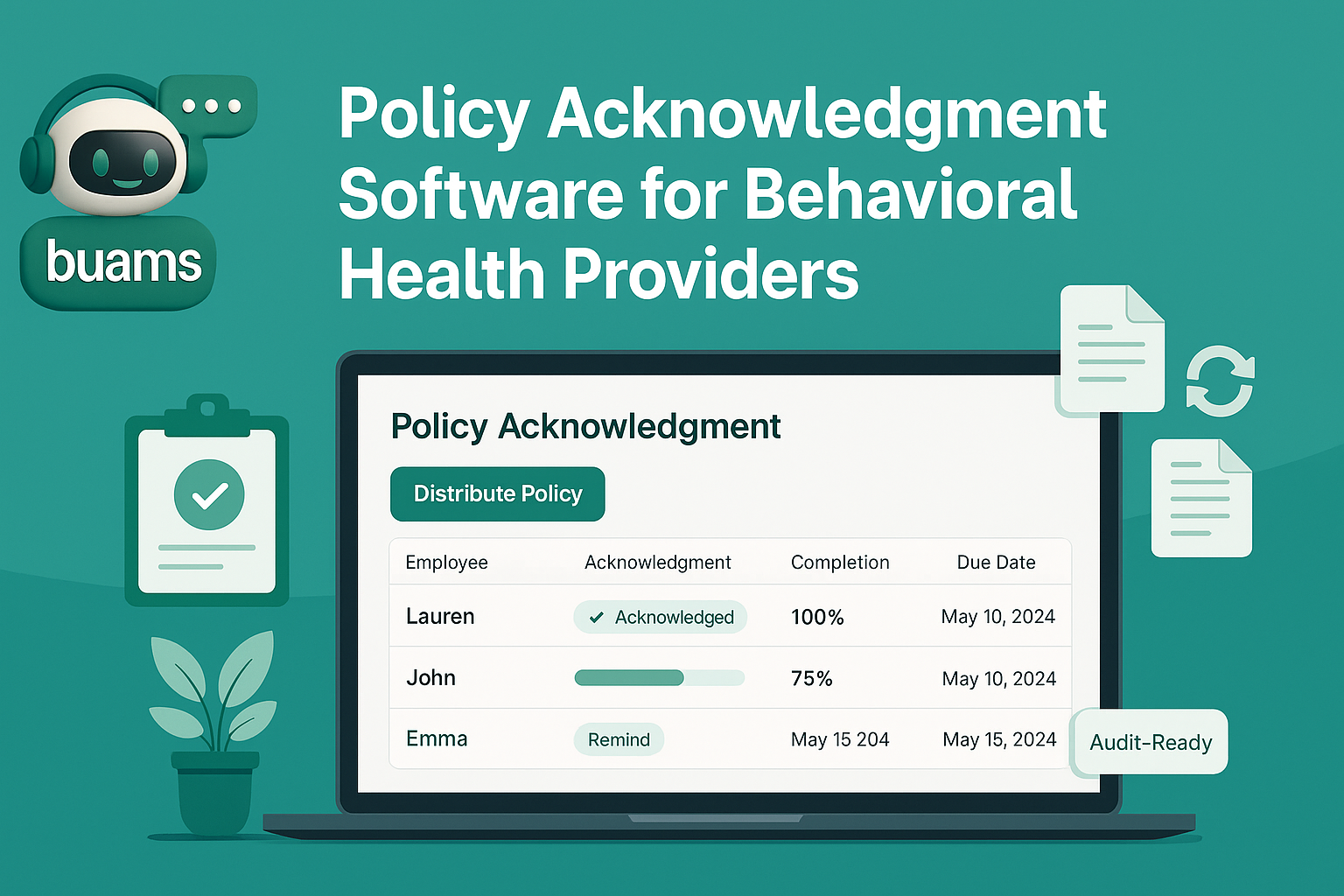
Policy acknowledgment software is a system that helps HR teams assign policies, collect employee confirmations, and store a clear record of each acknowledgment. Instead of relying on paper forms, shared drives, or scattered email replies, the process is managed through a structured workflow that shows what was assigned, when it was reviewed, and whether the acknowledgment is complete.
For behavioral health providers, that can include employee handbooks, code of conduct policies, HIPAA and confidentiality updates, supervision standards, training expectations, and program-specific procedures. The goal is not just efficiency. It is creating a defensible record that shows staff were informed of important expectations.
Why It Matters in Behavioral Health
Behavioral health organizations operate in a regulated environment where policy communication has real operational consequences. When staff do not receive or confirm updated expectations, small communication gaps can turn into bigger compliance problems. An outdated handbook, an unacknowledged workflow change, or inconsistent documentation of policy distribution can become a problem during audits, employee relations issues, or accreditation reviews.
This challenge grows as organizations add programs, hire across multiple roles, or manage teams in different locations. Not every policy applies to every employee, and manual distribution methods make it harder to prove that the right people received the right guidance. Without a reliable process, HR may spend hours reconstructing records when leadership, legal counsel, or surveyors ask for evidence.
Common Problems With Manual Policy Tracking
Many HR teams still handle policy sign-offs through email attachments, paper forms, or general shared folders. That usually creates friction in a few predictable ways:
These issues create both administrative burden and compliance exposure. Even when the organization is making a good-faith effort, the lack of clean documentation can weaken confidence in the process.
What to Look for in Policy Acknowledgment Software
Role-Based Assignment
Behavioral health agencies often need different policies for clinicians, supervisors, direct care staff, and administrative teams. Software should make it easy to assign the correct policy set based on role, department, program, or location.
Version Control
HR needs confidence that employees are acknowledging the current document, not an outdated copy. Strong version tracking helps preserve a clear history of what changed and when each employee confirmed receipt.
Automated Reminders and Status Visibility
Reminder automation reduces the need for repeated manual follow-up. It also gives HR and managers a quick way to see which acknowledgments are complete, overdue, or still pending.
Centralized Record Storage
Acknowledgment records should live alongside the broader employee file, not in disconnected folders. Centralized storage makes retrieval faster and helps keep policy history tied to the employee's overall compliance record.
Audit-Ready Reporting
When a regulator, accreditor, or internal reviewer asks for proof, HR should be able to show assignment dates, completion status, and document versions without rebuilding the timeline by hand.
How BUAMS HR Helps
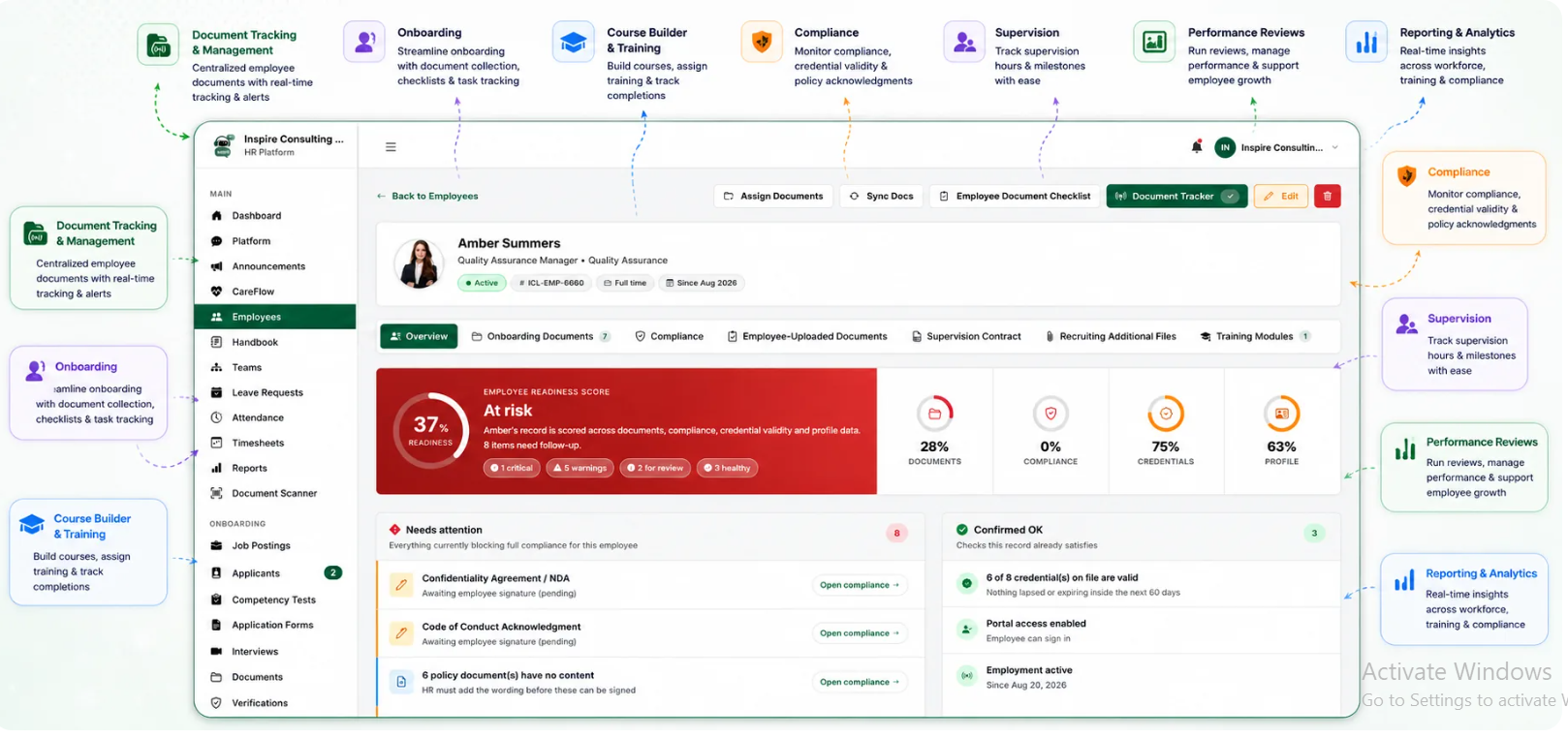
BUAMS HR helps behavioral health organizations manage policy communication in a more structured way by keeping employee records, compliance workflows, and document activity organized in one system. Instead of depending on scattered email chains or paper acknowledgments, HR teams can create a clearer process for assigning documents, monitoring completion, and maintaining a usable record for future review.
That matters when policy updates need to move across multiple roles or programs without losing visibility. With a centralized HR workflow, organizations can reduce administrative chasing, improve documentation quality, and make policy proof easier to retrieve when questions come up later.
Final Thoughts
Policies only help if organizations can show they were communicated clearly and acknowledged consistently. Policy acknowledgment software gives behavioral health providers a practical way to strengthen accountability, reduce manual tracking, and keep better evidence of staff communication over time. For HR teams balancing compliance with day-to-day operations, that structure can remove a lot of unnecessary friction.