Once a behavioral health candidate accepts an offer, the real operational race begins. HR teams still need to collect employment documents, coordinate policy acknowledgments, confirm role-specific requirements, and keep the start date from slipping. When those steps live in email threads, spreadsheets, and disconnected reminders, even strong hires can arrive on day one with missing paperwork or unresolved compliance tasks.
Preboarding software gives behavioral health providers a structured way to manage the time between offer acceptance and first day readiness. Instead of chasing updates across multiple people and systems, HR can keep post-offer tasks visible, organized, and connected to the employee record. That helps organizations reduce delays, improve consistency, and create a smoother transition into onboarding.
Key Takeaways
What Is Preboarding Software?
Preboarding software is used to manage the period after a candidate says yes but before they officially begin work. It gives HR teams a system for tracking required forms, deadlines, approvals, communication, and readiness tasks so that a new hire is properly prepared before the first scheduled shift or orientation session.
In behavioral health, this stage can be more complex than it appears. Different roles may need different packets, training requirements, supervisor assignments, location-specific instructions, or employee file documentation. Without a controlled preboarding process, organizations risk pushing critical tasks into the first week of employment, when teams are already trying to orient the employee and support program coverage.
Why Preboarding Matters for Behavioral Health Providers
Behavioral health organizations often hire for time-sensitive roles that affect client access, supervision coverage, and program operations. A delayed hire can increase pressure on existing staff, extend open shifts, or slow service expansion. That means even small preboarding breakdowns can have operational consequences beyond HR.
Preboarding also affects the quality of the employee experience. If a new hire receives inconsistent instructions, duplicate requests, or last-minute paperwork, the organization can appear disorganized before the employee has even started. For teams already competing for scarce talent, that is not a small issue. A smoother preboarding process helps reinforce professionalism and confidence during a critical moment in the hiring journey.
There is also a compliance angle. Behavioral health providers need disciplined handling of employee records, policy documentation, training-related requirements, and role readiness steps. Even when every task is eventually completed, a scattered process makes it harder to show who completed what, when it was reviewed, and whether the organization followed a repeatable standard across hires.
Where Manual Preboarding Workflows Break Down
Many HR teams start with a practical mix of email templates, shared folders, spreadsheets, and calendar reminders. That may work for low volume hiring, but it becomes harder to control as the organization grows across programs, locations, and role types.
These problems usually create more than inconvenience. They produce handoff confusion, avoidable delays, and weak documentation continuity between hiring and active employment.
What to Look For in Preboarding Software
The best preboarding software for behavioral health providers should support control, visibility, and clean handoffs instead of acting like a simple checklist tool.
Post-offer task tracking
HR teams should be able to see every required step tied to a hire, including who owns it, whether it is complete, and what is still blocking the start date. Clear status visibility helps leaders prioritize work before problems become urgent.
Role-based document collection
Different positions often require different forms, acknowledgments, and supporting records. A strong system helps standardize what must be collected for each role while reducing ad hoc requests and missing items.
Deadline visibility and reminders
Preboarding moves quickly, especially when organizations are hiring into high-need programs. Automated reminders and deadline tracking reduce the chance that tasks sit incomplete until the day before orientation.
Connection to employee files
Information gathered during preboarding should not disappear into isolated email chains. It should flow into an organized employee record structure so HR can maintain continuity after the hire becomes active.
Cross-team accountability
Behavioral health hiring usually involves HR, supervisors, program leaders, and sometimes compliance staff. Preboarding software should make ownership visible so each person knows what they are responsible for completing or reviewing.
Best Practices for a Strong Preboarding Process
First, organizations should define a standard preboarding pathway for each major role type. Not every employee needs the same steps, but every role should have a clear baseline so HR is not rebuilding the process from scratch for every offer.
Second, the start date should be tied to readiness, not optimism. If required tasks are still incomplete, the system should make that visible early enough for HR and operations leaders to adjust plans before the employee arrives.
Third, communications should be coordinated. New hires should receive clear instructions, timelines, and next steps without duplicate outreach from multiple people. Centralized workflows make that easier because the organization can see what has already been sent and what still needs action.
Finally, providers should treat preboarding as part of the broader workforce documentation lifecycle. The goal is not just to get through the week before day one. It is to create a cleaner transition from offer acceptance to onboarding, employee file completeness, and long-term compliance readiness.
How BUAMS HR Helps
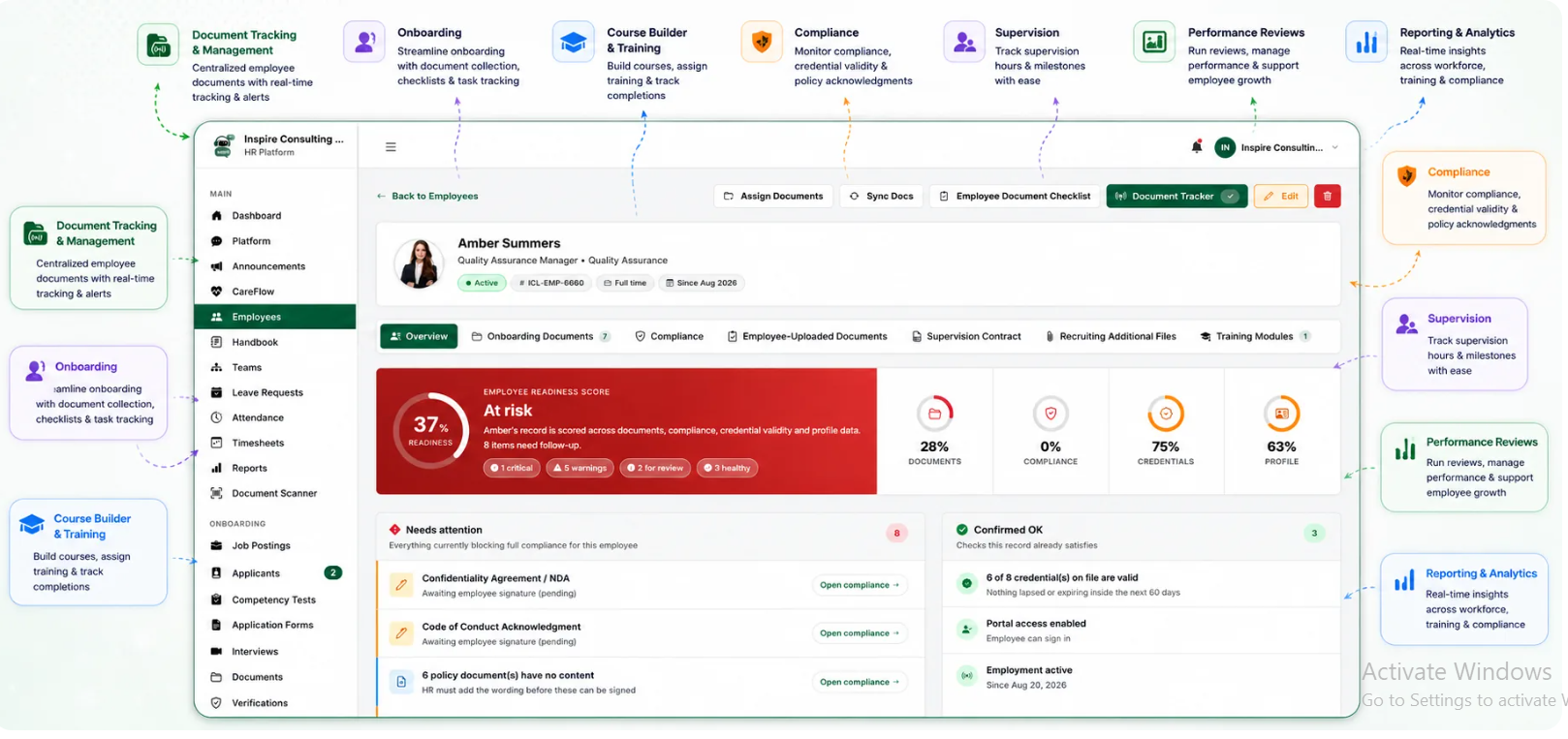
BUAMS HR helps behavioral health providers organize HR workflows that span hiring, preboarding, onboarding, and employee record management. Instead of letting post-offer tasks live in disconnected tools, teams can keep important documentation and readiness steps in one structured system.
That makes it easier to see which hires are ready to move forward, which ones are still waiting on documents or approvals, and where follow-up is needed before a start date is finalized. BUAMS HR supports a more disciplined handoff from accepted offer to active employee, helping organizations reduce administrative friction while keeping documentation organized.
For providers managing multiple programs or locations, BUAMS HR also improves consistency. HR leaders can standardize workflows, reduce missed steps, and maintain better continuity between prehire activity and the employee file that supports ongoing workforce management.
Final Thoughts
Preboarding software helps behavioral health providers control a stage that is often rushed, fragmented, and harder to track than it should be. With the right workflow, organizations can keep offers, paperwork, readiness tasks, and start dates aligned without relying on scattered follow-up.
For teams that want a more reliable bridge between hiring and onboarding, BUAMS HR provides a practical way to keep preboarding tasks, compliance-related records, and employee documentation connected in one place.