Behavioral health providers cannot afford a messy handoff between hiring a clinician and getting that person safely prepared to work. New therapists, counselors, peer specialists, and community-based staff often need role-specific oversight, shadowing, documentation review, and staged responsibility before they are fully independent. When preceptor assignments live in email threads, spreadsheets, or verbal handoffs, onboarding slows down and compliance risk rises. Preceptor assignment software gives HR and operations teams a better way to match new hires with the right oversight, document who is responsible, and keep readiness tasks moving.
Key Takeaways
What Is Preceptor Assignment Software?
Preceptor assignment software is a workflow system that helps organizations assign experienced staff to guide new hires through onboarding, early training, observation periods, and readiness checkpoints. In behavioral health settings, a preceptor may be a licensed clinician, team lead, supervisor, program manager, or another qualified staff member responsible for helping a new employee learn site expectations and complete required steps before taking on sensitive responsibilities.
For behavioral health providers, the assignment itself is only one part of the process. HR teams also need to know whether the new hire has completed required paperwork, whether role-specific credentials are confirmed, whether supervision expectations are documented, and whether local program leaders agree the person is ready. Good preceptor assignment software turns that entire process into a trackable workflow instead of a chain of assumptions.
Why It Matters for Behavioral Health Providers
Behavioral health organizations often onboard staff across multiple programs, sites, and service lines. A new outpatient therapist may need a different onboarding path than a mobile crisis clinician, psychiatric rehabilitation worker, or peer support specialist. Each role can involve different documentation standards, safety practices, electronic systems, and compliance expectations. If preceptor assignments are informal, organizations risk uneven onboarding quality and confusion about who owns readiness.
This matters even more in high-turnover or growth periods. Leaders may be trying to fill vacancies quickly while also protecting continuity of care. Without a structured assignment process, new employees can be left waiting for shadowing schedules, receiving inconsistent guidance, or starting work before required orientation steps are clearly documented. That creates preventable pressure for HR, supervisors, and program leaders.
Preceptor assignment software helps behavioral health providers create a repeatable process that supports both speed and accountability. It gives teams a reliable way to connect staffing decisions, onboarding progress, and compliance records in one place.
Common Problems With Manual Preceptor Tracking
Many organizations still manage preceptor assignments with separate spreadsheets, calendar invites, and message threads. That approach usually works until volume increases or a key manager is out. Then the cracks show quickly.
These problems are especially costly in behavioral health because onboarding quality affects client safety, documentation accuracy, reimbursement readiness, and retention. Early confusion can shape a new employee's experience long before performance issues appear.
What to Look For in Preceptor Assignment Software
The right system should do more than record a name next to a new hire. Behavioral health providers need software that supports role complexity, compliance visibility, and real workflow coordination.
Role-based assignment rules
Organizations should be able to match preceptors based on discipline, location, licensure level, supervisor relationship, and program type. This helps prevent weak pairings that look fine on paper but do not fit day-to-day operations.
Linked onboarding milestones
Assignment records should connect to checklists, file requirements, policy acknowledgments, training, and readiness reviews. That way HR can see whether oversight is happening alongside the rest of onboarding instead of in a separate silo.
Visibility across HR and operations
Both HR and program leadership need a shared view of assignment status, pending tasks, and escalation points. If a preceptor changes, a start date moves, or a required observation is incomplete, the right people should see it quickly.
Documentation and audit trail
Behavioral health providers should be able to show who was assigned, when the assignment changed, what onboarding steps were completed, and when readiness was confirmed. That record becomes valuable during accreditation reviews, incident follow-up, and internal quality checks.
Reassignment without workflow loss
Turnover, leave, and schedule changes happen. Good preceptor assignment software makes it easy to reassign responsibility without losing prior notes, due dates, or completion history.
How BUAMS HR Helps
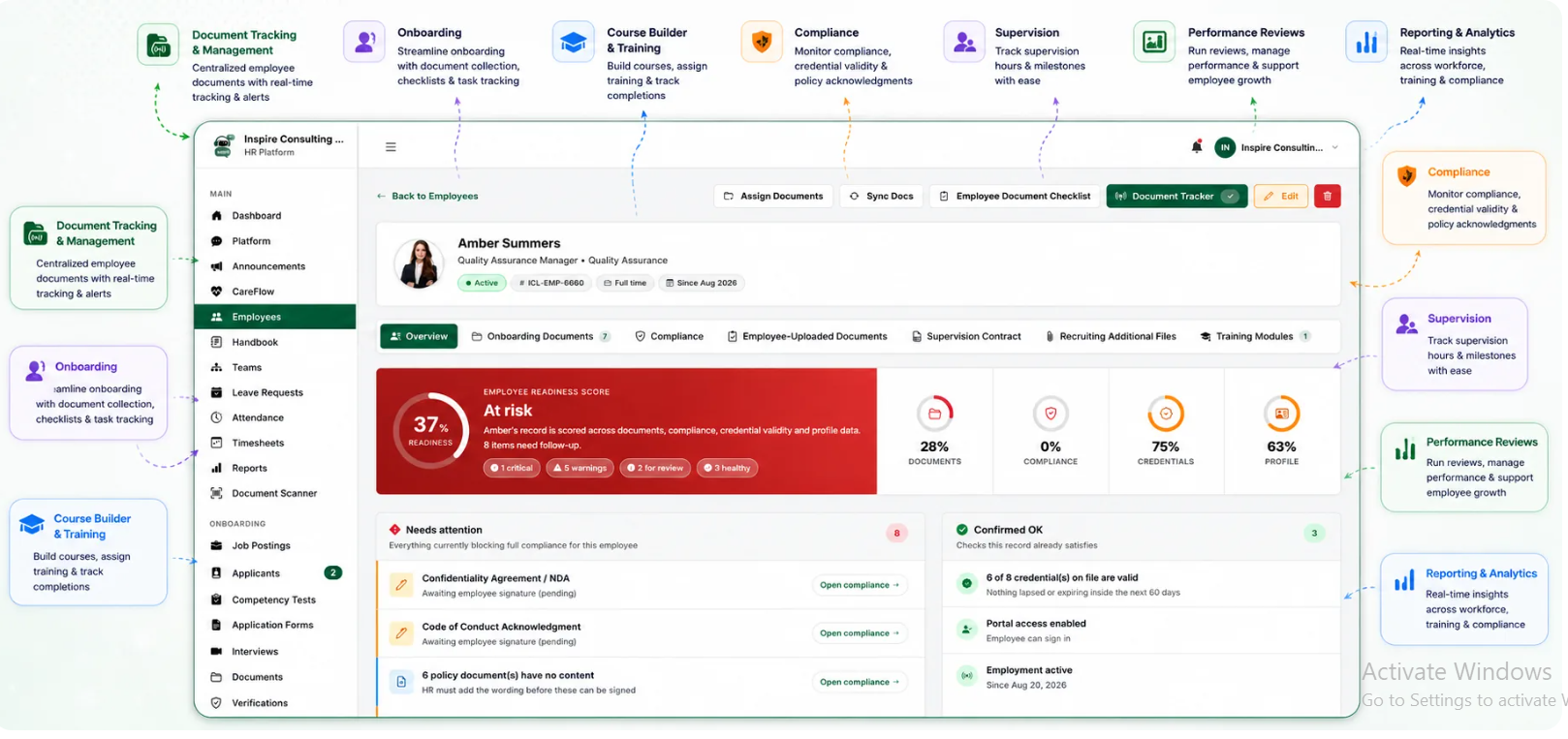
BUAMS HR helps behavioral health organizations bring preceptor assignment into a broader workforce readiness workflow. Instead of treating onboarding, employee files, compliance tasks, and role oversight as separate processes, teams can manage them together with better structure and visibility.
With BUAMS HR, organizations can keep new-hire records, role-specific requirements, and onboarding tasks organized in one system. HR teams can confirm that required documents are in place, operations leaders can track responsibility for early oversight, and leadership can see where readiness is moving smoothly or where delays are building. That makes it easier to launch new clinicians with consistency across programs.
For providers operating across multiple sites, BUAMS HR also supports standardization. Leaders can use one repeatable framework for assigning oversight, monitoring completion, and maintaining defensible records, even when different teams or service lines have different workflows. The result is a cleaner path from offer acceptance to confident, compliant readiness.
Final Thoughts
Preceptor assignment software gives behavioral health providers a practical way to reduce onboarding friction without lowering standards. When oversight assignments are clear, documented, and connected to the rest of the onboarding process, organizations can move faster while still protecting quality and compliance.
For HR teams trying to improve new-hire readiness, reduce confusion, and support safer program launches, a structured preceptor workflow is not just a convenience. It is part of building a workforce system that scales with growth and holds up under review.