Behavioral health organizations cannot afford to guess when it comes to hiring readiness. A clinician may have a strong interview, accept an offer quickly, and be urgently needed at a site, but the organization still has to confirm that the person’s license, degree, certification, and role-specific qualifications are real, current, and appropriate for the work they will perform. When those checks live across inboxes, scanned documents, spreadsheets, and follow-up phone calls, the result is usually the same: slower start dates, inconsistent documentation, and avoidable compliance risk.
That is why primary source verification software matters for behavioral health providers. Instead of treating verification as a one-time hiring chore, strong systems help HR teams create a repeatable process for validating qualifications, documenting evidence, assigning ownership, and keeping every completed step tied to the employee record. For organizations operating across outpatient, community-based, residential, or multi-site programs, that structure becomes even more important because role requirements often vary by program, payer, supervision model, and state.
Key Takeaways
What Is Primary Source Verification Software?
Primary source verification software is a system that supports the process of validating employee qualifications directly from the original or authoritative source rather than relying only on copies supplied by the applicant. In a behavioral health setting, that can include verifying active licensure, degree completion, board status, CPR or safety training, background screening results, supervision requirements, and other role-specific documentation needed before a staff member is cleared for work.
The software itself does not replace sound judgment or program-specific policies. What it does is give HR and compliance teams a reliable operating structure. Instead of tracking verification steps in separate places, teams can centralize required items, set completion rules by role, store proof in one file, record notes for exceptions, and show exactly what was completed before an employee was approved for a caseload, shift, or site assignment.
Why It Matters for Behavioral Health Providers
Behavioral health staffing is heavily dependent on trust, safety, and regulatory readiness. Many roles involve direct client care, documentation standards, billing requirements, supervision obligations, and site-specific clearances. If a provider hires quickly but verifies inconsistently, problems can surface later in painful ways: a credential cannot be substantiated during an audit, a clinician starts before all prerequisites are confirmed, or a site discovers that a required certification is missing after the schedule is already built.
Primary source verification software helps reduce those breakdowns by turning an error-prone manual process into a controlled workflow. For Maryland and DC behavioral health providers, this can be especially useful when organizations are coordinating across multiple license types, varied payer expectations, and programs that depend on timely staffing. The goal is not only to confirm qualifications, but also to document the verification trail in a way that can stand up to internal review, accreditation preparation, and external scrutiny.
What Behavioral Health HR Teams Should Verify Before Start Date
Every organization should define its own requirements by role, but most behavioral health providers need a repeatable way to confirm a combination of core and position-specific qualifications. A strong verification workflow usually includes the categories.
Software makes these checks more manageable because it can assign required items by job title, program, or location instead of forcing HR staff to rebuild the same checklist for every hire. That structure is especially helpful when providers are scaling, launching new programs, or filling multiple clinical and support roles at the same time.
Common Failure Points in Manual Verification Workflows
Most verification problems are not caused by a lack of effort. They happen because the work is fragmented. One recruiter has a document in email, HR has a spreadsheet, a supervisor is waiting on approval, and compliance does not realize a required item is still outstanding. In that environment, staff often spend more time hunting for status updates than actually resolving the gaps.
Common failure points include incomplete file evidence, unclear ownership, inconsistent deadlines, and start-date decisions made before all conditions are met. Another frequent problem is that organizations collect documents but fail to prove that the information was checked against the original source. During an audit or accreditation review, having a copy of a license is not always the same as demonstrating that the license was actively verified and recorded.
Primary source verification software reduces those risks by making outstanding items visible, tying proof to the employee file, and documenting each completed verification step in a consistent format.
What to Look for in Primary Source Verification Software
Behavioral health providers should look for software that supports both speed and defensibility. The right system should help the team move new hires forward quickly while still producing a clear audit trail.
These capabilities matter because behavioral health organizations do not just need a faster hiring checklist. They need a system that can show why a person was cleared, what evidence supported that decision, and whether anything still requires follow-up after the employee starts.
How BUAMS HR Helps
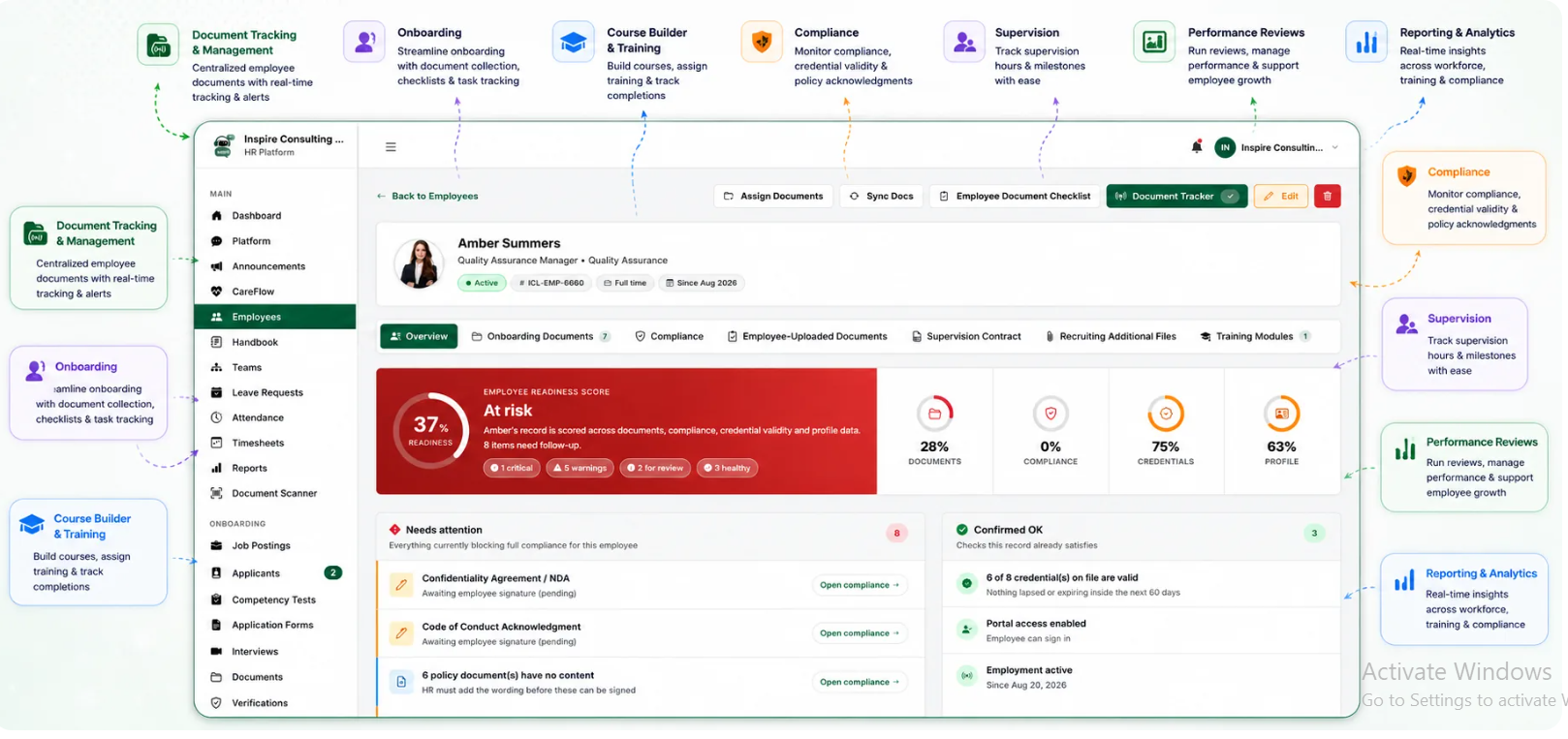
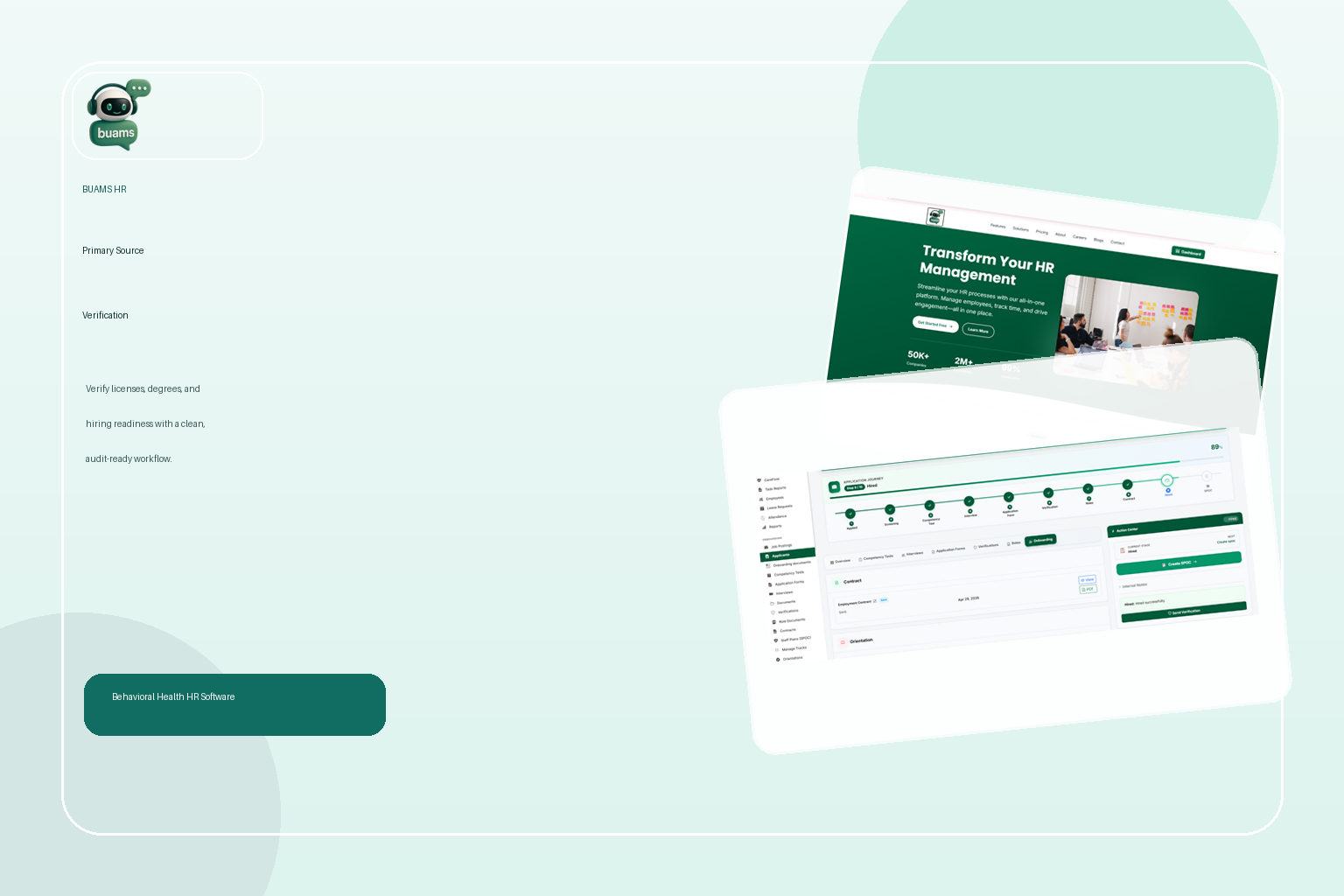
BUAMS HR helps behavioral health providers organize primary source verification as part of a broader workforce readiness process. Instead of treating verification as a disconnected task, teams can align hiring steps, employee files, compliance records, and role-specific readiness in one place. That means HR can see which required items are complete, supervisors can understand whether a hire is actually ready for assignment, and compliance teams can retrieve supporting evidence without chasing multiple systems.
For providers managing clinical, community-based, and administrative staff across programs, BUAMS HR supports a more consistent process for documenting verification results, storing related files, and maintaining accountability across teams. When the verification workflow is visible and standardized, organizations are better positioned to reduce onboarding delays, protect audit readiness, and avoid preventable gaps that surface after a staff member has already been scheduled.
Final Thoughts
Primary source verification is one of those HR processes that becomes most visible when it breaks. A missing check can delay a start date, undermine confidence in a personnel file, or create unnecessary risk during an audit. Behavioral health providers need a dependable way to confirm qualifications and document proof without slowing the pace of hiring more than necessary.
Primary source verification software gives HR teams that structure. With a clear workflow, consistent evidence capture, and better visibility into readiness, providers can bring staff onboard faster while staying aligned with compliance expectations. For growing behavioral health organizations, that balance between speed and control is exactly what keeps workforce operations sustainable.