Early employment periods are high risk for behavioral health providers. New hires may still be completing onboarding tasks, settling into documentation expectations, and learning role-specific workflows while supervisors assess fit, readiness, and support needs. When probation milestones are tracked through inbox reminders and separate spreadsheets, it becomes harder to see which check-ins are complete, which concerns need follow-up, and whether required records have made it into the employee file.
Probation period tracking software gives HR and supervisors a structured way to manage those early employment checkpoints. It helps organizations document review dates, supervisor feedback, training completion, corrective follow-up, and employment decisions in one workflow. For behavioral health providers, that structure matters because staff readiness can affect client coverage, compliance posture, and team stability very quickly.
Key Takeaways
What Is Probation Period Tracking Software?
Probation period tracking software is used to manage the time-bound review process for new employees or recently transferred staff. The goal is not simply to note a start date. A strong process connects probation timelines to supervisor checkpoints, required training, documentation status, performance notes, and any decision that needs to happen before the review window ends.
In behavioral health settings, probation periods often involve more than a basic performance conversation. HR may need to confirm that the employee file is complete, managers may need to document competency observations, and leadership may need visibility into whether the staff member is ready for independent responsibilities. Software creates a repeatable process instead of leaving each manager to invent their own system.
Why Probation Tracking Matters in Behavioral Health
Behavioral health providers operate in environments where staffing readiness has direct operational consequences. A new hire may be learning documentation standards, shadowing client interactions, completing required trainings, or building toward role-specific clearances. If the probation period passes without structured review, the organization may miss signs that additional coaching, schedule adjustments, or documentation cleanup are needed.
Manual tracking creates blind spots. One supervisor may keep detailed notes, while another only remembers to send feedback if HR asks. A program leader may assume training is finished, but the employee file may still be missing important records. When those details are not aligned, probation decisions become inconsistent and harder to defend.
This is especially important for Maryland and DC behavioral health providers that need dependable workforce processes across multiple sites, programs, and supervisory teams. Standardized probation tracking helps organizations make better early employment decisions without adding unnecessary administrative burden.
Common Problems With Manual Probation Processes
Review Deadlines Get Missed
Many organizations intend to complete 30-day, 60-day, or 90-day reviews, but those checkpoints often depend on manual reminders. When calendars change or supervisors are stretched thin, important milestones can slip past unnoticed.
Feedback Is Inconsistent Across Managers
Without a common workflow, probation reviews can vary widely from one program to another. Some managers provide detailed assessments, while others submit short comments that do not support a clear employment decision.
Training and Readiness Data Stay Disconnected
Supervisor impressions are only part of the picture. If required trainings, policy acknowledgments, or role-based tasks are tracked elsewhere, HR may not have a complete view of the employee's readiness at review time.
Documentation Does Not Make It Into the Employee File
Probation notes, coaching records, and extension decisions may live in email threads or local folders instead of the core HR record. That creates avoidable gaps later when leadership or compliance reviewers need the full history.
What to Look for in Probation Period Tracking Software
Time-Based Review Milestones
The system should make it easy to assign probation review dates based on hire date, transfer date, or role change. Teams should be able to see what is due soon and what is overdue without building manual reminder systems.
Supervisor Task Ownership
Each checkpoint should have a clear owner. Managers need prompts for evaluation steps, and HR needs visibility into which reviews are pending so nothing stalls silently.
Linked Training and Documentation Status
A useful probation workflow should connect review checkpoints with other employment requirements. That includes trainings, required forms, policy sign-offs, and role-readiness documentation that influence the final decision.
Centralized Notes and Decision History
Software should keep coaching notes, review summaries, probation extensions, and final outcomes attached to the employee record. Centralized history makes future follow-up much easier.
Consistency Across Programs
Behavioral health organizations with multiple supervisors need standardized review templates and repeatable steps. The right system helps leadership set one process while still allowing role-specific context where needed.
Best Practices for a Stronger Early Employment Process
How BUAMS HR Helps
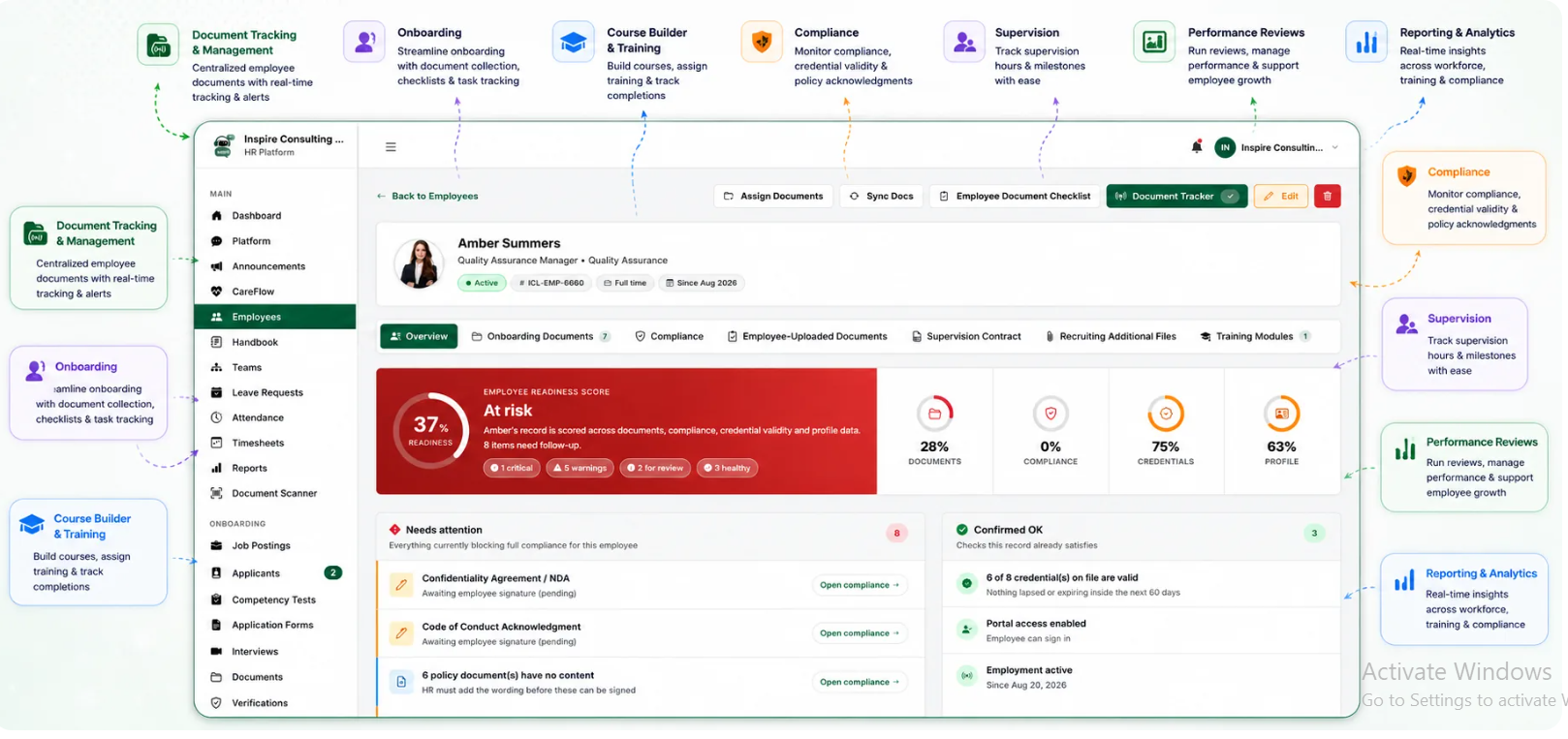
BUAMS HR helps behavioral health providers bring early employment tracking into a more organized system. When teams need to monitor probation timelines, supervisor follow-up, employee file completeness, and related readiness tasks, centralized records improve visibility and reduce fragmentation.
That matters for growing organizations where multiple managers are involved in hiring and supervision. Instead of depending on disconnected spreadsheets, HR teams can keep probation-related documents, tasks, and employment records aligned in one place. This supports cleaner handoffs between HR, supervisors, and operations.
For providers that want a more consistent approach to early performance checkpoints, BUAMS HR offers a practical foundation for tracking documentation, accountability, and employee progress during the most important first months of employment.
Final Thoughts
Probation period tracking software gives behavioral health organizations a better way to manage the early employment window with structure and consistency. It helps teams avoid missed reviews, uneven documentation, and unclear ownership while giving leadership a clearer picture of staff readiness.
For providers trying to improve hiring follow-through without creating more manual work, a standardized probation workflow is a smart operational step. It supports better records, better supervisor accountability, and better decisions before small issues turn into larger workforce problems.