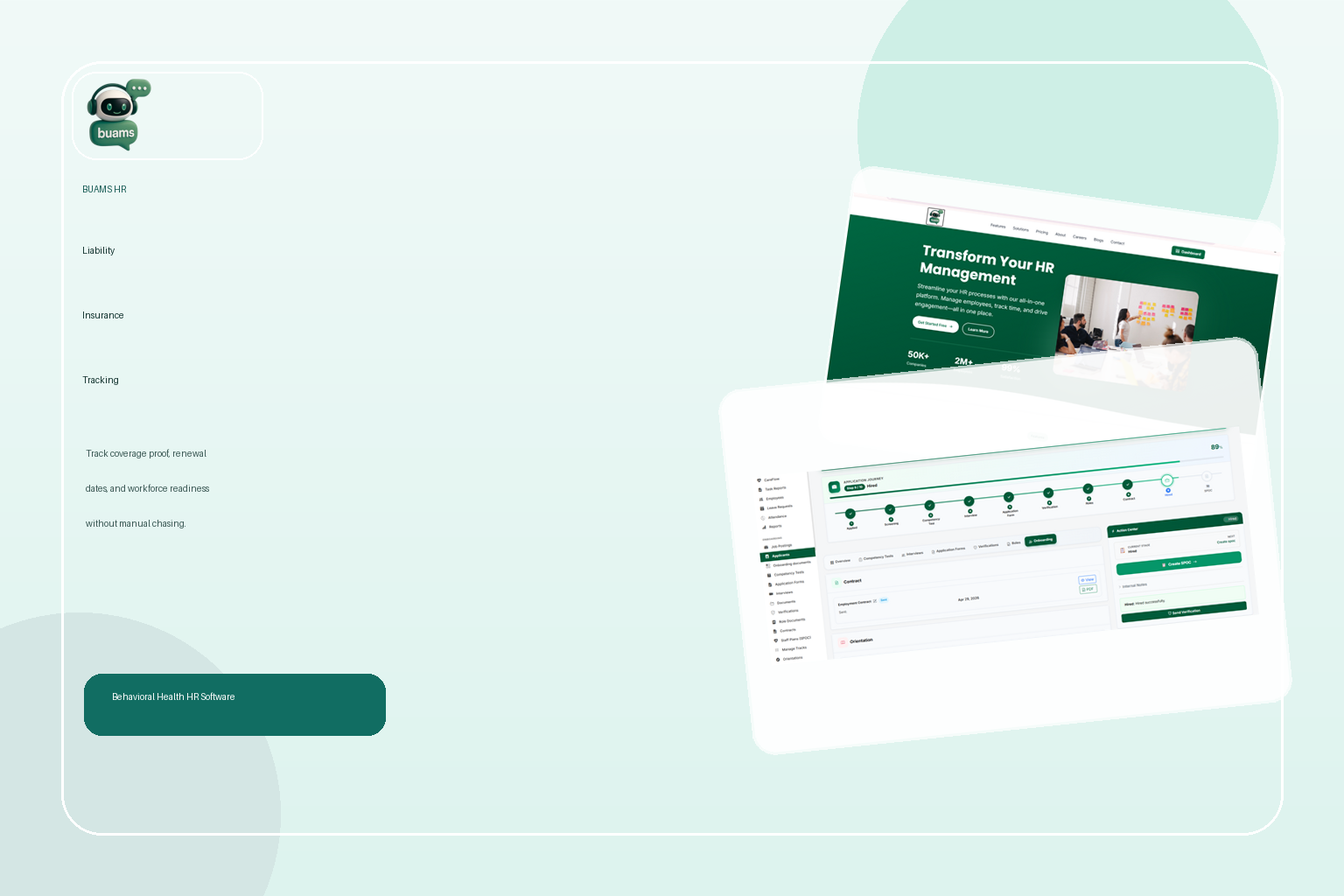
Professional liability insurance tracking software helps behavioral health providers manage a workforce requirement that often becomes urgent only when a renewal is late, a site requests proof of coverage, or a credentialing review exposes a missing document. Many organizations employ a mix of licensed clinicians, supervisors, contractors, and program leaders whose insurance obligations do not all look the same. When coverage certificates, renewal dates, policy limits, and follow-up notes are scattered across inboxes and shared drives, HR teams lose time and risk missing details that affect readiness.
Key Takeaways
What is professional liability insurance tracking software?
Professional liability insurance tracking software is a system for recording coverage requirements, storing proof of insurance, and monitoring renewal status for members of the workforce whose roles require documented protection. In behavioral health settings, that can include licensed clinicians, supervisors, contract providers, telehealth staff, and leaders whose documentation may be requested by payers, partner organizations, or internal compliance teams.
The goal is not just to save a PDF. A useful workflow shows who needs coverage, what type of policy is required, when it expires, whether updated proof has been received, and whether any assignment or credentialing decision should pause until documentation is complete. That level of visibility helps organizations avoid last-minute scrambles when someone is about to start, transfer sites, or undergo review.
Why it matters for behavioral health providers
Behavioral health organizations often work across outpatient programs, community-based services, crisis settings, schools, and telehealth environments. Insurance documentation requirements can differ based on role, employment type, payer expectations, or contract terms. If there is no consistent way to track this information, small paperwork gaps can turn into larger readiness problems.
A structured process reduces those blind spots. It also helps providers apply requirements more consistently across programs instead of relying on individual memory or local spreadsheets.
What to look for in professional liability insurance tracking software
The right solution should support visibility, documentation quality, and timely follow-up rather than acting as a simple document folder.
Centralized proof of coverage inside the employee record
Insurance certificates, declarations, and related approvals should live where HR can find them quickly. When coverage proof is tied directly to the employee or contractor file, teams spend less time hunting through shared folders and have a clearer history of what was received, reviewed, and replaced.
Renewal date tracking with clear follow-up status
A dependable system should make approaching expiration visible before it becomes urgent. HR teams need an easy way to identify who is due soon, who already submitted updated proof, and which cases still need outreach. That visibility supports smoother renewals and reduces the chance that a provider keeps working with outdated documentation on file.
Role-based requirement mapping
Not every workforce member needs the same type of insurance review. Some roles may require individual professional liability coverage, some may rely on organizational coverage, and others may need extra documentation because they work across multiple sites or programs. Good software helps organizations assign the right requirement to the right role instead of treating every employee the same.
Connection to onboarding, credentialing, and assignment readiness
Insurance tracking becomes far more useful when it is part of a broader readiness workflow. If updated coverage is still missing, that gap should be visible alongside other requirements such as licensure, training, supervision, and file completeness. This helps teams avoid approving a start date, transfer, or assignment when a critical document remains unresolved.
Reporting that highlights risk across programs
Behavioral health leaders need more than one-off reminders. They need a way to see which staff, sites, or programs have the most upcoming renewals, recurring document issues, or unresolved follow-up. Strong reporting helps leadership prioritize action earlier and spot patterns before they create service disruption.
How BUAMS HR helps
BUAMS HR helps behavioral health providers keep workforce documentation and compliance follow-up more organized so important records are easier to manage across the employee lifecycle. Instead of treating insurance certificates as isolated attachments, teams can connect documents, review steps, and outstanding follow-up items inside a more centralized HR workflow.
That structure matters for growing providers that need dependable oversight without increasing manual administrative work.
Final Thoughts
Professional liability insurance tracking software gives behavioral health providers a more reliable way to manage coverage proof, renewal dates, and workforce documentation before missing records create operational risk. When HR can see what is current, what is expiring, and what still needs review, the organization is better prepared for onboarding, assignment decisions, audits, and credentialing requests. BUAMS HR supports that kind of organized approach by helping providers keep employee records, compliance documents, and follow-up work easier to manage in one system.